

Blog
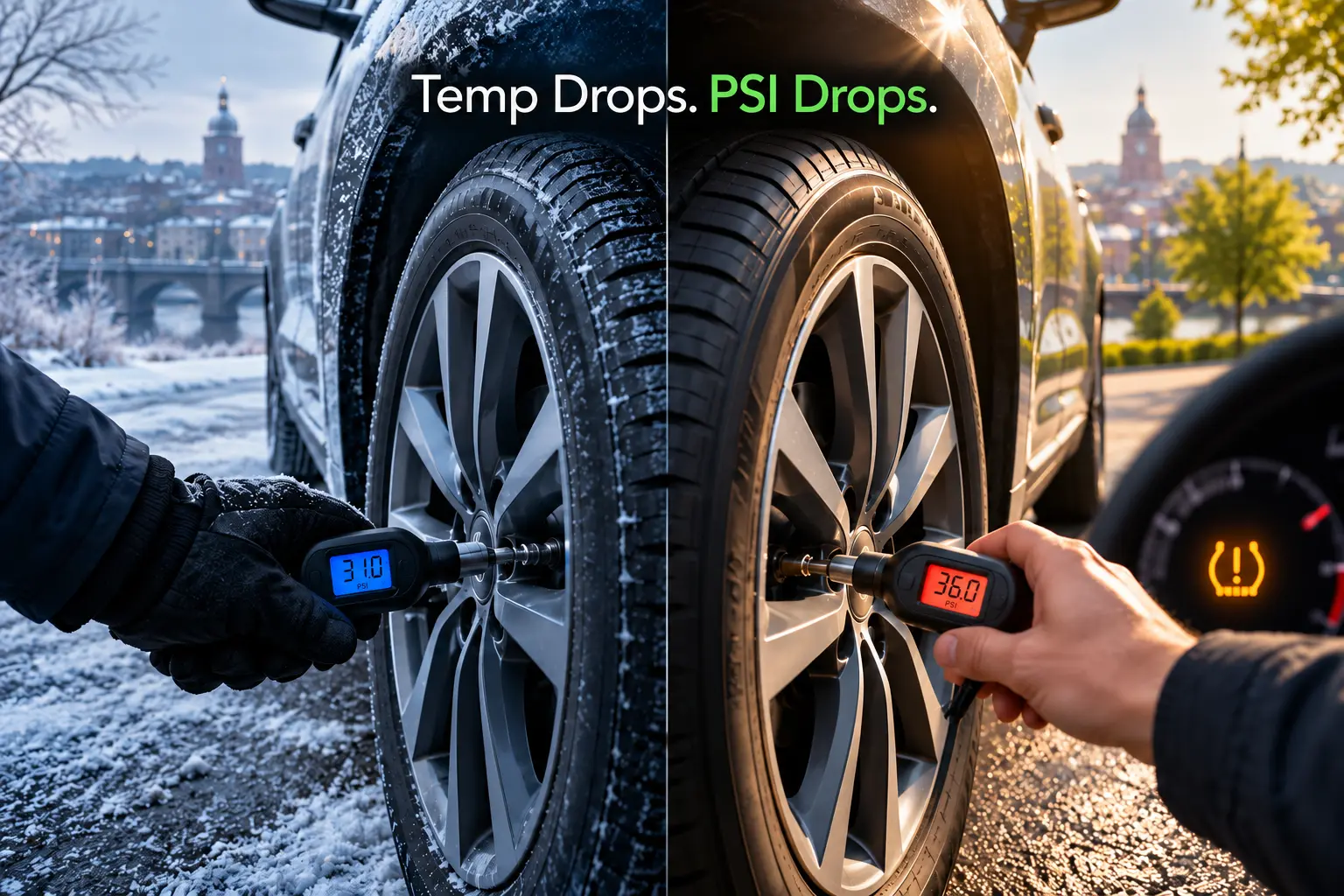
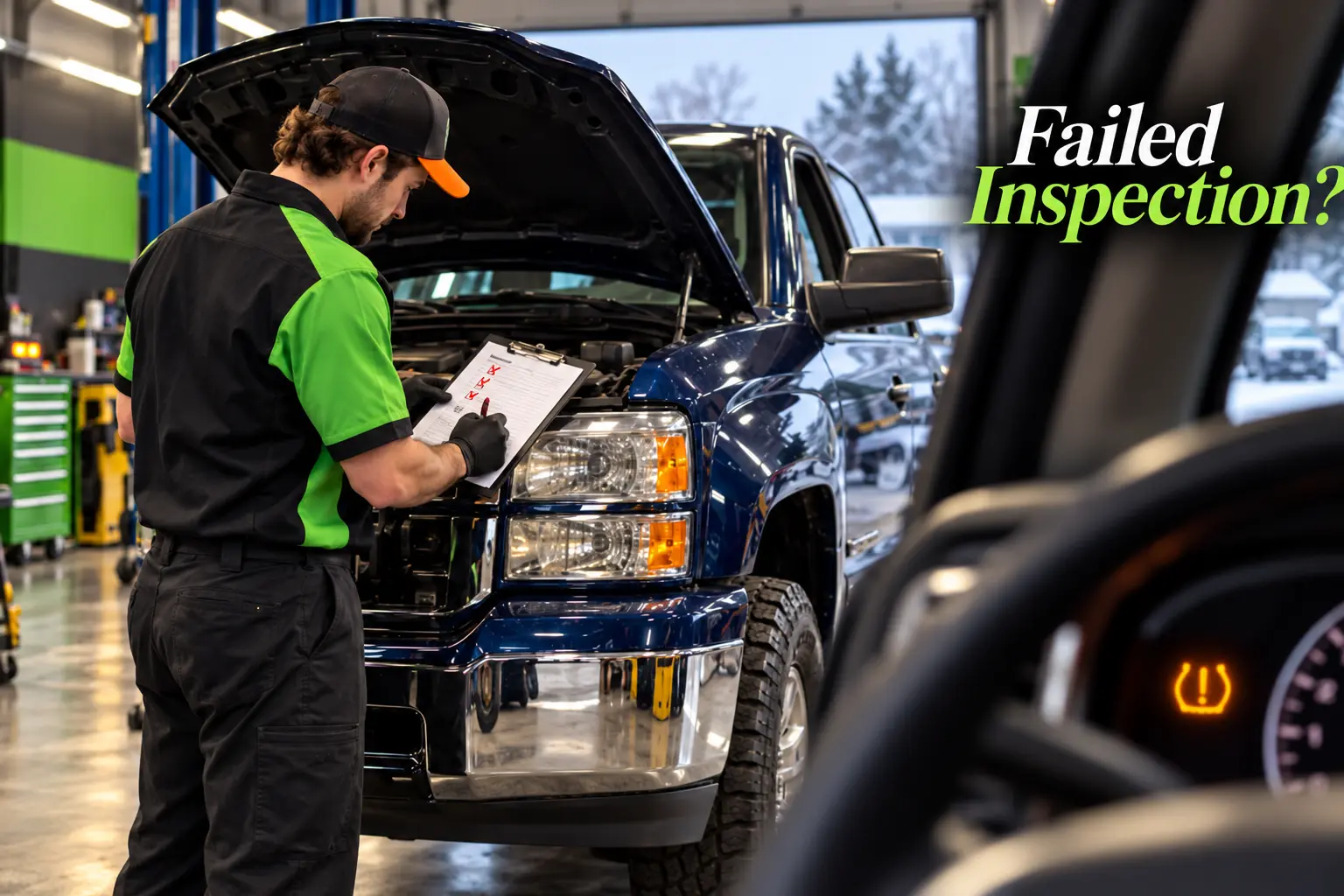
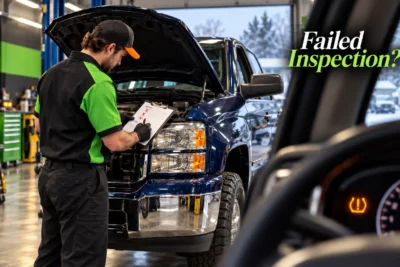
You walk out on a crisp October morning, start the car, and there it is: that little amber tire light staring back at you. The tires looked fine last night. So what happened?
Blame the thermometer. Tire pressure changes with temperature York PA drivers deal with every fall, and a single cold night can push a tire right past its warning threshold. Here’s how much air you really lose, why it matters, and when the problem is a leak instead of the weather.
How Much Does Tire Pressure Change With Temperature?
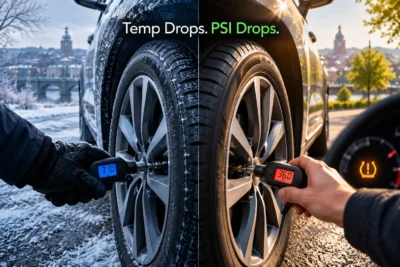
Short answer: tire pressure moves about 1 PSI for every 10°F change in air temperature. Cold air makes it drop. Warm air makes it rise.
The reason is simple physics. Air shrinks when it cools and expands when it heats up. Your tires are sealed, so the same amount of air takes up less room (and pushes less) when the temperature falls.
Here’s what that looks like in real life:
– A tire set to 35 PSI on a 70°F afternoon can read around 31 to 32 PSI on a 35°F morning.
– A 20-degree swing between day and night costs you roughly 2 PSI.
– A drop from a mild fall day to a freezing January morning can cost 5 PSI or more.
Heavier-duty truck tires run at much higher pressures, so they swing farther. Many shift closer to 2 PSI per 10°F. For a typical car, SUV, or minivan, 1 PSI per 10°F is a solid rule of thumb.
Can Tire Pressure Change Overnight?
Yes, and it happens all the time in York in the fall and spring. Days can feel almost warm, then temperatures slide after sunset. By sunrise the air inside your tires has cooled right along with it.
Nothing leaked. The tire is just carrying less pressure than it did yesterday afternoon. That matters because a tire that’s already a few PSI under spec has less room to give before the warning light comes on.

Why Does My Tire Pressure Light Come On When It Gets Cold?
Your tire pressure monitoring system (TPMS) watches each tire’s pressure and alerts you when it falls too far below the recommended number. Federal rules require the light to come on when a tire is about 25 percent under the recommended pressure. Plenty of automakers set theirs to trigger sooner.
So a cold snap doesn’t usually create a problem out of nothing. It exposes one. If a tire was already running a little low, a 30-degree drop finishes the job and the light pops on.
Here’s what you’ll often notice:
– The light shows up on the first cold morning of the season.
– It may turn off after 10 to 15 minutes of driving, because the tires warm up and pressure climbs.
– It comes back the next cold morning.
Pro tip: a light that goes away on its own isn’t a fixed tire. Your tires are still low, they’re just warm. Put air in them, and don’t wait for the light to make the decision for you.
Cold Weather Tire Pressure in York, PA: Why It Matters More Than You Think
Central Pennsylvania doesn’t ease into winter. Afternoons can feel manageable, then nights drop below freezing. Every one of those swings changes the pressure in your tires, and most people never check.
Low pressure causes more trouble than a warning light. When a tire runs underinflated, it flexes more than it should. That extra flex builds heat, wears the outer edges of the tread faster, and makes the car feel sloppy in corners.
You’ll also feel it at the pump. Underinflated tires create more rolling resistance, so the engine works harder to move the same car. And on wet or icy roads, a soft tire can stretch out your stopping distance when you can least afford it.
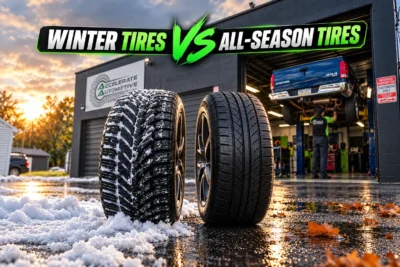
Winter is also the time of year when most drivers swap their tires. If you’re making that switch, a seasonal tire changeover in York, PA is the perfect moment to get every tire set to the correct pressure for the cold months ahead.

Does Hot Weather Raise Tire Pressure?
It does. The same rule works in reverse: pressure climbs about 1 PSI for every 10°F of warming. Summer pavement in York gets hot enough to push a tire’s pressure up quickly, and driving adds heat on top of that.
A tire that’s been rolling on the highway for half an hour can read several PSI higher than it did in your driveway. That’s normal.
Here’s the mistake we see: someone checks a hot tire, sees a number above the sticker, and lets air out. Don’t do that. Once the tire cools, it’ll be underinflated, and you’ve traded one problem for another.
Overinflation has its own downsides. A tire pumped too hard rides rougher, wears down the center of the tread, and grips less because less rubber touches the road. Both extremes shorten tire life.
What Is the Correct Tire Pressure for My Car?
The right number isn’t on the tire. It’s on the tire information placard, usually found on the driver’s side door jamb. Your owner’s manual lists it too.
Ignore the maximum pressure printed on the tire sidewall. That figure is the most the tire can safely hold, not what your vehicle needs. The placard number is set by the manufacturer for your specific vehicle, weight, and handling.
One more thing matters: that number is a cold pressure. According to the National Highway Traffic Safety Administration, you should check your tires, including the spare, at least once a month, and only when the car hasn’t been driven for at least three hours.
How Do You Check Tire Pressure at Home?
You don’t need fancy tools. A decent gauge and five minutes will do it.
- Check the tires first thing in the morning, before you drive, or after the car has sat for three hours.
- Find your recommended PSI on the door jamb placard.
- Remove the valve cap and press the gauge on straight and firm until the hissing stops.
- Compare the reading to the placard. Add air if you’re low.
- Recheck all four tires (and the spare), then replace the caps.
Pro tip: if you fill your tires inside a warm garage and then park outside in freezing weather, the pressure will drop once they cool down. Adjust for that, or check them again after they’ve been outside.
A cheap pencil gauge can be off by several PSI. If your readings seem odd, a technician’s calibrated gauge settles it fast.
When Is Low Tire Pressure a Leak and Not Just the Weather?
Here’s a useful way to tell. Cold weather lowers all four tires by about the same amount. A leak shows up in one tire.
Think leak, not weather, if you notice any of these:
– One tire keeps losing air while the other three hold steady.
– You fill the tire and it’s low again within a few days.
– The TPMS light returns even after the temperature has warmed up.
– You see a nail, screw, or visible damage in the tread.
– The car pulls to one side or vibrates at highway speed.
Slow leaks often come from a puncture, a worn valve stem, or a corroded wheel edge where the tire seals. Winter road treatment doesn’t help the last one.
Don’t keep topping off a tire that won’t hold air. If one of yours keeps going soft, get a professional flat tire repair in York, PA before a slow leak becomes a roadside problem.
How Often Should You Check Tire Pressure in York, PA?
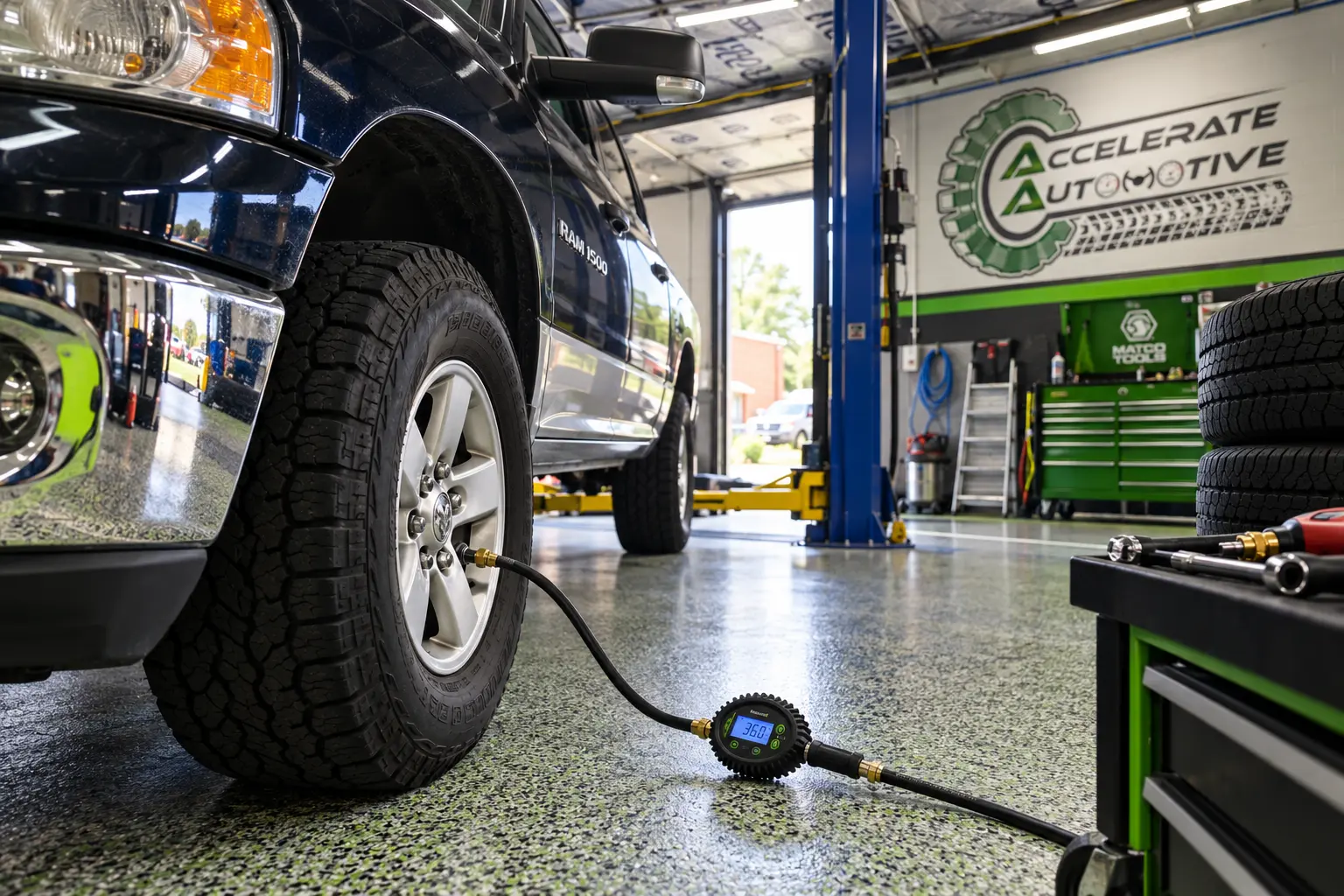
Once a month is the baseline. Beyond that, build in a few extra checks:
– After any temperature swing of 20 degrees or more.
– Before a long trip, especially with a loaded car.
– When the seasons change, in early fall and again in spring.
– Any time the TPMS light comes on.
That’s about two minutes a month, and it protects a set of tires that can cost hundreds of dollars to replace.
Tire Pressure Check York PA: Let Accelerate Automotive Take a Look
Not sure what your tires should read? Light stays on after you’ve added air? Don’t guess. Our technicians at Accelerate Automotive can check your pressures, look for slow leaks, and make sure your tires are ready for whatever York’s weather throws at them.
Whether you need a quick look before the first freeze or a full set of tire services in York, PA, we’re here to help. We serve drivers across York, with a focus on West York, and within about 30 miles of the shop.
Accelerate Automotive
1231 W. Locust Street & 1221 W. Heiges Ave, York, PA 17404
Phone: 866-382-8861
Email: service@driveaccelerate.com
Hours: Monday–Friday, 9:00 a.m.–5:00 p.m. | Saturday, 10:00 a.m.–2:00 p.m. | Evenings by appointment | 24/7 drop-off
Call 866-382-8861 today or stop by, and let’s get your tires set before the next cold morning does it for you.