

Blog
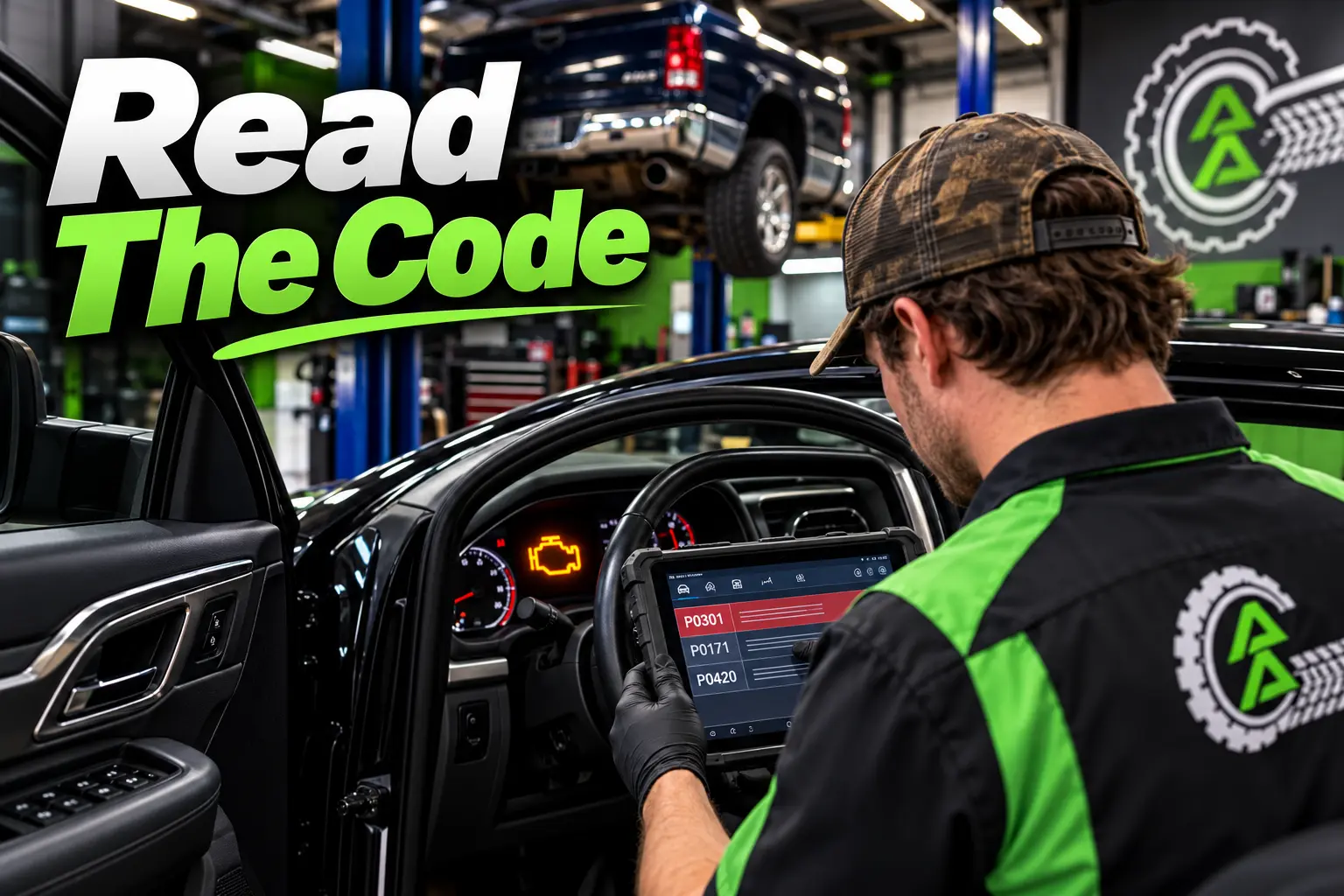
Your dashboard lights up on the way to work and your stomach drops. Every driver knows that feeling.
The catch: a check engine light doesn’t say what’s wrong. It only says something is. An OBD2 scan York PA drivers can count on turns that vague warning into a specific trouble code and that code is where real diagnosis starts.
We read these codes every week at Accelerate Automotive in West York. This guide covers what the codes mean, what they don’t and what to do before a small fault turns into an expensive one.
What Is an OBD2 Scan and What Does It Do?
OBD2 stands for second-generation on-board diagnostics. Every light-duty car and truck built since the 1996 model year has it, according to the U.S. Environmental Protection Agency.
What Does the OBD2 System Monitor?
The system watches your engine, transmission and emissions components nonstop. When a reading drifts out of range, the computer stores a diagnostic trouble code (DTC) and turns on a warning light.
What Does a Scan Tool Read?
A scan tool plugs into the diagnostic port, usually under the dashboard near the steering column. It pulls the stored codes plus freeze frame data, which is a snapshot of engine conditions at the moment the fault was logged. That snapshot shows whether the problem hit at a cold start, at highway speed or under load.
A proper OBD2 scan York PA shops perform goes well beyond reading a number off a screen. More on that below.
How Do You Read an OBD2 Code?
Every code has five characters and the pattern is easy to learn. Take P0301 as an example:
- First character: the system. P is powertrain, B is body, C is chassis and U is network communication.
- Second character: 0 means a generic code shared by all manufacturers. 1 means manufacturer-specific.
- Third character: the subsystem involved, such as fuel and air metering, ignition or emissions controls.
- Last two digits: the specific fault within that subsystem.
So P0301 is a generic powertrain code for a cylinder 1 misfire. Simple enough on paper. The hard part is figuring out why cylinder 1 is misfiring.
Which OBD2 Codes Come Up Most Often?
Some codes show up far more than others. Here are the ones we see regularly.
Misfire Codes (P0300–P0308)
These flag random or cylinder-specific misfires. Causes range from worn spark plugs and failing ignition coils to vacuum leaks and fuel delivery problems.
Catalyst Efficiency Code (P0420)
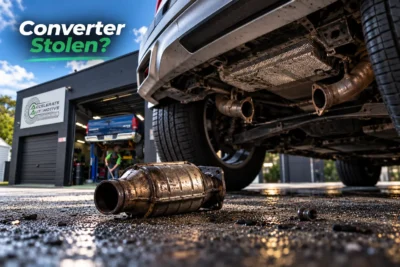
The computer thinks the catalytic converter isn’t cleaning the exhaust well enough. The converter may be at fault, but failing oxygen sensors and exhaust leaks can trigger the same code.
Lean Condition Codes (P0171 and P0174)
Too much air or too little fuel. Vacuum leaks and dirty mass airflow sensors are common culprits.
EVAP Leak Codes (P0442 and P0455)
These point to a leak in the fuel vapor system. Check the gas cap first. A loose cap is the cheapest fix there is.
Coolant Temperature Code (P0128)
The engine isn’t reaching normal operating temperature. A thermostat stuck open is the usual suspect.
Pro tip: write down the cod and note whether the light was steady or flashing, before you visit a shop. That detail helps a technician narrow things down faster.
Does an OBD2 Code Tell You Exactly What’s Broken?
No. A code tells you which circuit or reading fell outside its normal range. It doesn’t tell you why.
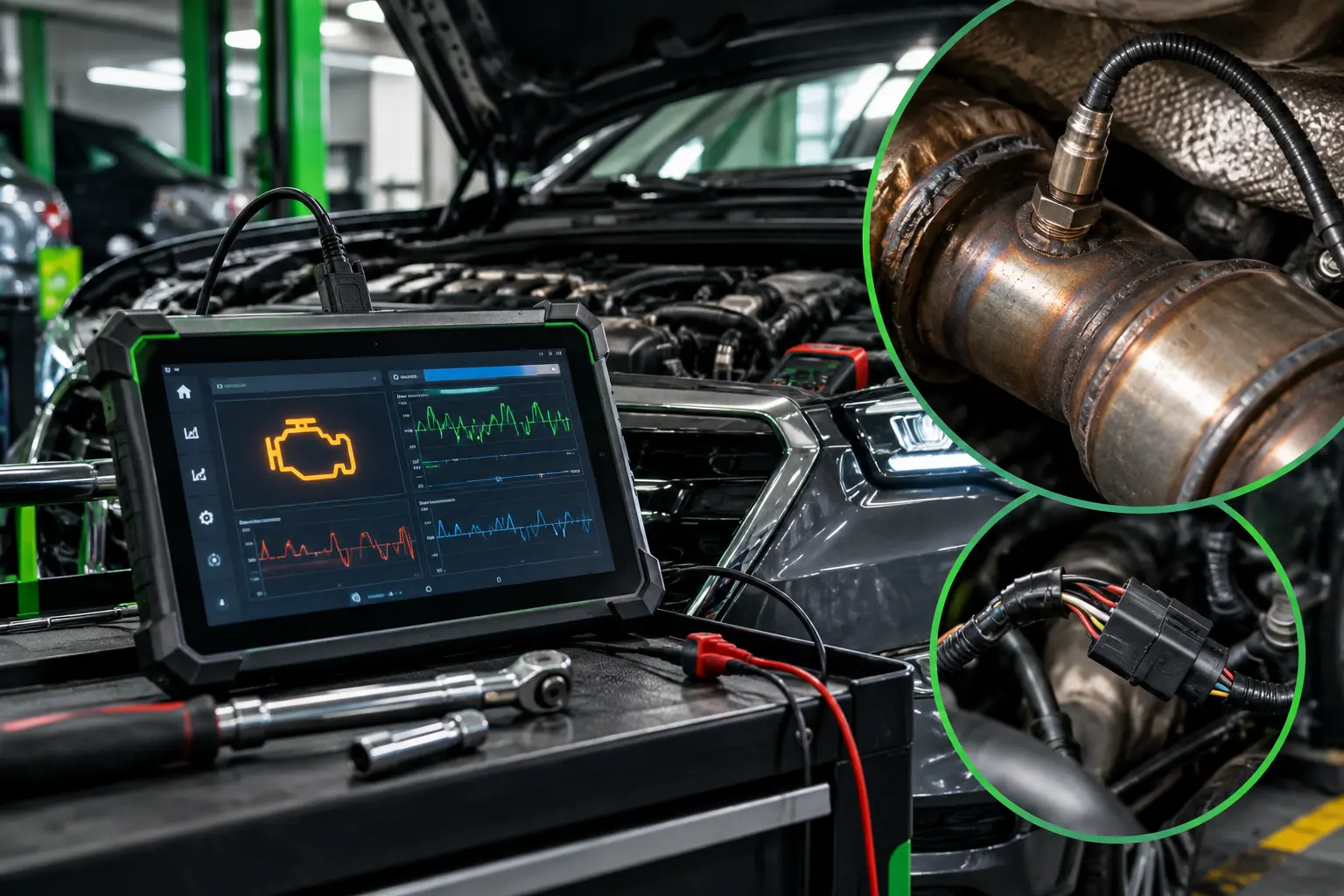
P0420 is the classic example. Plenty of drivers replace a catalytic converter because of that code, then watch the light come right back. The real problem was an upstream oxygen sensor all along.
That’s the gap between reading a code and diagnosing it. Diagnosis means checking live data, reviewing freeze frame information, inspecting wiring and connectors and testing the suspect part before anyone recommends a repair.
It’s also why a basic code reader only gets you halfway. It gives you the code. It can’t give you the answer.
Can You Drive With the Check Engine Light On?
It depends on how the light behaves.
Steady Check Engine Light
A steady light usually isn’t an emergency. You can normally drive short-term, but get the car scanned soon. Small faults tend to get expensive when ignored.
Flashing Check Engine Light
A flashing light is different. It typically signals an active engine misfire and unburned fuel can overheat the catalytic converter. That repair costs far more than a set of spark plugs. Pull over when it’s safe and have the car checked before driving any farther. Our check engine light diagnostics in York, PA start with exactly this kind of situation.
Stop right away if the light comes with overheating, loss of power, knocking, smoke or a low oil pressure warning.
Should You Clear an OBD2 Code Yourself?
We’d advise against it. Clearing a code wipes the freeze frame data a technician needs. It also resets your car’s readiness monitors, the self-tests the computer runs before an inspection. Those monitors need time to finish again, often several drive cycles.
If the fault is still there, the light simply returns.
Timing matters in Pennsylvania too. The state’s emissions inspection connects to your car’s OBD computer, as described in this PennDOT inspections newsletter, so a lit warning light is a problem at the station. A code cleared right before inspection is a bad bet.
Why Does an OBD2 Code Keep Coming Back?
Because the root cause is still there.
Common Reasons Codes Return
Three situations account for most repeat codes:
- The earlier repair addressed a symptom rather than the source.
- An intermittent fault, like a loose connector or corroded wiring, acts up only under certain conditions.
- A failing sensor works some days and drops out on others.
Road salt and cold Pennsylvania mornings are hard on connectors and sensors. Intermittent problems are common around here.
Pending, Stored and Permanent Codes
It also helps to know the code types. A pending code means the computer saw a problem once but hasn’t confirmed it. A stored code is confirmed and it’s what turns the light on. A permanent code stays in memory until the computer itself verifies the repair, so a scanner can’t erase it. That’s by design.
When Should You Book an OBD2 Scan?
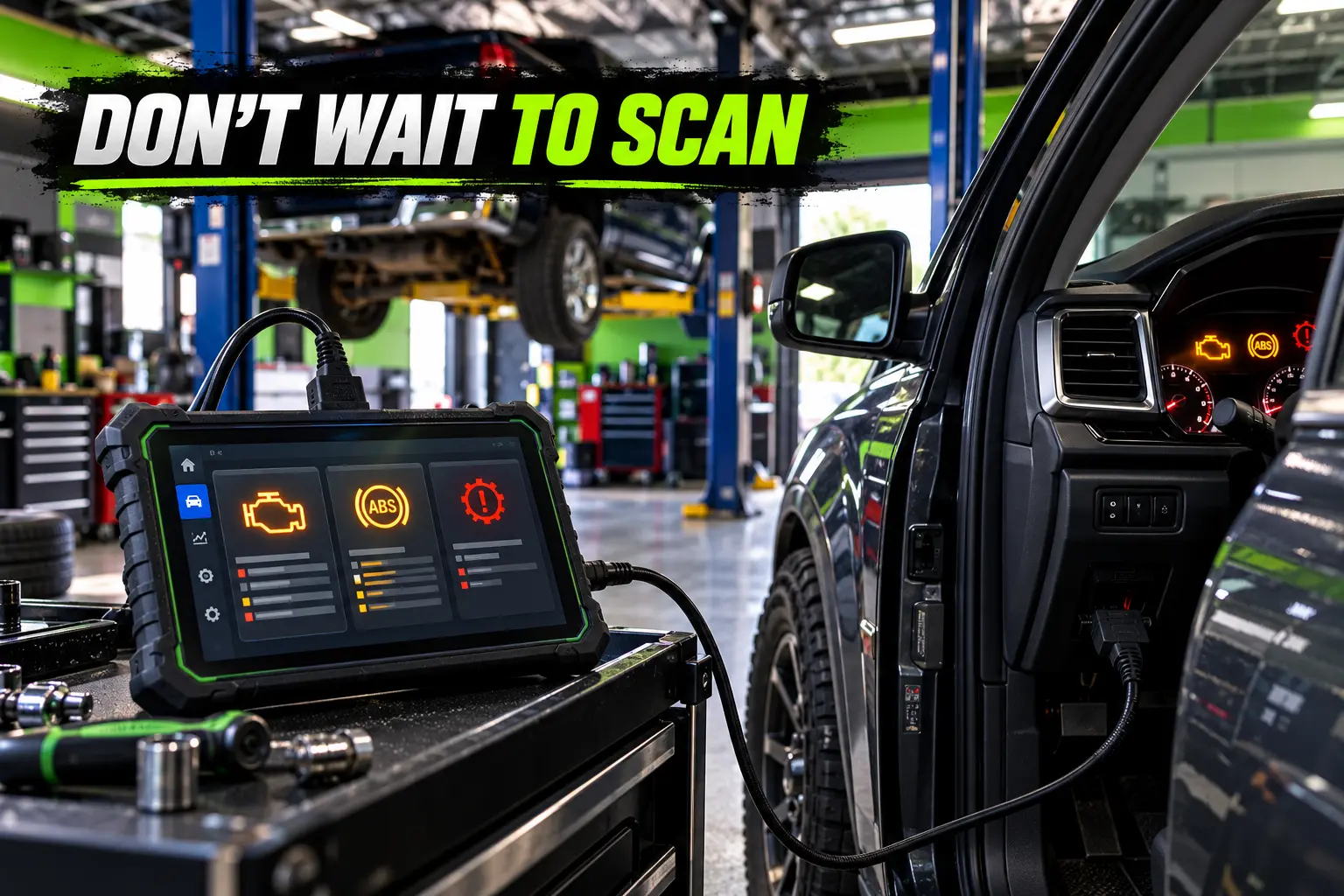
Don’t wait for the light alone. Book an OBD2 scan York PA shops can run in a single visit if you notice any of these:
- A steady or flashing check engine light
- Rough idle, hesitation or stalling
- Worse fuel economy than usual
- A failed or upcoming emissions inspection
- An ABS, transmission or other dashboard warning light
- A used car you’re thinking about buying
That last one is worth a minute. A scan can show stored faults and sometimes it reveals that codes were recently cleared to hide a problem.
Many basic code readers only cover powertrain codes. ABS, body and network faults often need a shop-level tool, which is another reason a professional scan finds more.
Where to Get an OBD2 Scan York PA Drivers Trust
What Our OBD2 Scan Includes
At Accelerate Automotive, our OBD2 scan York PA service starts with connecting the scan tool and recording every stored and pending code.
Next, we review freeze frame and live data, inspect the related components and test before recommending anything. You get a plain-language explanation of what we found and a clear next step.
Why does that matter? A fast answer is nice. A correct one saves you money.
Hours and Service Area
We serve West York and the surrounding area, roughly a 30-mile radius. Our hours are Monday through Friday, 10:00 a.m. to 6:00 p.m. and Saturday, 9:00 a.m. to 2:00 p.m. Evenings are available by appointment and 24/7 drop-off means you can leave your keys after hours.
Get Your OBD2 Scan in York, PA Today
Don’t guess what’s behind that light. Bring your vehicle to Accelerate Automotive for an OBD2 scan York PA drivers can trust or ask about our same-day car diagnostics.
Call 866-382-8861 or email service@driveaccelerate.com. You’ll find us at 1231 W. Locust Street and 1221 W. Heiges Ave, York, PA 17404.