

Blog
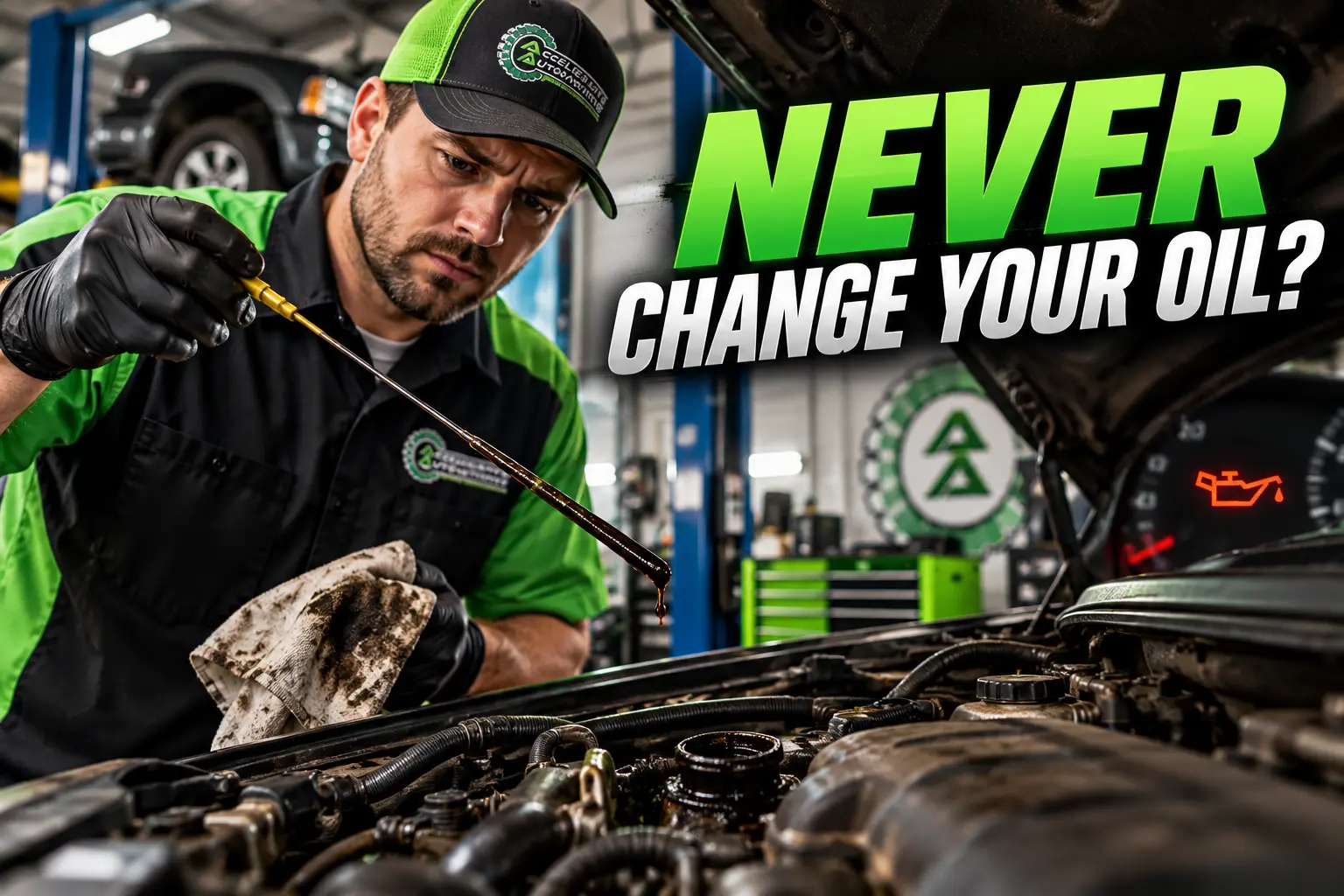
Your engine won’t warn you before it quits. It just runs hotter, louder and a little more worn with every mile on tired oil.
Here’s the quick answer to “what happens if you never change your oil York PA”: the oil breaks down, thickens into sludge and stops protecting the metal parts inside your engine. Eventually, those parts grind, overheat and fail.
That’s not a scare tactic. It’s simple mechanics. And in York, where cold January starts, humid summer traffic and short trips around West York all punish oil faster than most drivers expect, it plays out sooner than people think.
What Happens If You Never Change Your Oil York PA? The Short Answer
When oil stays in your engine far past its limit, damage usually follows a predictable path:
- The oil loses its additives and gets thick, dirty and acidic.
- Sludge forms and starts blocking narrow oil passages.
- Moving parts get less lubrication, so friction and heat climb.
- Bearings, camshafts and timing components wear out early.
- The engine knocks, overheats or seizes completely.
The result is often a repair bill that costs many times more than the oil changes you skipped. Sometimes the only fix is a full engine replacement.
What Does Engine Oil Actually Do?
Most people think oil just “lubricates.” It does a lot more than that.
Oil creates a thin film between metal parts that would otherwise grind together. It also carries heat away from pistons and bearings and it picks up dirt, soot and tiny metal particles so the filter can trap them.
Special additives handle the rest. They fight rust, slow down oxidation and keep deposits from sticking to engine surfaces. Those additives don’t last forever. Once they’re used up, the oil is still in the pan, but it can’t do its job.
How Engine Oil Breaks Down Over Time
Heat is the first enemy. Your engine runs hot all day and oil exposed to that heat and oxygen slowly oxidizes. It thickens, darkens and leaves behind sticky varnish.
Contamination is the second. Small amounts of fuel, moisture and combustion byproducts slip past the piston rings and mix into the oil. Short trips make this worse because the engine never gets hot enough to burn off the moisture.
Then there’s the filter. A clogged oil filter can’t trap any more debris. Most filters have a bypass valve that opens to keep oil flowing, which means unfiltered oil can circulate through the engine. That’s better than no oil. It’s still not good.

What Happens to Your Engine Without Oil Changes?
Engines rarely fail overnight. The damage builds in stages.
Stage 1: Dirty, Degraded Oil
At first, nothing feels wrong. The oil is darker and thicker and the additives are fading. You might notice slightly worse fuel economy or a rougher idle, but most drivers miss it.
Stage 2: Sludge and Clogged Passages
As oil oxidizes, it forms sludge: a tar-like gel that collects in the valve cover, the oil pan and the pickup screen. It also gums up tiny passages that feed the top of your engine.
Modern engines are especially sensitive here. Variable valve timing systems, hydraulic timing chain tensioners and turbochargers all depend on clean oil flowing at the right pressure.
Stage 3: Oil Starvation and Poor Lubrication
When sludge blocks the flow, parts start running with too little oil. Metal touches metal. Friction heats everything up and wear speeds up fast.
This is called oil starvation. It’s one of the most common causes of premature engine failure.
Stage 4: Overheating, Knocking and Failure
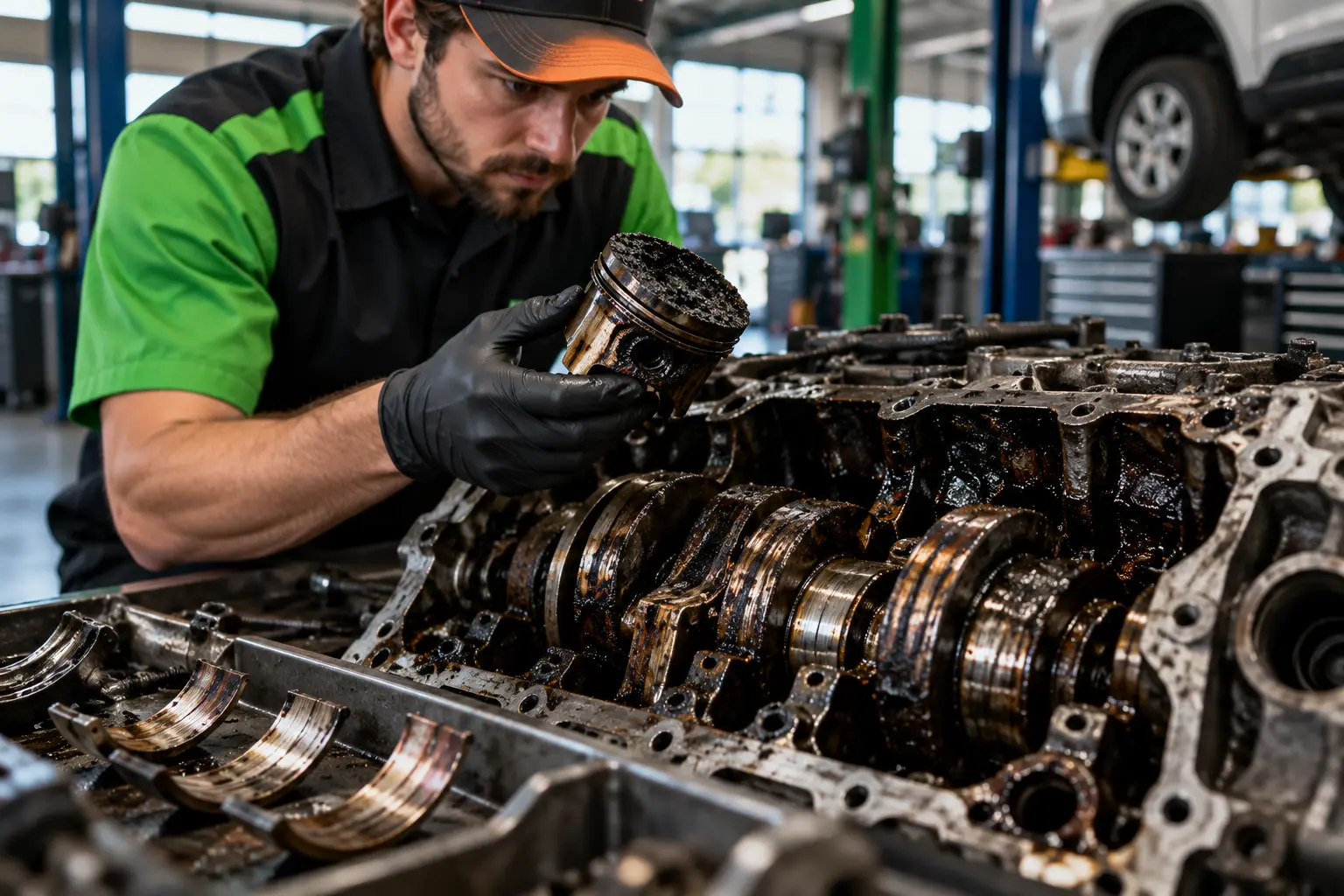
Without enough clean oil to carry heat away, temperatures climb. Bearings wear down and you may hear a deep knocking from the bottom of the engine. A worn timing chain can start to rattle or stretch.
Past this point, the engine can seize. A seized engine usually can’t be saved with a simple repair. If you’re already hearing ticking or knocking, schedule engine diagnostics in York, PA right away. Catching the problem early can save you thousands.
Can Skipping Oil Changes Cause Permanent Engine Damage?
Yes. Sludge, scored cylinder walls, worn bearings and warped components don’t reverse themselves. A fresh oil change stops further damage, but it can’t undo what’s already happened.
That’s why the cheapest repair is always the one you never need. Think of a regular oil change as insurance for the most expensive part of your car.
What Are the Signs Your Oil Change Is Overdue?
Your car usually gives you hints. Watch for these overdue oil change symptoms:
- Oil pressure warning light: If it comes on, pull over safely and shut the engine off. Driving on low oil pressure can destroy an engine in minutes.
- Engine noise: Ticking, tapping or knocking often means parts aren’t getting enough lubrication.
- Burning oil smell: This can point to a leak or oil burning off hot surfaces and either one needs attention.
- Blue-gray exhaust smoke: Oil is likely burning inside the engine.
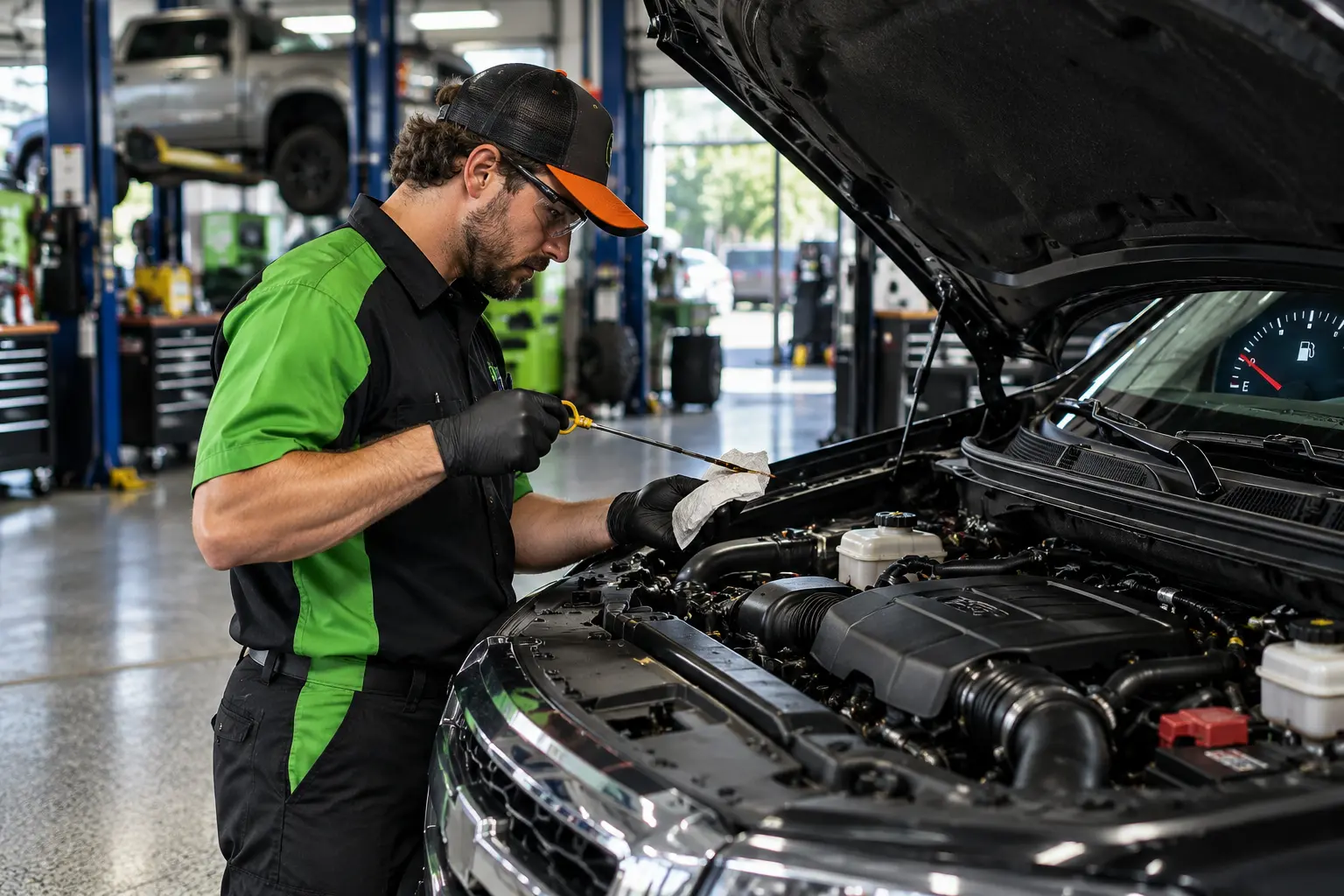
- Gritty or sludgy oil on the dipstick: Wipe it between your fingers. Grit or thick, tar-like texture is a red flag.
- Overheating: Old oil can’t pull heat away from internal parts like it should.
- Poor fuel economy or sluggish acceleration: More friction means your engine works harder.
One quick note: dark oil alone doesn’t always mean it’s bad. Oil darkens fast as it collects soot. Texture, mileage and time since the last change tell you far more.
What Happens If You Don’t Change Your Oil for 10,000 Miles, a Year or Two Years?
The answer depends on your engine, your oil and how you drive. Still, some general patterns hold.
At 10,000 miles: If your manual calls for 5,000–7,500 miles, you’re well past the limit. The oil is probably badly degraded and wear is already happening. Some engines using full synthetic are rated for longer intervals, so check your manual before assuming the worst.
After a year: Oil ages even when the car sits. Moisture and fuel dilution build up, especially with short commutes. Most manuals set a time limit as well as a mileage limit, so a low-mileage driver isn’t automatically safe.
After two years: This is severe neglect. Sludge is a real risk and the engine may already have lasting wear. A professional inspection is the smart next step.
And what about a car that’s gone far longer or never had an oil change at all? Honestly, many engines don’t survive that. The ones that do are usually running on borrowed time.
Will an Oil Change Help After It’s Overdue?
Yes and sooner is better. Fresh oil and a new filter restore lubrication, flush out loose contaminants and slow further wear.
If the oil is badly overdue, though, have a technician look things over first. Heavy sludge sometimes needs extra attention and a rough-running engine may need a proper diagnosis rather than just new oil.
Is It Safe to Drive With Overdue Engine Oil?
For a short trip to the shop, usually yes, as long as the oil level is fine and no warning lights are on. For daily commuting or a road trip, no.
Every extra mile adds wear. If your oil pressure light is on or the engine sounds wrong, don’t drive it. Call us instead and we’ll tell you the safest way to get it in.
Can Old Oil Hurt Your Fuel Economy?
It can. Worn oil adds friction, so your engine burns more fuel to do the same work.
Grade matters too. The U.S. Department of Energy says using the manufacturer’s recommended grade of motor oil can improve gas mileage by 1–2%. That’s a small gain per tank. Over a year of York commuting, it adds up.
How Often Should You Change Your Oil in York, PA?
Forget the old 3,000-mile rule. It no longer fits many modern engines. Your owner’s manual gives the real interval and it often lists a shorter schedule for “severe” driving.
Severe driving covers more than most people realize: short trips, stop-and-go traffic, towing, dusty roads and extreme temperatures. Pennsylvania winters and summer heat can both put you in that category.
If you drive a newer vehicle or want longer-lasting protection, a synthetic oil change in York, PA is worth a conversation. Synthetic oil resists heat and breakdown better than conventional oil. High-mileage formulas can help older engines too. We’ll match the oil to your car and your driving, not upsell you.
Get Your Oil Changed at Accelerate Automotive in West York
Stop guessing about your oil. Our team will check your oil condition, change the oil and filter and look over your other fluids so small problems don’t turn into big ones.
Book an oil change and fluid check in York, PA today. Not sure how overdue you are? Bring the car in anyway. We’ll give you a straight answer, with no pressure.
Accelerate Automotive
1231 W. Locust Street & 1221 W. Heiges Ave, York, PA 17404
Phone: 866-382-8861
Email: service@driveaccelerate.com
Hours: Mon–Fri 9:00 a.m.–5:00 p.m., Sat 10:00 a.m.–2:00 p.m. Evenings by appointment. 24/7 drop-off is available.
We serve York and the surrounding area within roughly 30 miles, with a focus on West York. If your oil change is overdue, call today and get it handled before your engine pays the price.