

Blog
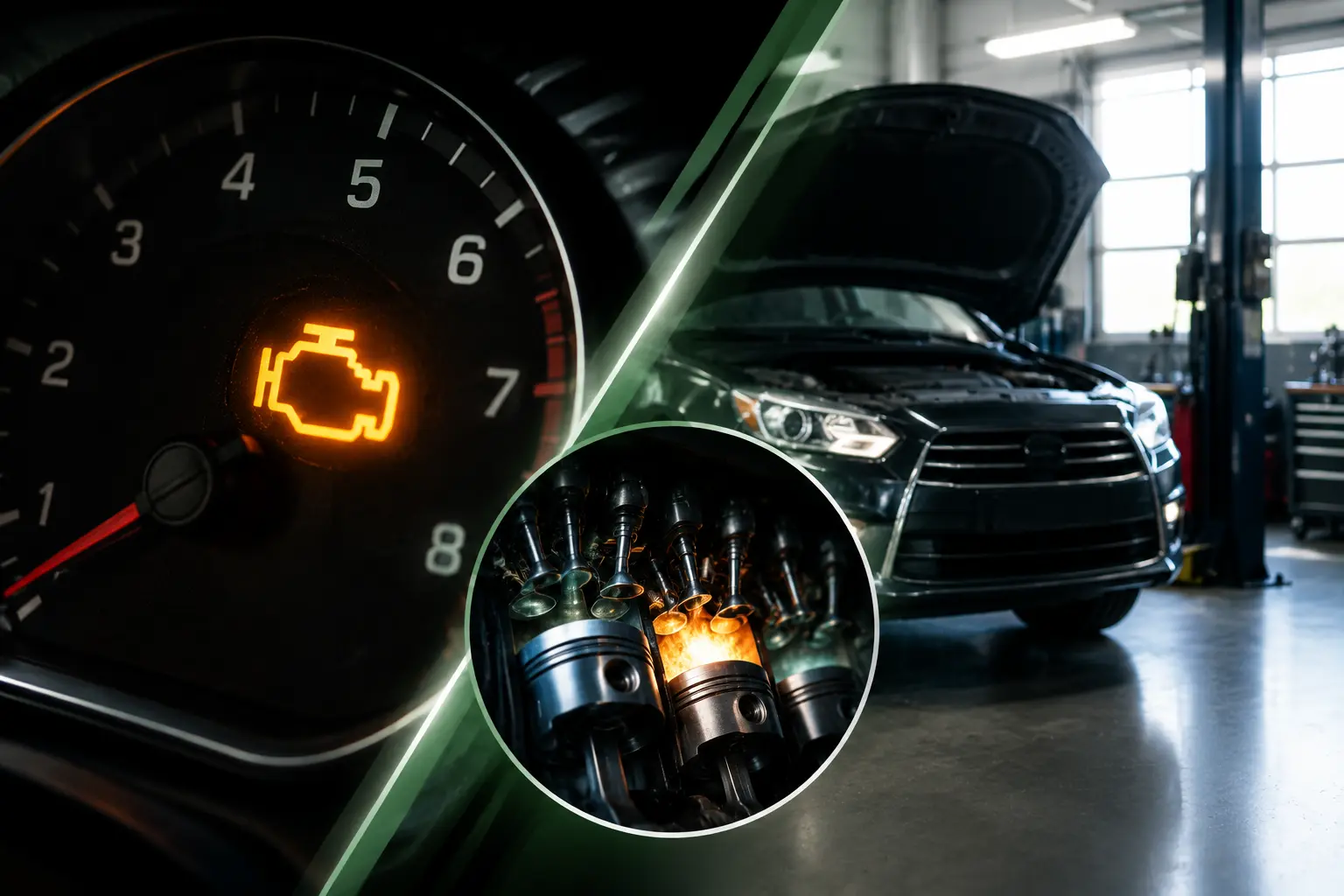
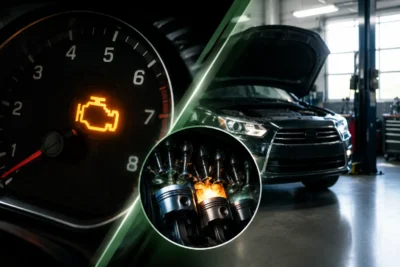
A flashing check engine light is your car telling you something is wrong right now, not next week. If that light is blinking on and off instead of glowing steady, your engine is likely misfiring and driving on it can turn a simple repair into a much bigger bill. This is one of the more urgent warning signs your dashboard can show, especially during the hot summer stretch when engines already run under more strain. Below, we’ll walk through what’s actually happening under the hood, why it matters and what to do about it before the damage spreads.
What Does a Flashing Check Engine Light Mean?
A blinking check engine light almost always points to an active engine misfire. That means one or more cylinders aren’t burning fuel the way they should. Unburned fuel gets pushed into the exhaust system, where the added heat can start to damage your catalytic converter if the misfire continues. A solid, non-flashing light is a “get it checked soon” signal. A flashing one is a “pull over and address it now” signal and the difference matters more than most drivers realize.
Is a Flashing Check Engine Light More Serious Than a Solid Light?
Yes. A steady light often points to smaller issues, like a loose gas cap or a failing oxygen sensor. A flashing light means the misfire is happening as you drive and continued driving adds heat and stress to parts that were never built to handle it. Treating both the same way is one of the more expensive mistakes a driver can make.
Common Causes of a Flashing Check Engine Light
- Worn or fouled spark plugs that can no longer create a clean spark
- A failing ignition coil that cuts out under load
- A clogged or malfunctioning fuel injector starving a cylinder
- Vacuum leaks that throw off the air-fuel mixture
- Low compression from internal engine wear
Each of these can trigger the same warning, which is exactly why a proper check engine light diagnostic matters. Guessing at parts and swapping them one by one tends to cost more in the long run than having a technician pull the actual codes first.
Can You Drive With a Flashing Check Engine Light?
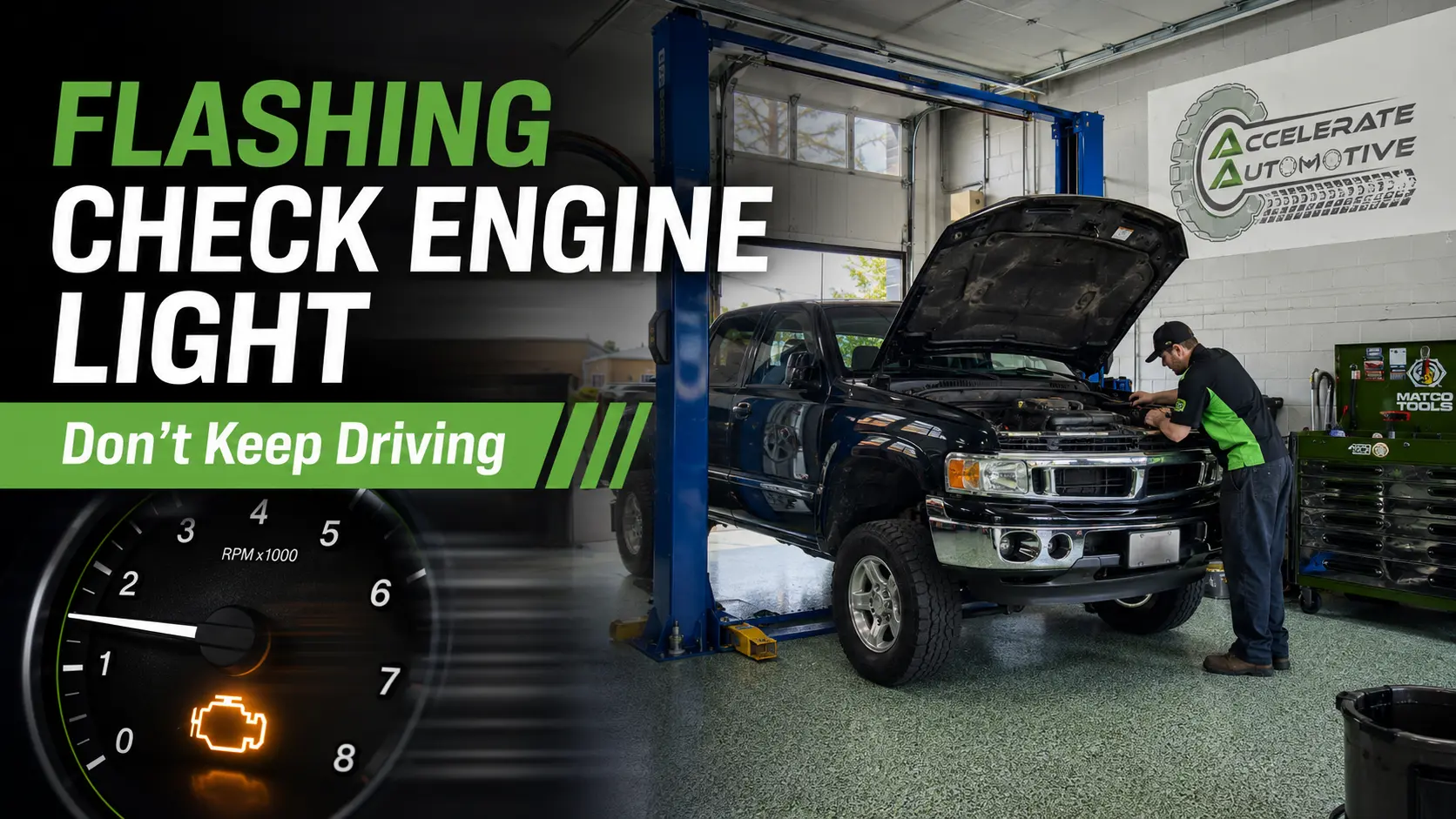
Technically yes but it isn’t recommended and definitely not for long. Continued driving while the engine is misfiring pushes unburned fuel into the exhaust system, where it can gradually damage the catalytic converter. Once that part is damaged internally, you’re no longer looking at a simple spark plug job. If the light starts flashing while you’re driving, the safer move is to ease off the accelerator, avoid hard acceleration and get to a shop as soon as reasonably possible rather than continuing on as normal.
Why Is My Car Shaking While the Check Engine Light Flashes?
Shaking or a rough, uneven idle usually means more than one cylinder is misfiring at once. This is common with widespread spark plug wear, a failing coil pack or a fuel delivery problem affecting multiple cylinders. The vibration you feel is the engine literally running unevenly, cylinder to cylinder. It’s not something that fixes itself and it tends to get worse the longer it’s left alone.
Why Does the Check Engine Light Flash Only When Accelerating?
Under acceleration, your engine demands more fuel and a stronger spark to keep up with the load. If a component is already weak, like an aging ignition coil or a spark plug close to failure, that added demand is often what pushes it over the edge. That’s why some drivers only notice the flashing light on the highway on-ramp or when passing another car and never at a steady cruise.
Does a Flashing Check Engine Light Require Towing?
It depends on how the vehicle is behaving. Shaking, noticeable power loss, overheating, unusual smells or additional warning lights on the dash are all signs that towing is the safer choice rather than continuing to drive. If none of those symptoms are present and you’re close to a shop, driving there gently and directly may be reasonable but this is a judgment call that depends on your specific situation. When in doubt, a quick call to a repair shop or roadside assistance can help you decide and towing is always the more cautious option.
How Is a Flashing Check Engine Light Diagnosed?
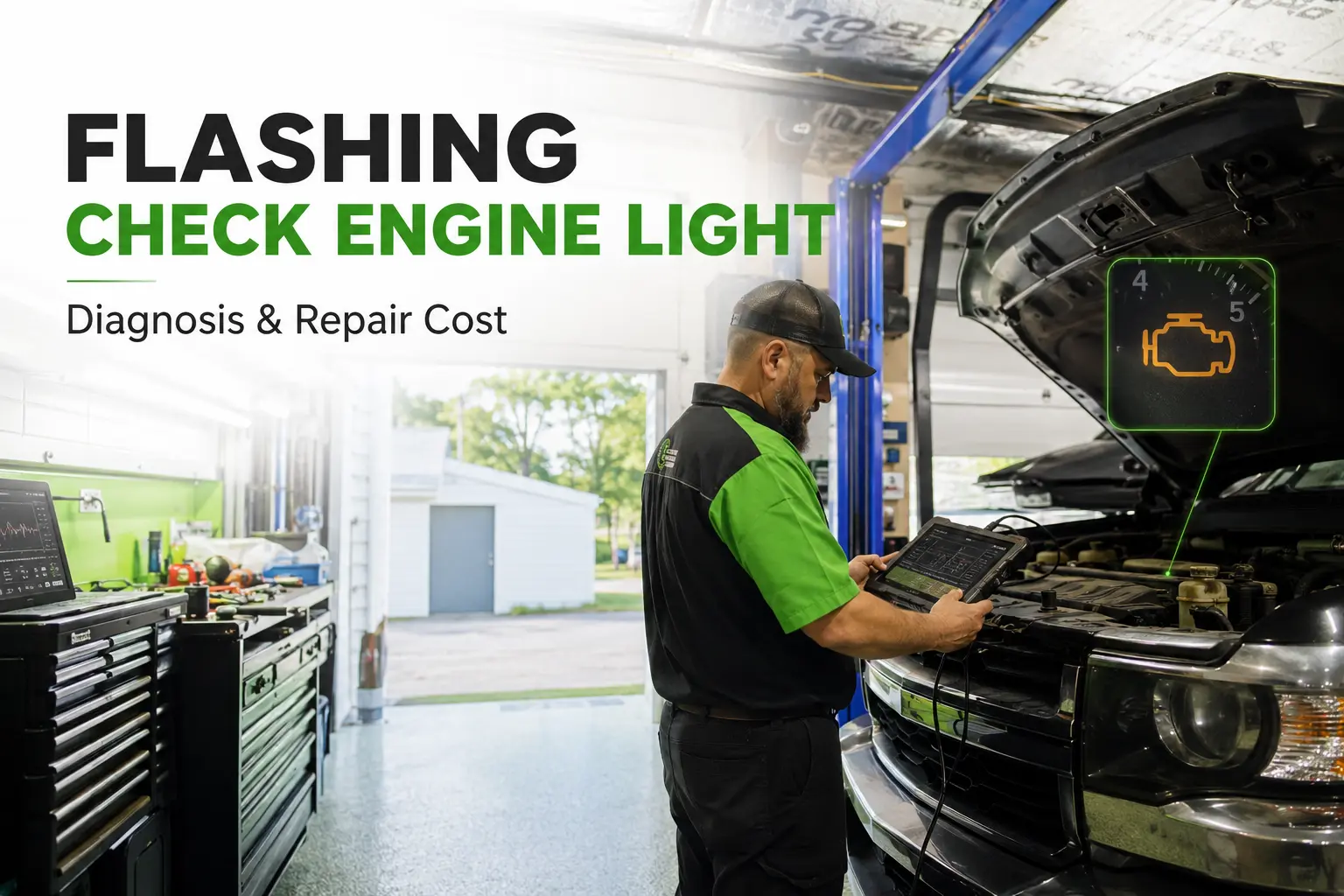
Diagnosis starts with an OBD-II scan to pull the stored trouble codes, which point toward the misfiring cylinder or system. From there, a technician typically inspects spark plugs, tests ignition coils individually, checks fuel pressure and looks for vacuum leaks. Codes give a starting point, not a final answer. Confirming the actual failure before recommending a repair is what separates real diagnostic work from guesswork and it’s how you avoid paying for parts you never needed.
How Much Does Flashing Check Engine Light Repair Cost?
Cost depends entirely on the cause. A spark plug replacement sits on the lower end. An ignition coil swap typically costs more. Fuel injector work and catalytic converter replacement sit at the higher end of the range, which is exactly why catching the problem early matters so much. Letting a misfire go untreated for days or weeks is often what turns a smaller, more affordable repair into a significantly larger one.
Can Bad Spark Plugs or a Faulty Ignition Coil Really Cause This?
Yes. Spark plugs and ignition coils are among the more frequent causes of this kind of misfire, particularly on vehicles that are overdue for routine maintenance. Spark plugs tend to wear down gradually, while ignition coils often fail suddenly, sometimes without much warning at all. Either one can leave a cylinder without a clean, consistent spark and the engine computer picks up on that misfire almost instantly.
Preventing a Flashing Check Engine Light Before It Starts
Most flashing check engine lights don’t come out of nowhere. They’re usually the end result of a smaller issue that got put off for too long. A few habits go a long way toward avoiding an emergency repair down the road:
- Keep up with scheduled spark plug and ignition system service, even when the car seems to be running fine
- Pay attention to a rough idle or hesitation before it turns into a full misfire
- Don’t ignore a solid check engine light, since smaller problems can grow into flashing ones
- Use quality fuel and stay current on fuel filter and injector service
- Have your vehicle inspected before long trips, especially in summer heat that adds extra strain on the engine
York, PA drivers dealing with stop-and-go traffic on Route 30 or longer commutes on I-83 tend to put extra wear on ignition components over time. Regular checkups help catch that wear before it turns into a roadside problem.
What Happens If You Ignore a Flashing Check Engine Light?
Ignoring it rarely ends well. The misfire doesn’t fix itself and unburned fuel keeps flowing into the exhaust system every time you drive. Over time, that added heat can damage the catalytic converter and in some cases it can lead to further engine damage that costs more to fix than the original spark plug or coil issue would have. A repair shop visit isn’t always convenient but a flashing light is one of the few dashboard warnings where waiting tends to cost more than acting.
Get Your Vehicle Checked in York, PA Today
If your check engine light is flashing, don’t wait it out and hope it stops. Bring your vehicle to Accelerate Automotive for thorough, honest engine diagnostics in York, PA. We’ll pull the codes, work to find the real cause and give you a clear answer on what it takes to fix it right. As the California Air Resources Board explains, your OBD-II system is designed to catch emissions and performance problems early, which is exactly why that dashboard light deserves a prompt response instead of a guess. Call our shop today and let’s get your engine running the way it’s supposed to before a smaller problem becomes a much larger one.