

If your car judders or vibrates between 30 and 45 mph, especially right after a gentle shift, you’re likely feeling transmission shudder while driving. It’s not something to brush off. Left alone, a small shudder can turn into a transmission that slips, overheats or fails outright.
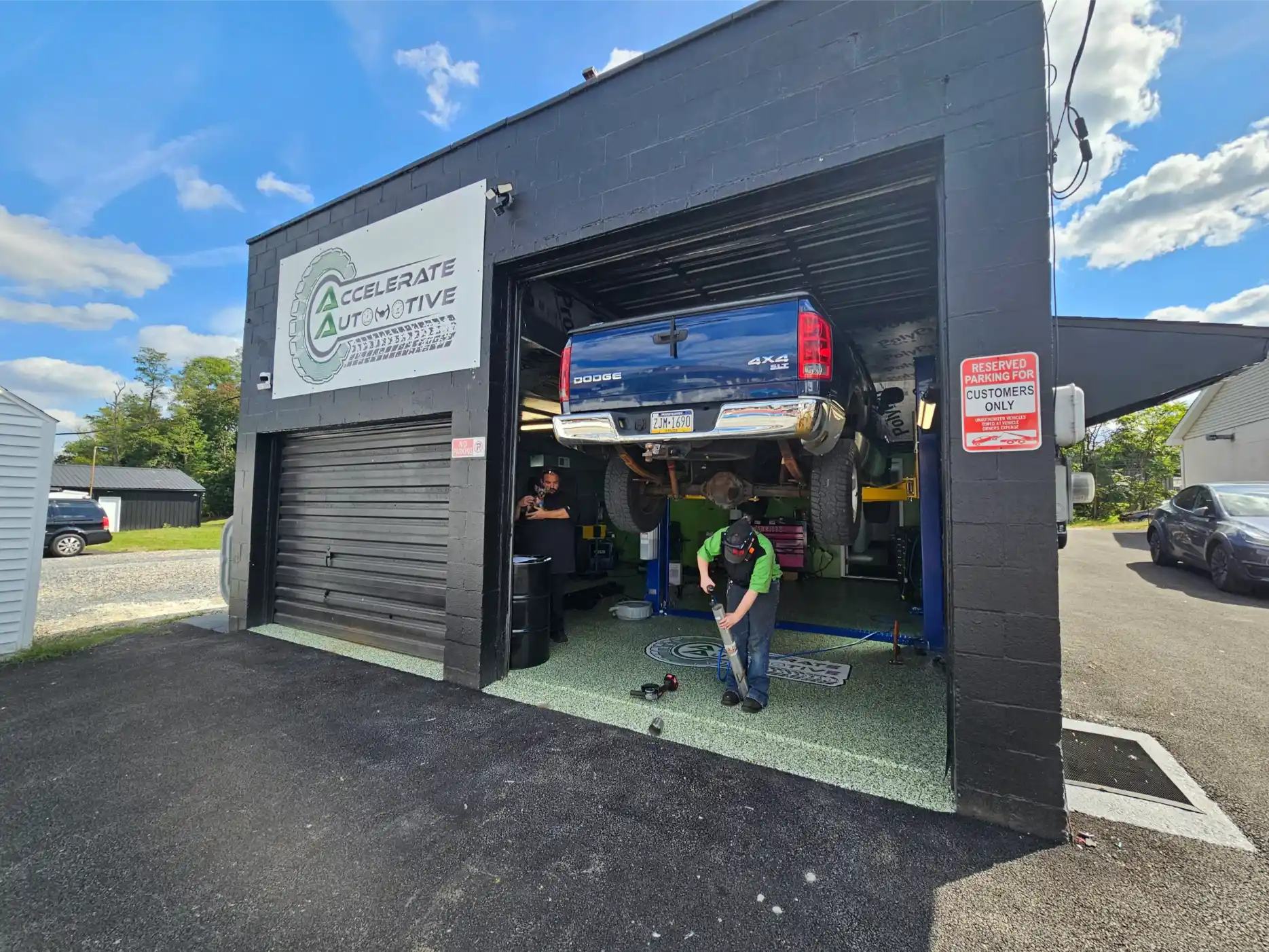
We see this a lot at our shop in York, Pennsylvania, particularly on commuter routes like Route 30 and the interchanges near West York, where stop-and-go traffic puts constant stress on the torque converter. Here’s what’s actually happening under the hood and what it takes to fix it.
What Does Transmission Shudder Feel Like?
Most drivers describe it the same way: a light, rhythmic vibration through the seat or steering wheel, almost like driving over rumble strips on a smooth road. It typically shows up during light acceleration, somewhere between 30 and 45 mph and can appear or disappear depending on throttle position.
It’s easy to confuse with an unbalanced tyre or a warped rotor. The difference is timing. Tyre and brake vibrations are usually constant and speed-related. Transmission shudder tends to come and go with acceleration and gear changes, not just speed.
Common Signs of Transmission Shudder
- A light vibration during light throttle, usually between 30 and 45 mph
- Shuddering that fades once you’re at a steady cruising speed
- A jerky or hesitant feeling during gear changes
- Vibration that’s more noticeable when the engine is warm
What Causes Transmission Shudder?
There are a handful of culprits and most of them come down to fluid condition or wear inside the torque converter.
1. Worn or Degraded Transmission Fluid
Transmission fluid does more than lubricate. It carries friction properties that let the clutch plates and torque converter clutch (TCC) grip smoothly. Once that fluid breaks down from heat and age, it can’t maintain that grip and shudder is often the first symptom you’ll notice.
2. Contaminated Fluid
Water intrusion, the wrong fluid type or metal debris circulating through the system can all throw off how the transmission engages. Contaminated fluid usually looks dark, smells burnt or has a gritty texture when checked on the dipstick.
3. Worn Torque Converter Clutch
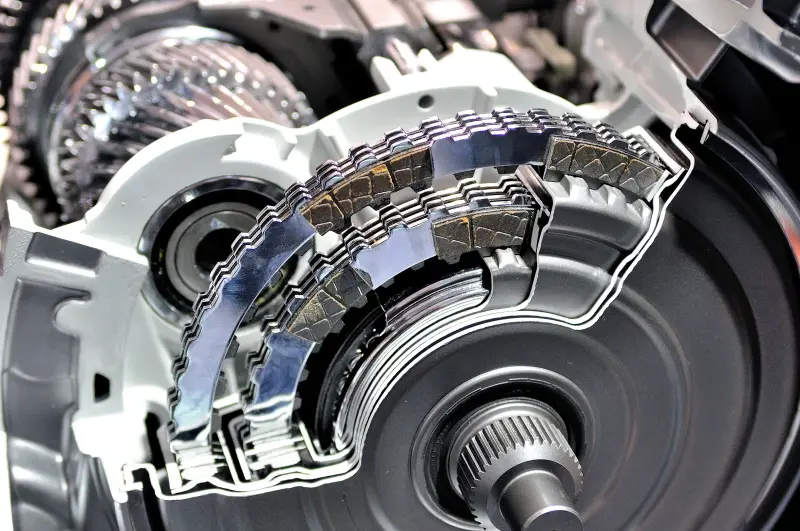
Inside the torque converter sits a clutch that locks the engine to the transmission at cruising speed for better fuel economy. When the friction material on that clutch wears down or glazes over, it slips instead of locking cleanly, which produces the shudder you feel in the cabin.
4. Faulty Solenoids or Valve Body Issues
The valve body directs fluid pressure throughout the transmission using electronic solenoids. If a solenoid sticks or fails, it can disrupt how and when the torque converter clutch engages, causing the same shuddering sensation even when the fluid itself is fine.
Is It Safe to Keep Driving With a Shuddering Transmission?
Technically, yes, for a short while. Practically, no. Every mile you drive with a worn TCC or degraded fluid adds more heat and friction damage inside the transmission. What starts as an inexpensive fluid service can turn into a full transmission replacement if you wait too long.
If you’re noticing shudder alongside slipping, delayed engagement or a burning smell, treat it as urgent and get it looked at within a few days, not a few months.
How Do Mechanics Diagnose Transmission Shudder?
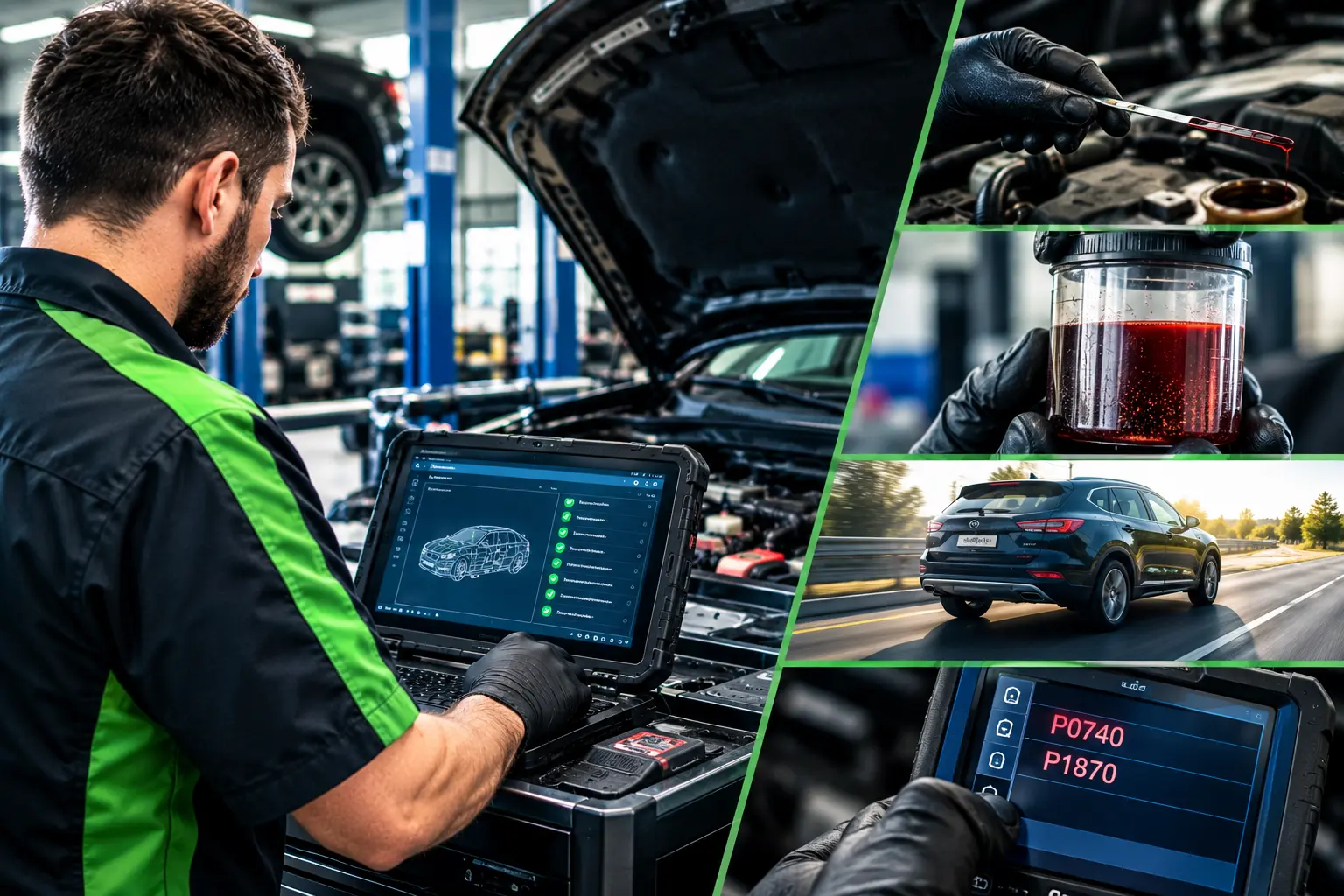
A proper diagnosis starts with checking the fluid condition and level, since that rules out the simplest cause first. From there, a technician will typically:
- Pull diagnostic trouble codes to check for solenoid or TCC-related faults
- Inspect fluid colour, smell and particulate content
- Road test the vehicle at the speed range where shudder occurs
- Check for related codes such as P0740 or P1870, which point directly to torque converter clutch problems
This kind of hands-on automatic transmission repair diagnostics is what separates a guess from an accurate fix and it’s why we always road test before recommending any work.
Fixes for Transmission Shudder, From Simple to Advanced
Not every shudder needs a rebuild. In our experience, most cases resolve at one of these stages.
Transmission Fluid Change
This is always the starting point. A full fluid exchange, using the manufacturer-specified fluid rather than a generic substitute, resolves a surprising number of shudder complaints on its own. Our transmission fluid service in York, PA includes a full drain and refill with OEM-spec fluid.
Valve Body or Solenoid Service
If codes point to a solenoid issue, cleaning or replacing the faulty component can restore proper shift and clutch engagement without touching the internals of the transmission itself.
Torque Converter Repair or Replacement
For more advanced wear, the torque converter clutch material may need rebuilding or the converter replaced entirely. This is a bigger job, but it’s far less costly than letting the problem progress to full transmission failure.
How Much Does It Cost to Fix Transmission Shudder?
Costs vary widely depending on the cause. A fluid service sits at the lower end, while a torque converter replacement or full transmission rebuild costs considerably more. We won’t guess over the phone. Every job starts with a diagnostic so you know exactly what you’re paying for before any work begins.
Why York, PA Drivers Trust Accelerate Automotive
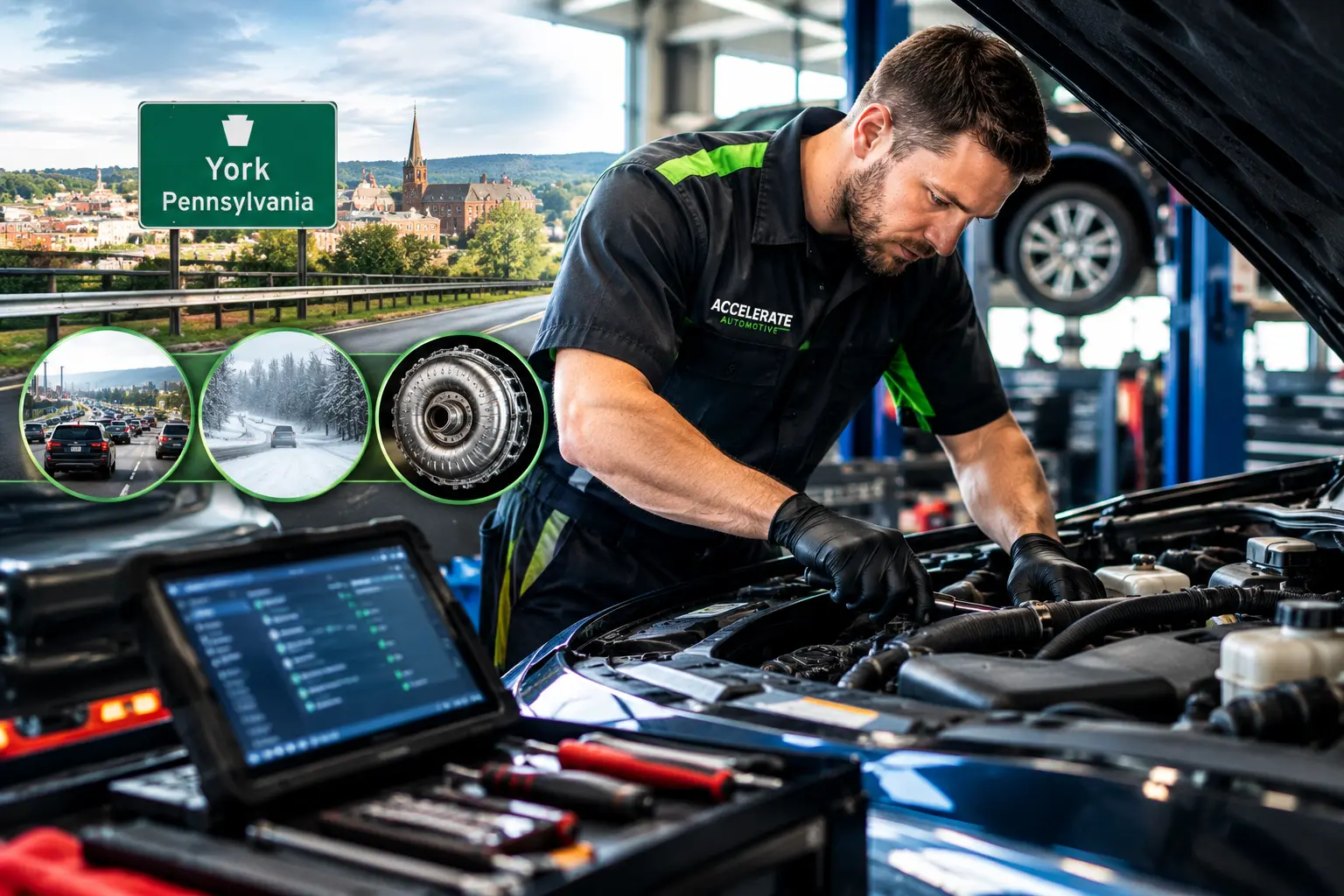
Route 30 traffic, hilly terrain and cold Pennsylvania winters all add extra strain to a transmission’s torque converter. We’ve diagnosed enough shudder complaints from West York commuters to know it’s rarely random. It almost always traces back to fluid condition or converter wear.
If you’re also dealing with related symptoms, our engine and transmission repair team can check both systems in a single visit, since engine misfires are sometimes mistaken for transmission shudder.
According to the National Highway Traffic Safety Administration, ignoring drivetrain vibration symptoms is a common factor in preventable roadside breakdowns, which is exactly why early diagnosis matters.
Book a Transmission Diagnostic in York, PA
If your car is shuddering between 30 and 45 mph, don’t wait for it to get worse. Bring it to Accelerate Automotive at 1231 W. Locust Street or 1221 W. Heiges Ave, York, PA. We offer 24/7 drop-off, Saturday hours and same-day diagnostics for most vehicles.
Call us at 866-382-8861 or book online to get your transmission checked before a small shudder becomes a major repair.