

Blog
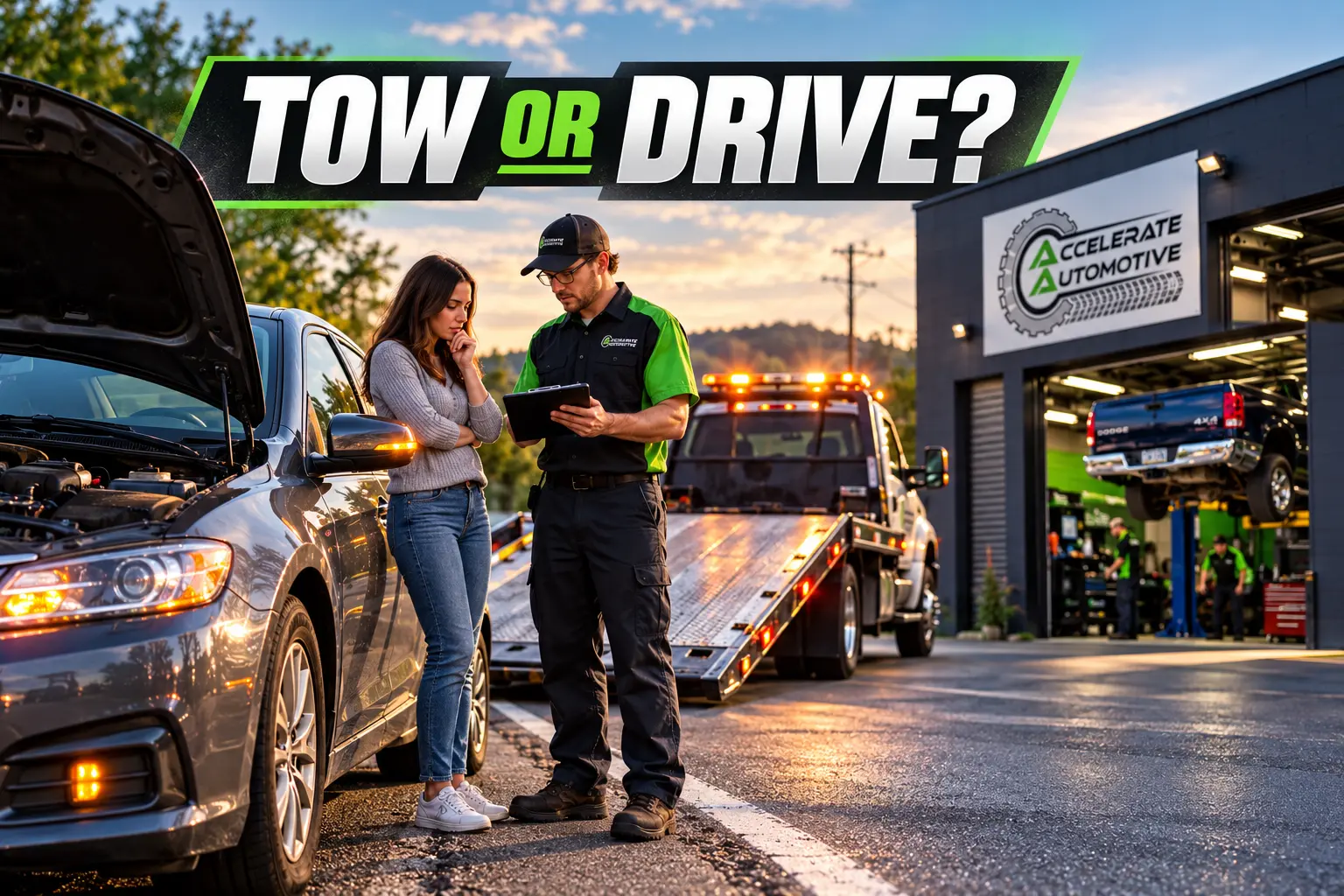
Your dashboard lights up, the engine sounds wrong and home is only a few miles away. Driving feels like the easy call.
It’s also how a small repair becomes a major one. If you’re asking yourself, “should I tow my car or drive it York PA?”, the answer depends on what’s failing. Some problems are safe to carry a few miles. Others can wreck an engine or a transmission in minutes.
Here’s how to tell the difference before you turn the key again.
Should I Tow My Car or Drive It York PA? The Short Answer
Tow it if you’re unsure. That’s the safest rule.
Drive it only when three things are true: the car feels completely normal, no red warning lights are on and the shop is close. If any of those fail, a tow is cheaper than the damage that follows.
A tow hook-up costs far less than a new engine. Most drivers who regret the decision regret driving.
What Happens to Your Car When You Drive It Broken?
Most failures don’t stay the same size. They grow with every mile.
A cracked hose leaks a little coolant, so the engine runs hotter. A hotter engine stresses the head gasket. A failed head gasket lets coolant into places it was never meant to go. One short drive can move you from a hose replacement to a major engine repair.
The same pattern shows up everywhere:
- Low transmission fluid lets internal parts overheat and wear quickly.
- A slipping belt can stop the water pump, which brings overheating.
- Worn brake parts get worse under every stop and you only get one failure at the wrong moment.
- A loose suspension part can change how the car steers without warning.
That’s why mechanics lean toward towing. You’re not paying for the tow itself. You’re protecting the parts that still work.
When Should I Tow My Car to a Mechanic in York, PA?
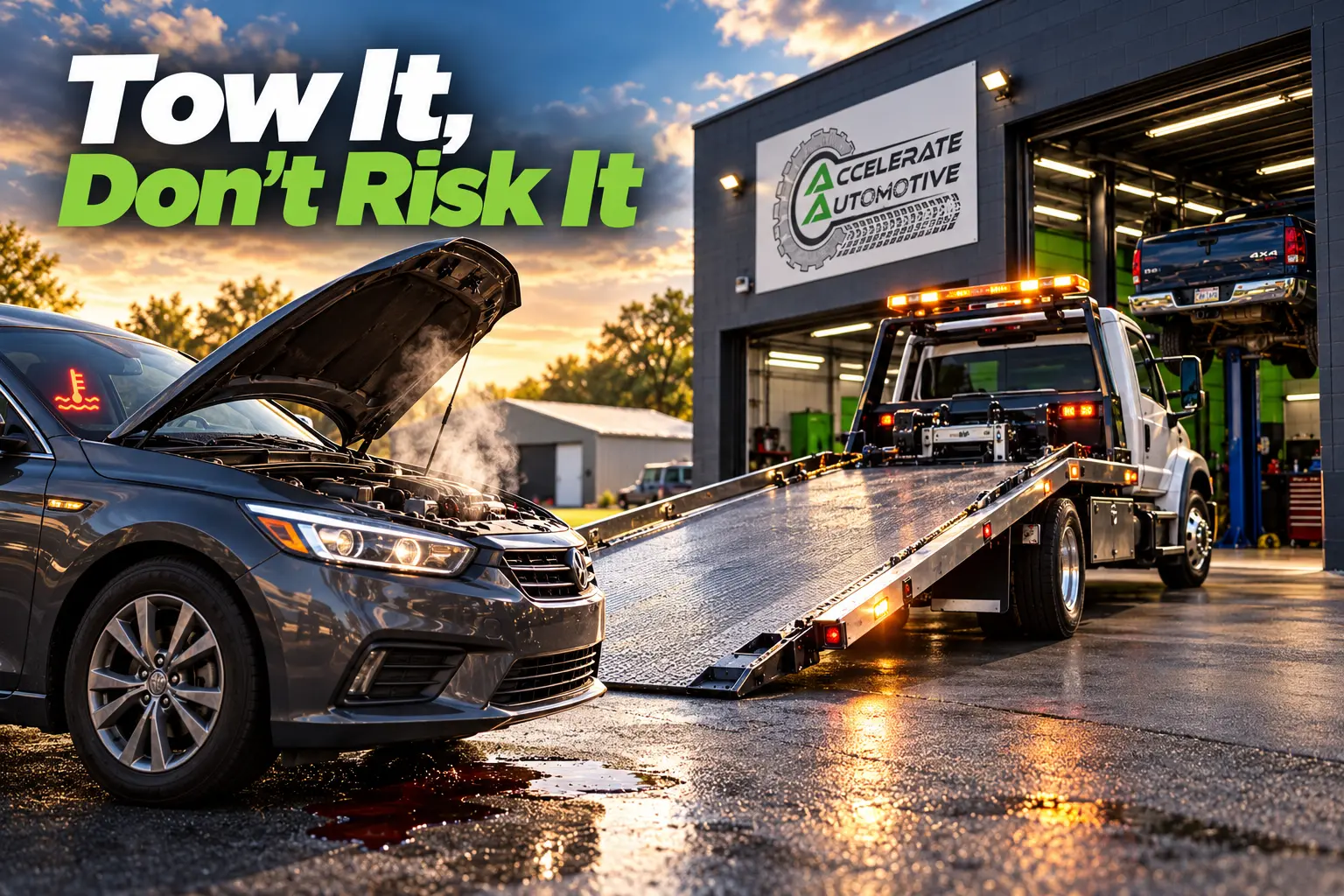
Call a tow truck instead of driving if you notice any of these:
- Overheating. The temperature gauge is climbing or steam is coming from under the hood.
- Brake trouble. The pedal feels soft, sinks to the floor or the car pulls hard to one side when you stop.
- Steering problems. The wheel feels loose, vibrates badly or fights you.
- Oil pressure warning. The red oil light is on. Shut the engine off right away.
- Flashing check engine light. A flashing light usually means an active misfire, which can damage the catalytic converter fast.
- Heavy fluid leaks. You see puddles under the car or you smell burning oil or coolant.
- Grinding, knocking or loud clunking. These sounds usually mean metal is hitting metal.
- Smoke from the engine. Any thick smoke means stop.
- The car won’t stay running or won’t shift. Don’t try to force it.
Of course, a car that won’t start has no choice in the matter. It’s getting a tow either way.
If your car is overheating or knocking, an engine diagnostics service in York, PA should be the first stop, before anyone starts replacing parts.
Brake symptoms deserve the same urgency. Our team handles emergency brake repair in York, PA because a car that can’t stop isn’t a car you should be steering.
When Is It Safe to Drive Your Car to a Repair Shop?
Sometimes driving is fine. Be honest about the symptoms, though.
Driving a short distance is usually reasonable when:
- The check engine light is on but steady and the car drives normally.
- You hear a faint noise that hasn’t changed or grown louder.
- A tire is slightly low but not flat and the shop is nearby.
- A routine warning, such as a maintenance reminder, has appeared.
Even then, keep the trip short. Skip the highway. Avoid hard acceleration, and pull over if anything changes.
Pro tip: if the sound, smell or feel changes during the drive, stop where it’s safe and call for a tow. Don’t push the last mile.
Does Towing Damage Your Car?
It can, but only when it’s done wrong.
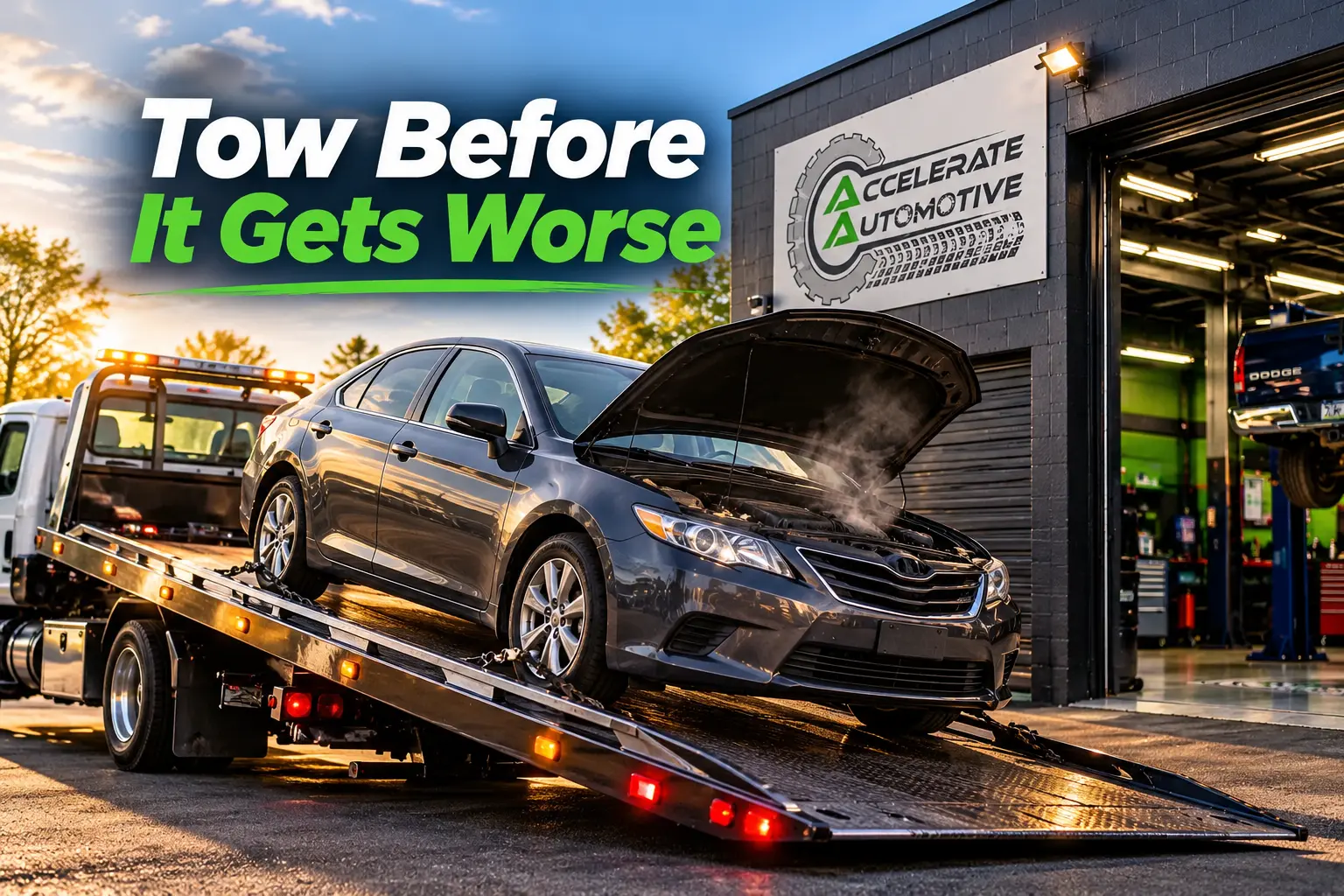
Flatbed towing is the safest option for most vehicles. The whole car rides on the bed, so the wheels, transmission and drivetrain stay still. This matters most for all-wheel-drive and four-wheel-drive vehicles. Dragging them with the wheels on the road can strain the drivetrain.
Low-clearance cars also do better on a flatbed. A wheel-lift tow can scrape a front bumper or splitter.
Before the truck arrives, tell the operator your drive type, whether the car is automatic or manual and whether it will roll. Check your owner’s manual for towing instructions too. The National Highway Traffic Safety Administration also publishes vehicle safety guidance at NHTSA.gov if you’d like to read more about staying safe around a disabled vehicle.
Which Costs More: Towing or Repairing the Damage From Driving?
Driving a failing car nearly always costs more in the end.
A tow is a known, one-time expense. Damage from driving is unpredictable. An overheated engine can warp parts. A transmission driven low on fluid can fail completely. Run bad brakes long enough and you may need rotors and calipers along with pads.
Here’s the part many drivers miss: insurance or roadside coverage may include towing. Check your policy before you pay out of pocket.
Think of it this way. You can often pay for the tow and the diagnosis and still come out ahead of one major repair you caused by driving.
What Should You Do the Moment Your Car Breaks Down?
Stay calm and work through these steps:
- Get to safety. Move off the road, turn on your hazards and park on level ground if you can.
- Shut the engine off. This matters most with overheating, smoke or low oil pressure.
- Note the symptoms. Which lights came on? What did you hear or smell? Mechanics use these details to diagnose faster.
- Stay out of traffic. On roads like I-83 or US-30, wait somewhere safe rather than standing near moving vehicles. PennDOT’s driver safety resources cover what to do when you’re stranded.
- Call for help. Arrange the tow, then call your repair shop so they know what’s coming.
Winter makes every one of these steps harder. A dead battery on a freezing York morning feels different than one in June, so keep a charged phone and a blanket in the car.
Why Go to a Shop That Handles Breakdowns Directly?
A tow only solves half the problem. The car still needs a real diagnosis.
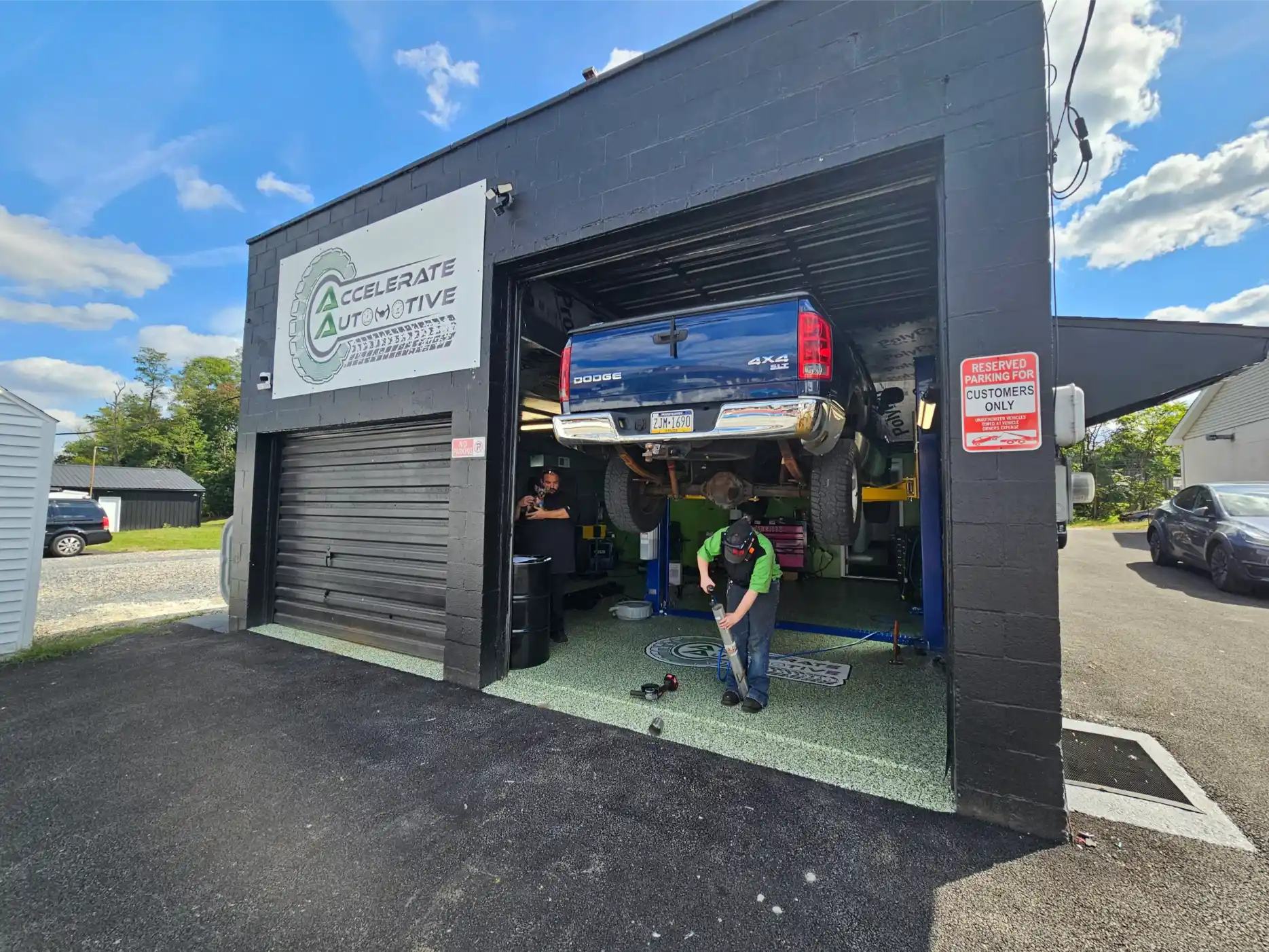
That’s where we come in. Accelerate Automotive works on broken-down vehicles every day, from sedans and SUVs to pickups and work vehicles. We start with a proper inspection so you know what failed, why it failed and what it takes to fix it. No guessing.
If you need quick turnaround, our same-day auto repair in York, PA service is built for drivers who can’t be without a car for long.
You also get clear options. We’ll explain what needs fixing now and what can wait, so you stay in control of the cost.
How Does After-Hours Drop-Off Work?
Breakdowns don’t wait for business hours. Ours is set up around that.
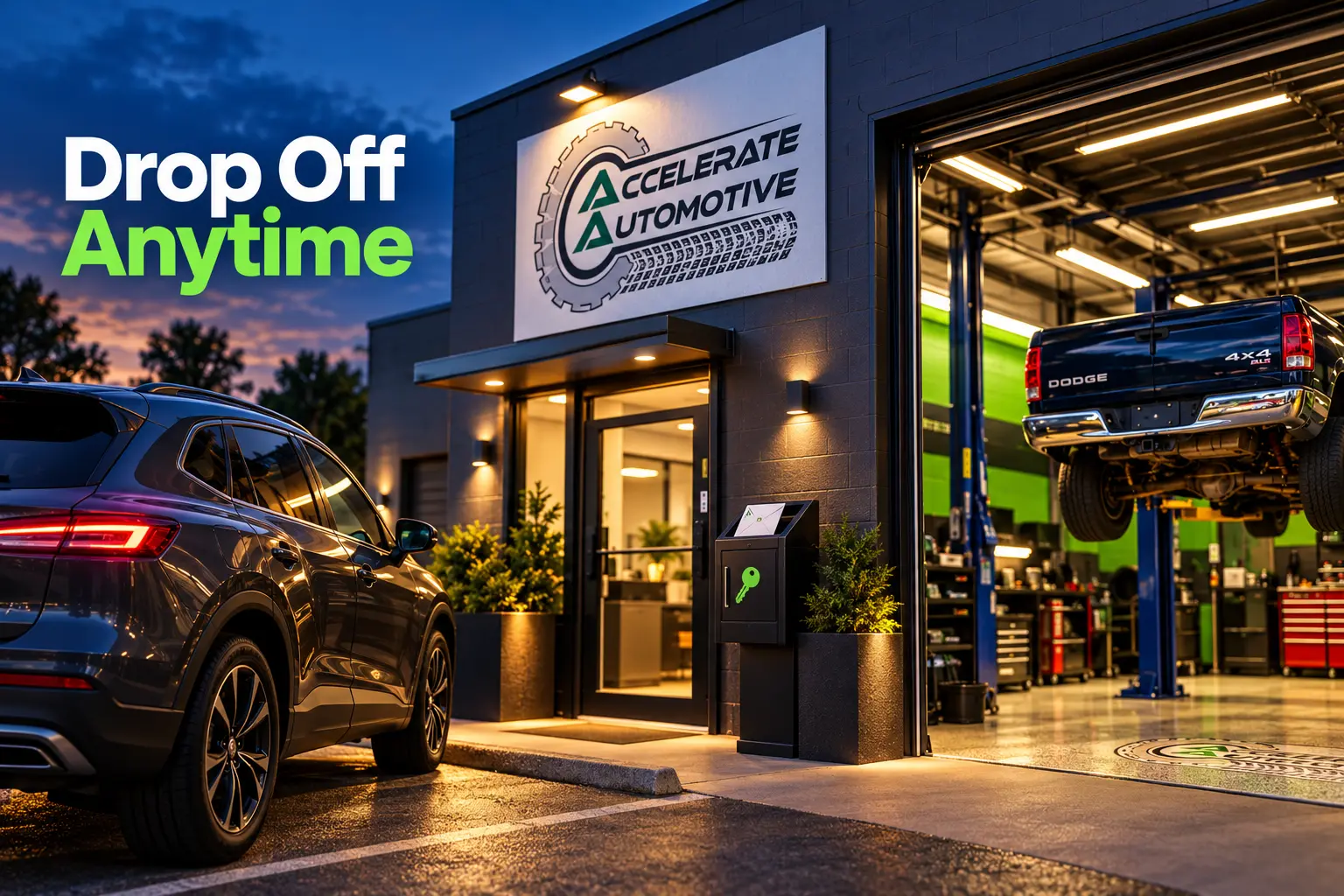
You can use our 24/7 drop-off, so the car is already at the shop when you wake up. Leave your details and a description of the problem and we’ll start from there when we open.
Our regular hours are Monday through Friday, 10 a.m.–6 p.m. and Saturday, 9 a.m.–2 p.m. Evening appointments are available too.
Where Can I Get My Broken Car Fixed in West York?
You can find us at two locations:
- 1231 W. Locust Street, York, PA 17404
- 1221 W. Heiges Ave, York, PA 17404
We serve drivers in West York and across York, along with the surrounding area within roughly a 30-mile radius.