

Blog
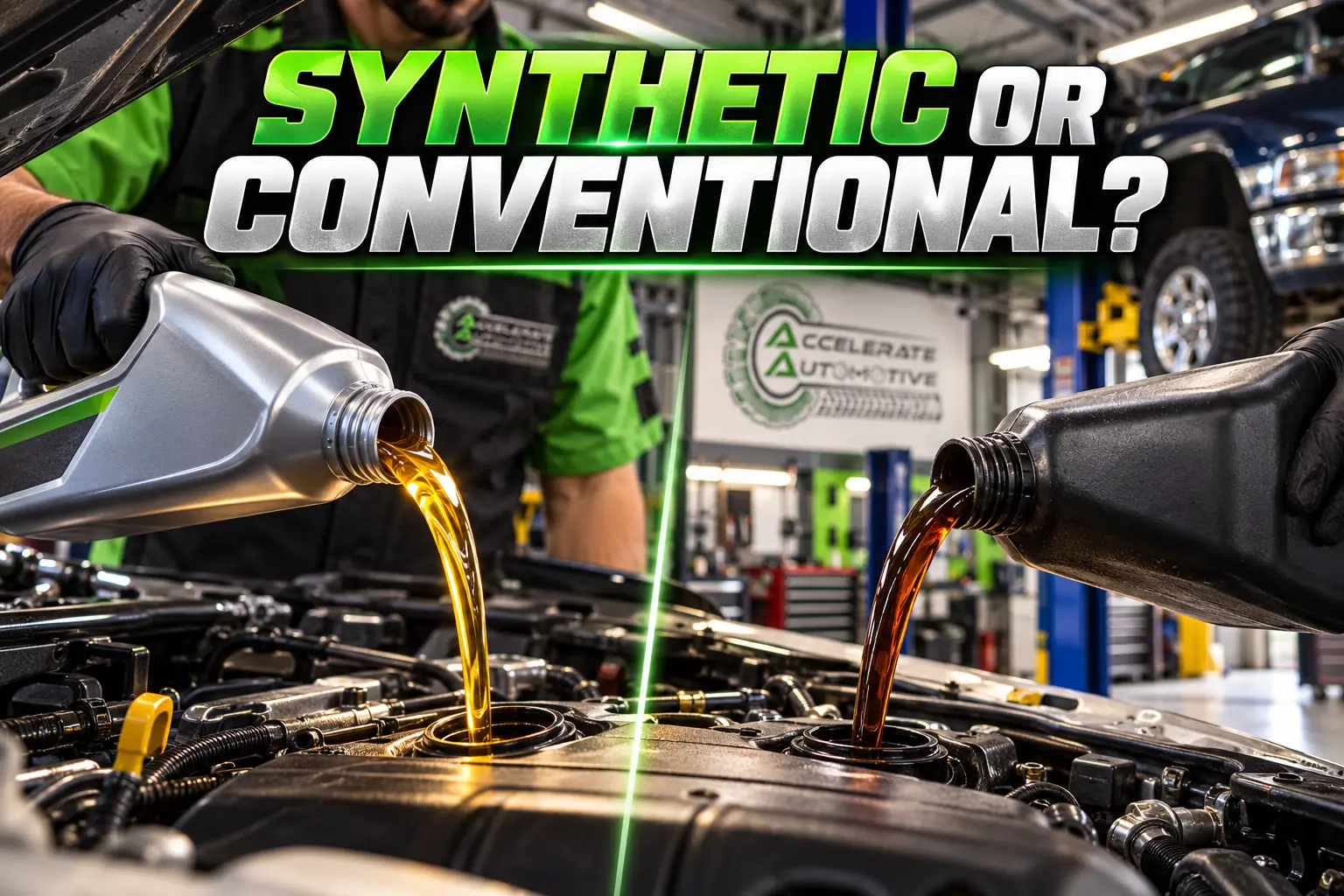
If you’ve ever stared at a service menu wondering whether synthetic oil is worth the extra money, you’re in good company. The synthetic vs conventional oil York PA question comes up for nearly every driver at some point and most people just want a straight answer.
Here it is: the right oil depends on your engine, your driving habits and what your manufacturer specifies. Below, we break down cost, performance and engine impact so you can choose with confidence.
Synthetic vs Conventional Oil York PA: The Short Answer
In the synthetic vs conventional oil York PA choice, synthetic oil costs more per change but protects better under heat, cold and stress. Conventional oil costs less and still works well in many simpler, lower-demand engines.
For most newer vehicles, synthetic is the smarter long-term choice. For older, low-stress engines that the manufacturer approves for conventional oil, it can be a perfectly sound way to save money.
Your owner’s manual settles the synthetic vs conventional oil York PA debate before price does. Whatever it requires is your starting point.
Synthetic vs Conventional Oil York PA: What’s the Real Difference?
Both start as base oil, but they get there differently. Understanding that is the first step in the synthetic vs conventional oil York PA decision.
Conventional oil is refined from crude oil. Its molecules vary in size and shape, which makes it less uniform. That’s fine for basic lubrication. It just breaks down faster when conditions get tough.
Synthetic oil is engineered in a lab to a tighter specification. Its molecules are more consistent and the additive package is typically more robust. The result is oil that holds its thickness better, flows faster on a cold start and resists sludge when temperatures climb.
Think of it like work boots. Both will get you through the day. One is built for the worst of it.
Here’s how the two stack up:
- Cold-start flow: Synthetic moves through the engine faster in freezing weather.
- Heat resistance: Synthetic holds up longer under high operating temperatures.
- Sludge control: Synthetic generally leaves cleaner engine internals.
- Upfront price: Conventional costs less per service.
- Change intervals: Synthetic often allows longer intervals, based on your manufacturer’s guidance.
Synthetic vs Conventional Oil York PA Cost: What Will You Pay?
Let’s talk about money, since cost is usually the deciding factor.
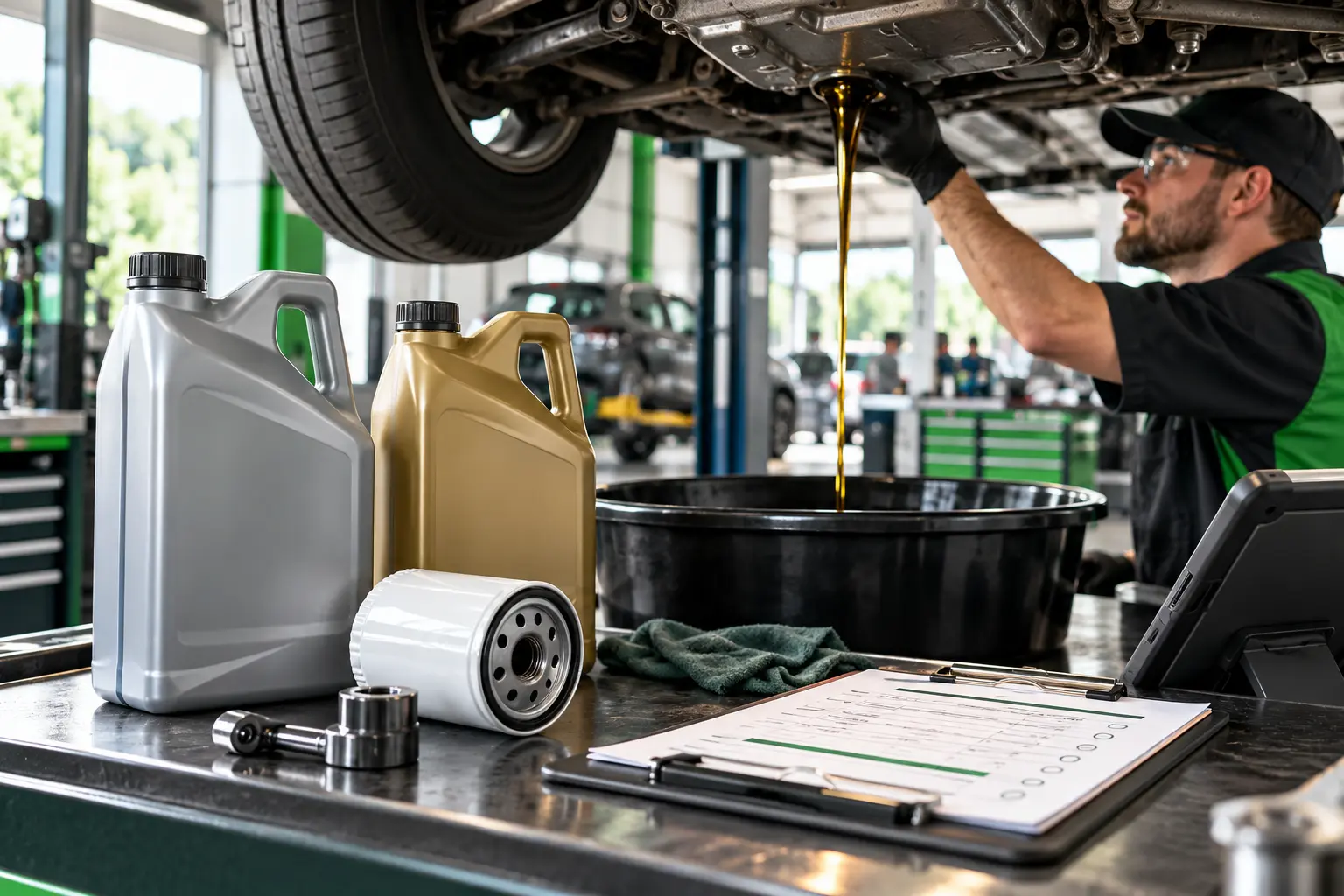
A synthetic oil change cost in York, PA will run higher than a conventional one. Synthetic oil itself is pricier to produce and many vehicles also take larger oil capacities. Exact pricing depends on your vehicle, the oil grade and the filter it needs, so any honest shop will quote you after checking those details.
Here’s what the sticker price doesn’t show. Synthetic often lasts longer between changes. If your manufacturer approves a longer interval, you may make fewer trips to the shop over a year. That narrows the gap more than most people expect.
There’s also the cost you don’t see on the invoice. Engine wear, sludge buildup and heat damage show up later as repair bills. Oil is one of the cheapest forms of insurance your car has.
Want real numbers for your vehicle? Our synthetic oil change in York, PA page lays out what’s included and we’ll give you a clear quote before any work begins.
Which Oil Performs Better in York’s Weather and Driving Conditions?
Conditions matter in the synthetic vs conventional oil York PA decision, because local drivers put their cars through a real mix. Cold Pennsylvania winters, humid summers, stop-and-go traffic on Route 30 and around West York and plenty of short trips that never let the engine fully warm up.
Each of those conditions is hard on oil.
Cold mornings thicken conventional oil more than synthetic, so parts spend extra seconds under-lubricated at startup. Most engine wear happens right then. Synthetic gets where it needs to go faster.
Summer heat and heavy traffic push oil temperatures up. Conventional oil can thin out and oxidize sooner. Synthetic resists that breakdown better, which keeps protection steady.
Short trips matter too. When an engine never reaches full operating temperature, moisture and fuel residue can build up in the oil. Synthetic handles that contamination more gracefully, though it still needs changing on schedule.
Does Synthetic Oil Actually Extend Engine Life?
It can help, but it isn’t magic. That’s the honest takeaway on engine impact in any synthetic vs conventional oil York PA comparison.
Clean, stable oil reduces friction and wear. Over tens of thousands of miles, that adds up to healthier bearings, cleaner piston rings and fewer deposits. Turbocharged and direct-injection engines benefit the most. They run hotter and put more stress on oil, which is why many manufacturers specify synthetic for them outright.
What synthetic can’t do is rescue a neglected engine. Skipped changes, low oil levels and ignored leaks will damage any engine, regardless of what’s in the crankcase.
The best results come from pairing the right oil with consistent service. If you’re unsure where you stand, our guide on how often to change oil in York, PA walks through intervals for local driving conditions.

When Is Conventional Oil Still a Smart Choice?
Conventional oil still has a place in the synthetic vs conventional oil York PA conversation. Don’t let anyone tell you otherwise.
It makes sense when:
- Your owner’s manual approves conventional oil.
- Your vehicle is older with a simple, low-stress engine.
- You drive modest miles and change oil on a tight schedule.
- Budget is a real concern and you’d rather change oil more often than skip a service.
The key is consistency. Fresh conventional oil beats overdue synthetic every time. If you go this route, stay on schedule.
What About Synthetic Blend and High Mileage Oil?
You’re not stuck choosing between two extremes. Blends and high mileage formulas add more options to the synthetic vs conventional oil York PA decision.
Synthetic blend mixes synthetic and conventional base oils. It offers better protection than conventional at a lower price than full synthetic. It’s a reasonable middle ground for drivers who want an upgrade without the full cost.
High mileage oil is formulated for engines with around 75,000 miles or more. It includes additives that condition seals, which can help reduce small leaks and oil burn in aging engines. You can get high mileage formulas in conventional, blend and full synthetic versions.
Owners of older cars, trucks and SUVs often land here. A high mileage full synthetic gives worn engines extra protection without a guessing game.
Can You Switch From Conventional to Synthetic Oil?
Yes. This one’s a stubborn myth.
You can safely move from conventional to synthetic at any mileage and you can switch back if needed. Synthetic won’t cause leaks in a healthy engine. If an older engine starts leaking after the switch, the seals were likely already worn and the oil simply revealed it.
If your vehicle has high mileage and a history of conventional oil, a quick inspection before switching is smart. We’d rather spot a weak seal early than have you find it on your driveway.

How Do You Choose the Right Oil? A Quick Checklist
To settle synthetic vs conventional oil York PA for your own car, run through these five questions:
- What does the owner’s manual specify? If it requires synthetic, that settles it.
- Is your engine turbocharged or direct-injection? Synthetic is usually the right call.
- How do you drive? Heavy traffic, towing, short trips and extreme temperatures favor synthetic.
- How many miles are on the vehicle? Above 75,000, consider high mileage oil.
- What’s your budget over the whole year, not just per visit?
Using the manufacturer’s recommended grade matters for more than protection. According to FuelEconomy.gov, running the recommended grade of motor oil can improve gas mileage by 1%–2%. Also look for the certification marks from the American Petroleum Institute on the bottle, which show the oil meets industry performance standards.