

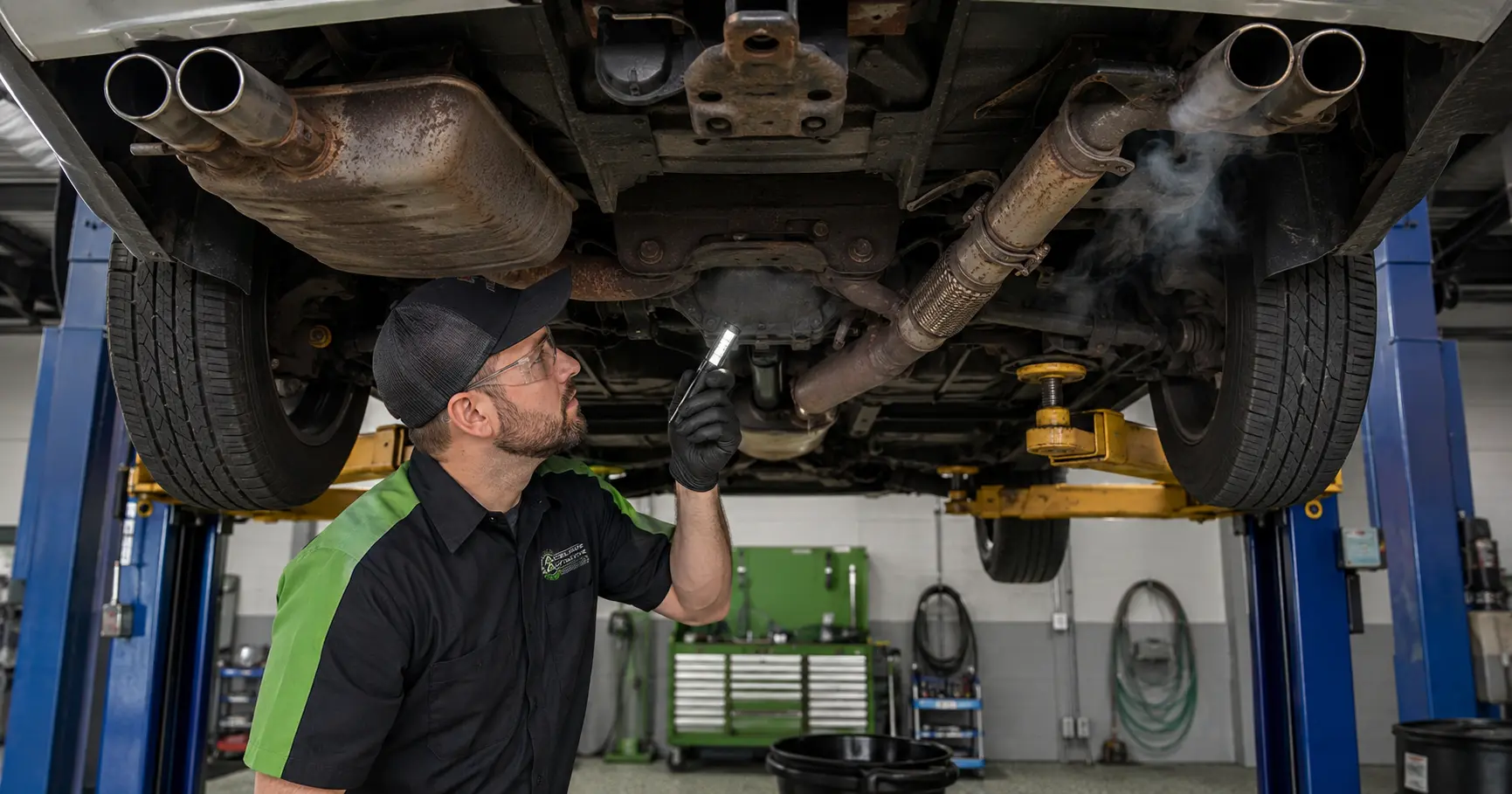
If your car has gotten noticeably louder over the past few weeks, you’re not imagining it. Loud exhaust noise in York, PA is one of the most common complaints we hear at the shop and it almost always comes down to one of two things: a failing muffler or an exhaust leak. They sound similar from the driver’s seat, but they’re not the same problem and they don’t cost the same to fix.
Here’s the thing. Ignoring either one rarely makes it better. A small leak turns into a bigger one. A rusted-out muffler eventually falls off entirely, sometimes on Route 30 at the worst possible moment. Let’s walk through how to tell them apart and what it actually takes to quiet things back down.
What Causes Loud Exhaust Noise in York, PA?
Most loud exhaust complaints trace back to corrosion. York winters bring road salt and road salt eats through exhaust components from the outside in. Add in the freeze-thaw cycles we get every year and you’ve got a recipe for cracked welds, rusted-through pipes and mufflers that give out years before they should.
The other common culprit is a gasket or seal that’s worked itself loose, usually near the manifold or somewhere along a joint in the pipe. These tend to show up as a noise that changes with engine speed rather than a steady roar.
Muffler Problems
A muffler is built to cancel out sound waves using a series of internal chambers and baffles. When those chambers rust out or the baffles come apart, the muffler can’t do its job anymore. You’ll usually notice:
- A deep, steady rumble that gets louder under acceleration
- A rattling sound coming from underneath the car, especially over bumps
- Visible rust or flaking on the muffler body itself
- A noise that’s present even at idle and just gets worse from there
If you’re hearing this, take a look at our page on muffler replacement in West York, PA for what the repair typically involves.
Exhaust Leaks
An exhaust leak happens when gas escapes somewhere it shouldn’t, before it ever reaches the muffler. This could be a cracked pipe, a blown gasket or a joint that’s separated. Signs typically include:
- A ticking or tapping sound at startup that may quiet down as the engine warms
- A hissing or popping noise, particularly right after you start the car
- A sharper, more metallic tone than the deep rumble of a bad muffler
- A faint exhaust smell inside the cabin, which is worth taking seriously
An exhaust smell in the cabin isn’t just annoying. It can mean exhaust gas, including carbon monoxide, is finding its way into the car. If you notice that smell, don’t wait on it. Get it looked at right away.
Is There a Noise Ordinance in York, PA?
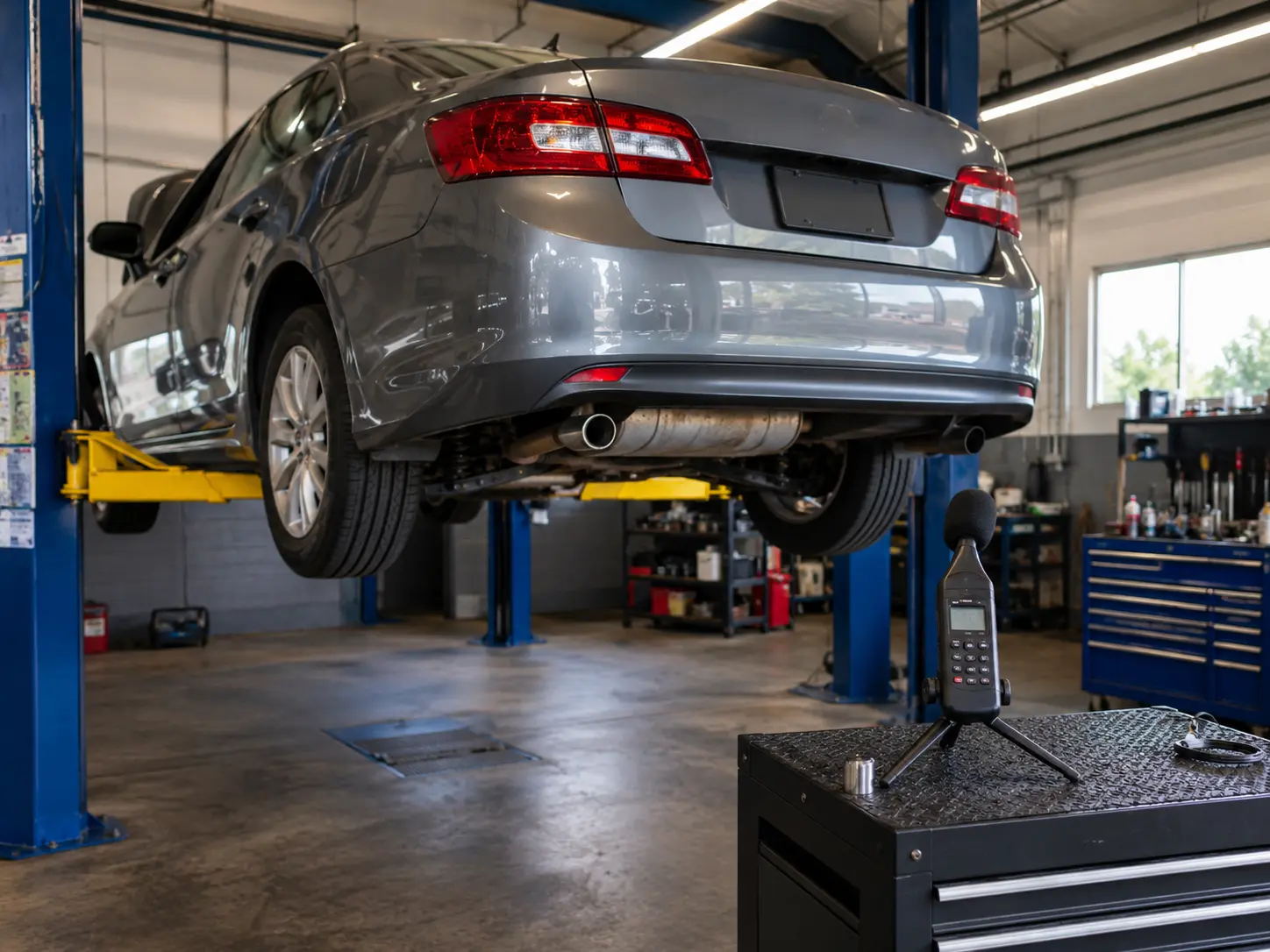
Yes. Like most Pennsylvania municipalities, York enforces vehicle noise limits and law enforcement can and does cite vehicles with excessively loud or modified exhausts. Beyond local enforcement, the issue has gotten enough attention that state lawmakers are getting involved. Pennsylvania Representative Jared Solomon has introduced the SLEEP Act, aimed at banning aftermarket exhausts audible from 200 feet away, with penalties that could include fines and jail time for repeat violations, according to a recent report from Local21 News.
Whether or not that bill becomes law, it’s a good reminder that a loud exhaust isn’t just a mechanical issue. It can turn into a citation, especially if it’s the kind of noise that carries down the block.
How Loud Can an Exhaust Legally Be?
Pennsylvania law generally requires vehicles to have a muffler in good working order that prevents excessive or unusual noise. There’s no single number posted on a sign, but officers use their judgment along with decibel testing equipment when a vehicle sounds abnormal for its type. A stock exhaust system in good condition will almost never draw attention. A cracked pipe, a missing muffler or an aftermarket setup with the resonator removed absolutely will.
Why Is My Car’s Exhaust Suddenly Louder Than Usual?
A sudden change in exhaust noise almost always points to something breaking rather than wearing down gradually. Hitting a pothole hard, driving over a speed bump too fast or even normal rust finally giving way can cause a pipe to crack or a hanger to snap, dropping part of the exhaust system closer to the road. If the noise appeared overnight, it’s worth having it looked at within a few days rather than a few weeks.
Muffler Repair vs. Exhaust Leak Repair: What’s the Cost Difference?
This is usually the first question people ask once we’ve told them what’s wrong, so let’s be straightforward about it. Exhaust leaks are often the cheaper fix if caught early. A small crack or a bad gasket can sometimes be welded or resealed for a fraction of what a full muffler replacement runs. Once a muffler itself has rusted through, though, patching it rarely holds for long. At that point, replacement is the more reliable option, even if it costs more upfront.
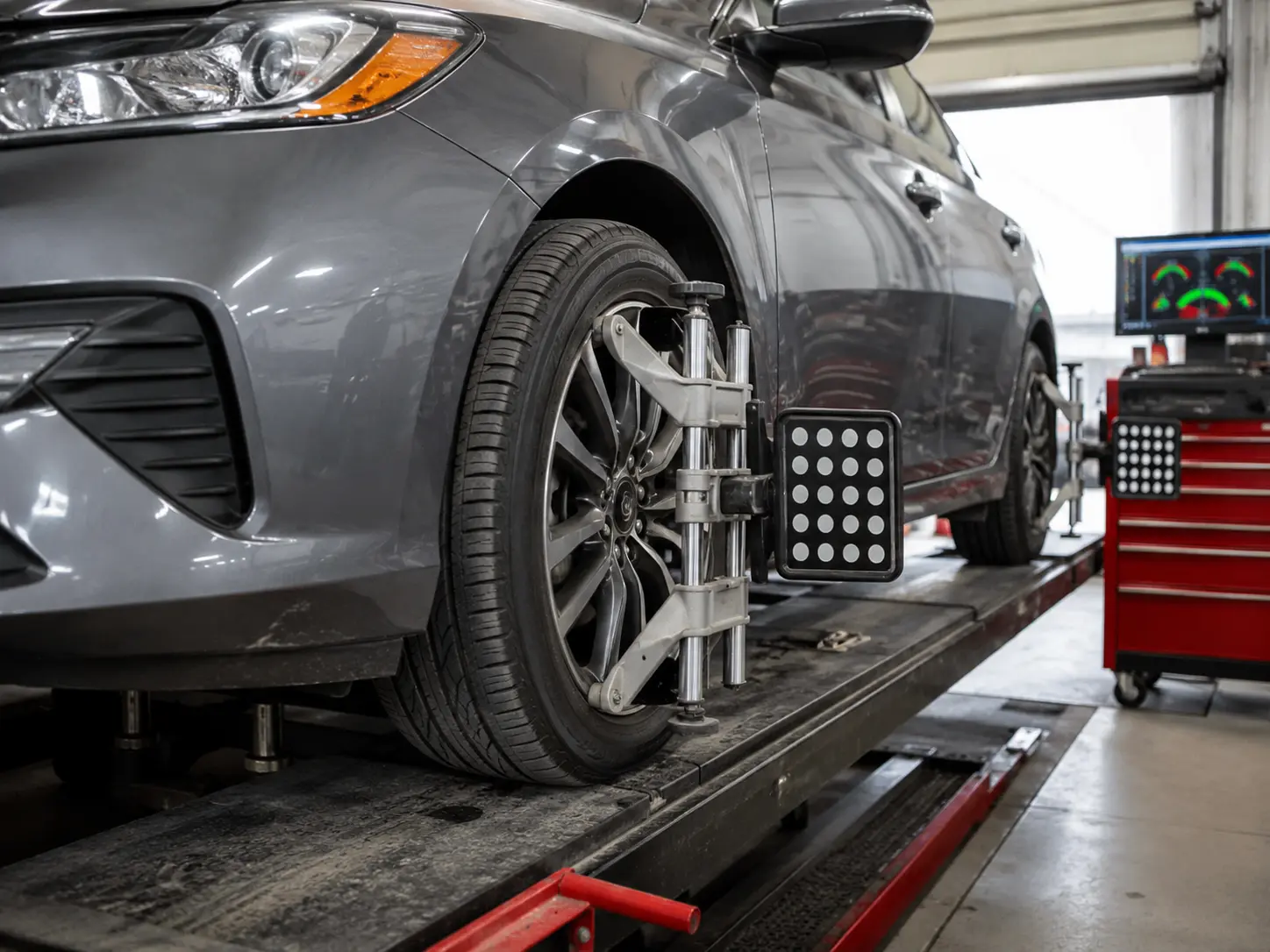
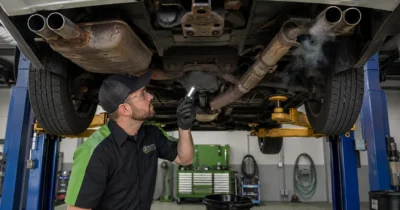
The only way to know for sure which one you’re dealing with and what it’ll actually cost, is to get the car up on a lift. We check the full length of the system, not just the part making the most noise, because a leak upstream can sometimes get blamed on a muffler that’s actually fine.
How We Diagnose Loud Exhaust Noise
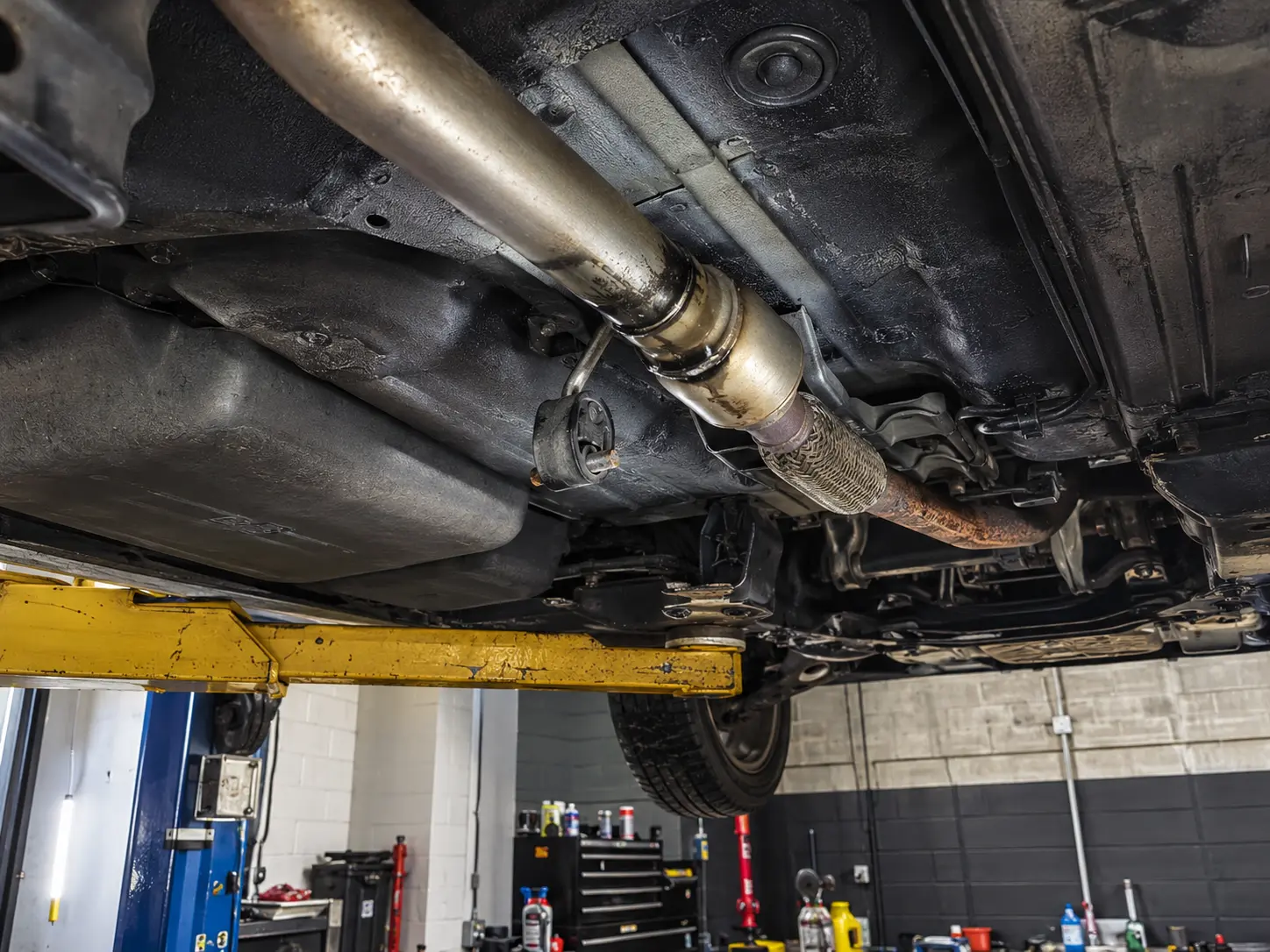
You’d be surprised how often a customer comes in convinced they need a new muffler and it turns out to be a twenty-dollar hanger that’s snapped and let the pipe sag against the frame. That’s why we don’t guess based on sound alone.
Once your car is up on the lift, we run through the exhaust system from the manifold back to the tailpipe, checking each joint, weld and hanger along the way. We’re listening and looking for:
- Soot trails or dark staining around joints, which usually point straight to a leak
- Flex pipe sections that have started to separate at the seams
- Rust patterns that tell us whether a section is a few months from failing or already there
- Loose or missing hangers that let the system vibrate and bang against the undercarriage
We also pay attention to whether the noise changes with RPM, since that tells us a lot about where along the system the problem sits. A noise that gets sharper as you rev the engine in park is a different animal than one that only shows up while driving over rough pavement.
Can You Drive with a Loud Exhaust?
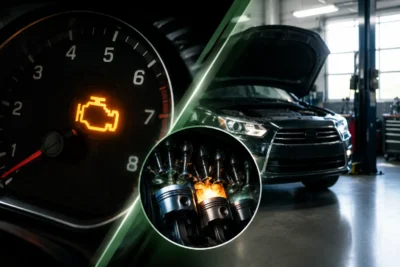
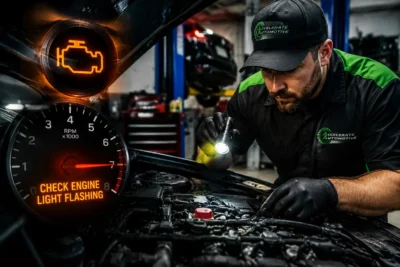
Technically, yes, for a short while. Practically, we’d steer you away from it. Beyond the risk of a citation under York’s noise ordinance, a compromised exhaust system can let carbon monoxide seep toward the cabin, especially in vehicles with rust holes near the floor pan or trunk. It also puts more strain on your engine, since a damaged exhaust can throw off backpressure and, in some cases, trigger a check engine light. If you’re weighing whether to wait until your next scheduled service, err on the side of getting it checked sooner.
A Few Ways to Slow Down Exhaust Wear
You can’t stop rust entirely, not with the amount of road salt used around York and West York each winter, but a few habits help stretch the life of your exhaust system:
- Rinse the underside of your car occasionally during winter, especially after a salted road
- Avoid taking speed bumps and steep driveway angles too fast, since impact damage is a common trigger for sudden leaks
- Get your exhaust looked at during routine oil changes rather than waiting for a noise to show up
- Address small rust spots or minor rattles early, before they turn into a full section replacement
None of this guarantees you’ll never hear a rattle or a rumble again, but it does mean fewer surprises and, usually, a smaller repair bill when something does need attention.
Don’t Let a Small Exhaust Problem Get Louder
Loud exhaust noise in York, PA doesn’t fix itself and it rarely stays a minor issue for long. What starts as a faint tick at startup can turn into a full rumble within a few months and what starts as a rumble can end with a muffler dragging on the pavement. Neither one is a fun surprise.
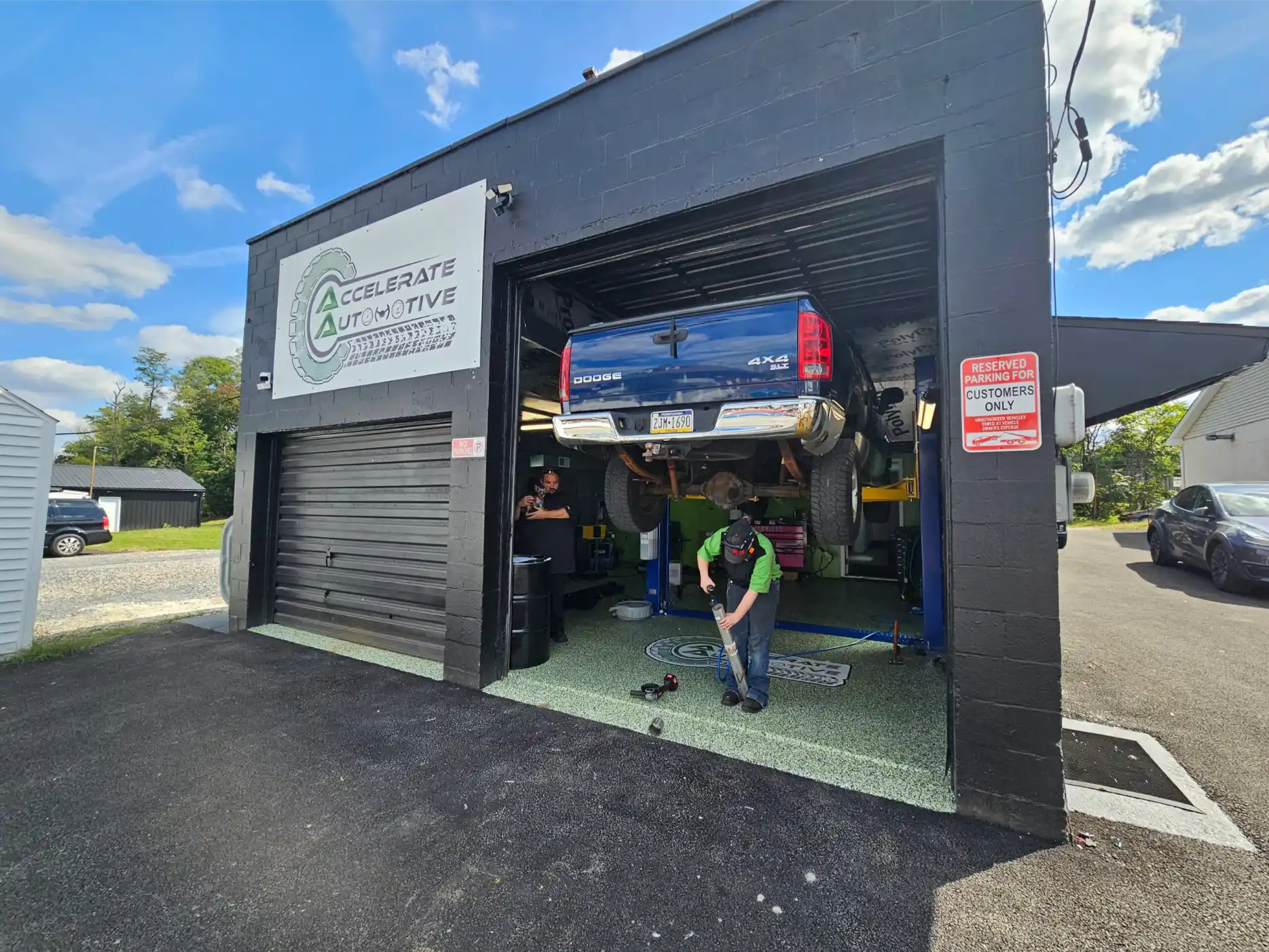
Bring it by Accelerate Automotive and we’ll get it on the lift, find out exactly what’s causing the noise and give you a straight answer on what it’ll take to fix it. Check out our full exhaust repair services in York, PA or our exhaust pipe repair page for more detail and if the noise has been building for a while, it might also be worth having your catalytic converter checked at the same time, since it sits right in the same system.
Contact Accelerate Automotive today to schedule your exhaust inspection, before that noise turns into a bigger repair bill.