

Blog
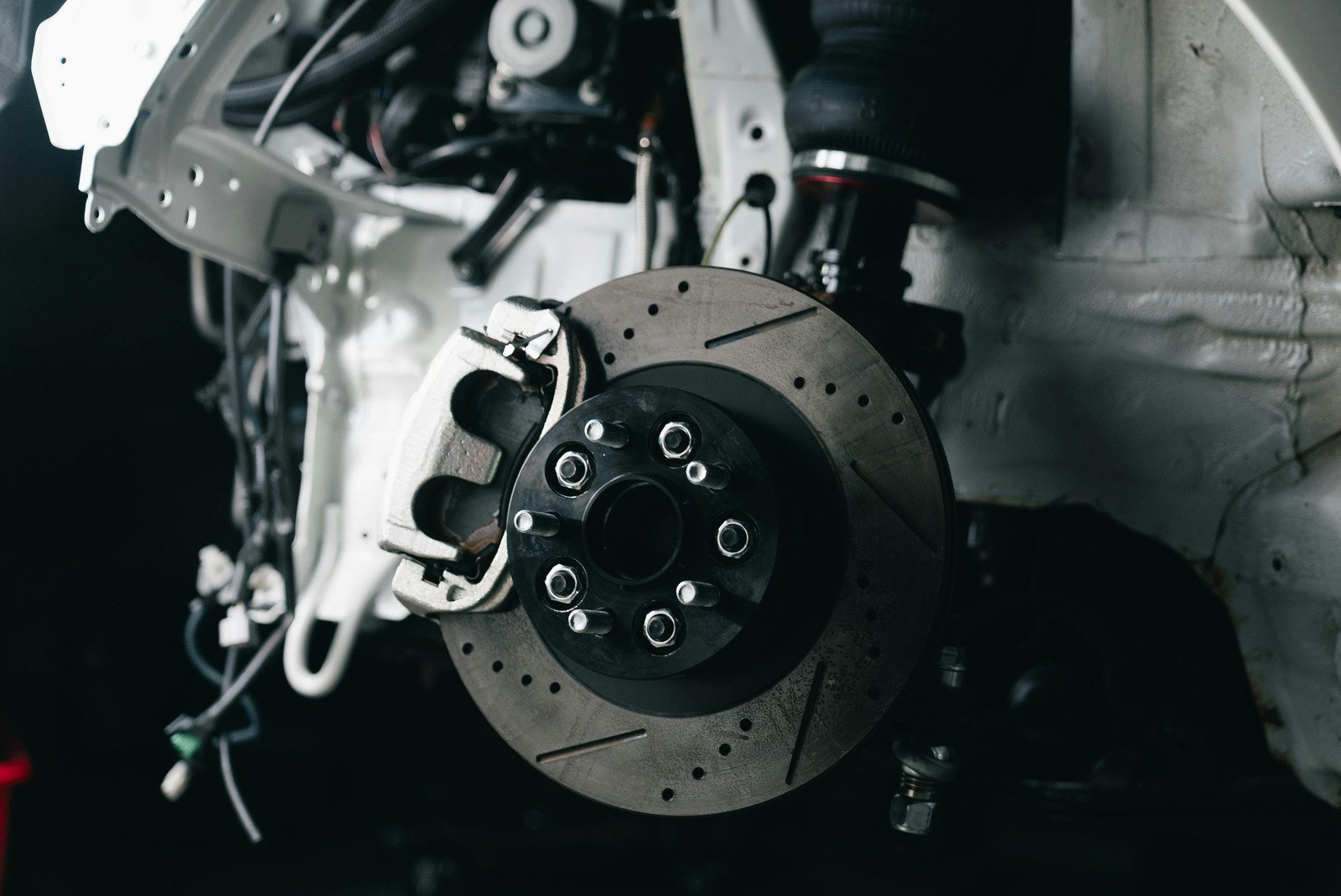
So how long do brake pads last? For most vehicles, somewhere between 30,000 and 70,000 miles. That’s a wide range and there’s a good reason for it: brake wear isn’t really about mileage on its own. It’s about heat, friction and how often your foot lands on that pedal.
Here in York, PA, several local factors can push wear toward the faster end of that range for some drivers. Winter road salt, hilly stretches on the west side of town and stop-and-go traffic through downtown all add extra demand on a braking system. Exactly how much that affects your car depends on your specific driving pattern but it’s worth understanding before you assume your pads will hit the high end of the mileage scale.
What Determines Brake Pad Lifespan?
A brake pad’s job is simple: press against the rotor and turn motion into heat through friction. Every stop uses up a small amount of material. How fast that material disappears depends on a handful of factors.
- Vehicle weight. Trucks and SUVs generally put more strain on pads than sedans.
- Pad material. Ceramic, semi metallic and organic pads wear at different rates.
- Driving style. Riding the brake or braking hard and late tends to burn through pads faster than anticipating stops early.
- Terrain. More hills usually mean more braking, which adds up over time.
- Traffic patterns. Stop-and-go commuting wears pads faster than steady highway driving.
Drivers who spend most of their time on the highway often land toward the higher end of the mileage range, while city commuters and drivers making frequent short trips tend to see replacement come sooner. There’s no single formula but these patterns hold up across most vehicles.
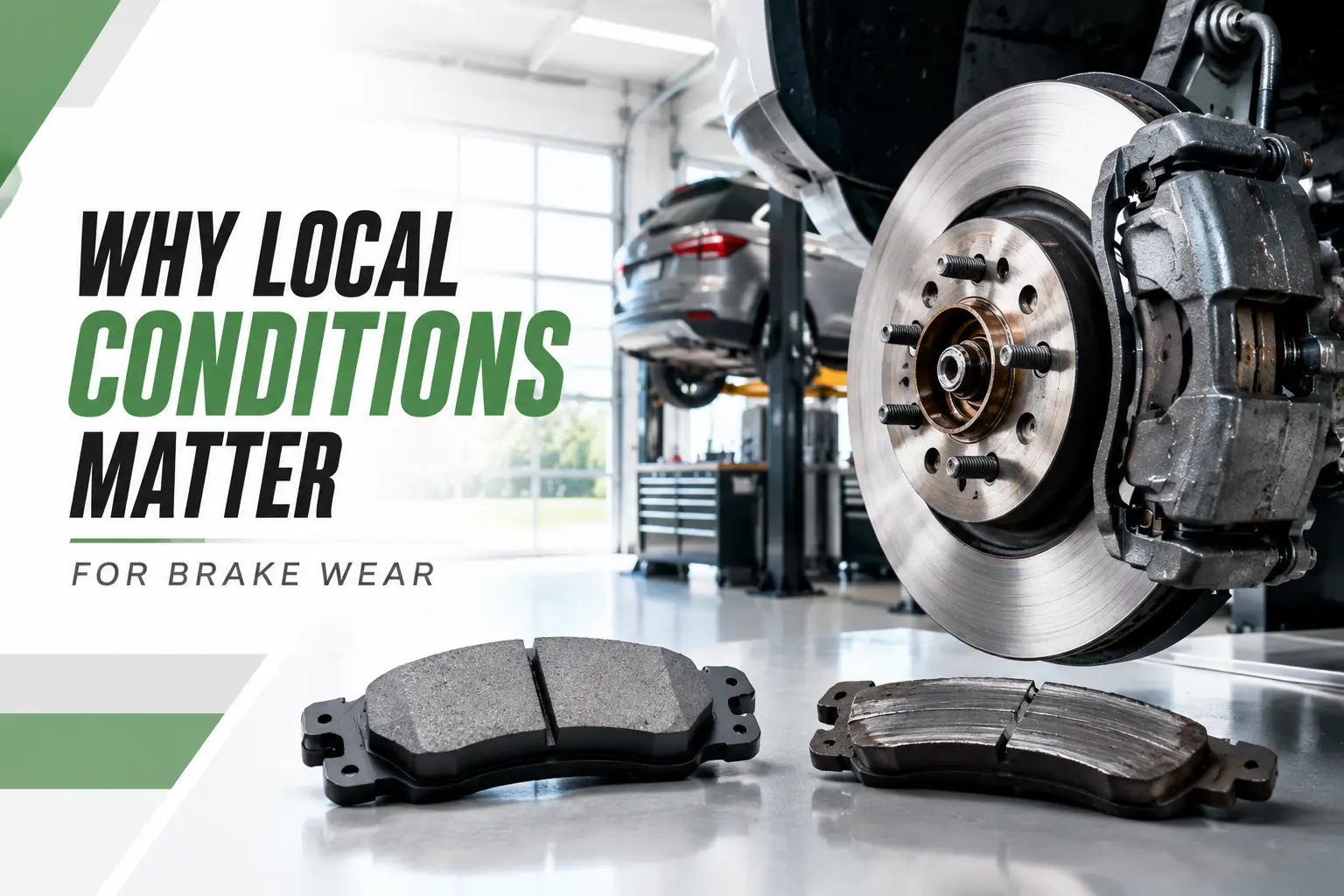
Why Local Conditions Matter for Brake Wear
This is the part that’s easy to miss if you’re just going off a number you read somewhere else.
Road salt, used across Pennsylvania during winter, can accelerate corrosion on calipers, rotors and brake lines over time. That corrosion doesn’t just affect appearance. It can contribute to uneven pad contact and reduced braking efficiency in some cases. Combine that with more frequent braking on icy roads and grit buildup in wheel wells and it’s reasonable to expect brake components in this region to face more stress than they would in a warmer, drier climate.
That doesn’t mean every vehicle in York will need pads replaced early. It does mean local conditions are a real variable worth factoring in in when you’re deciding whether to inspect your brakes sooner rather than later.
Signs Your Brake Pads Are Wearing Out
Cars are usually pretty good at warning you before brakes fail outright. Pay attention to:
- A high-pitched squeal when braking (that’s often a built-in wear indicator doing its job)
- Grinding, which usually means metal is contacting metal
- Vibration or pulsing through the brake pedal
- The car pulling to one side when you brake
- Stopping distances that feel longer than they used to
If any of these sound familiar, it’s worth getting looked at sooner rather than later. Left unaddressed, worn pads can score the rotors, turning a routine repair into a more expensive one. We handle brake pad replacement in York, PA regularly and catching wear early almost always keeps the repair simpler.
Front vs. Rear: Do They Wear at the Same Rate?
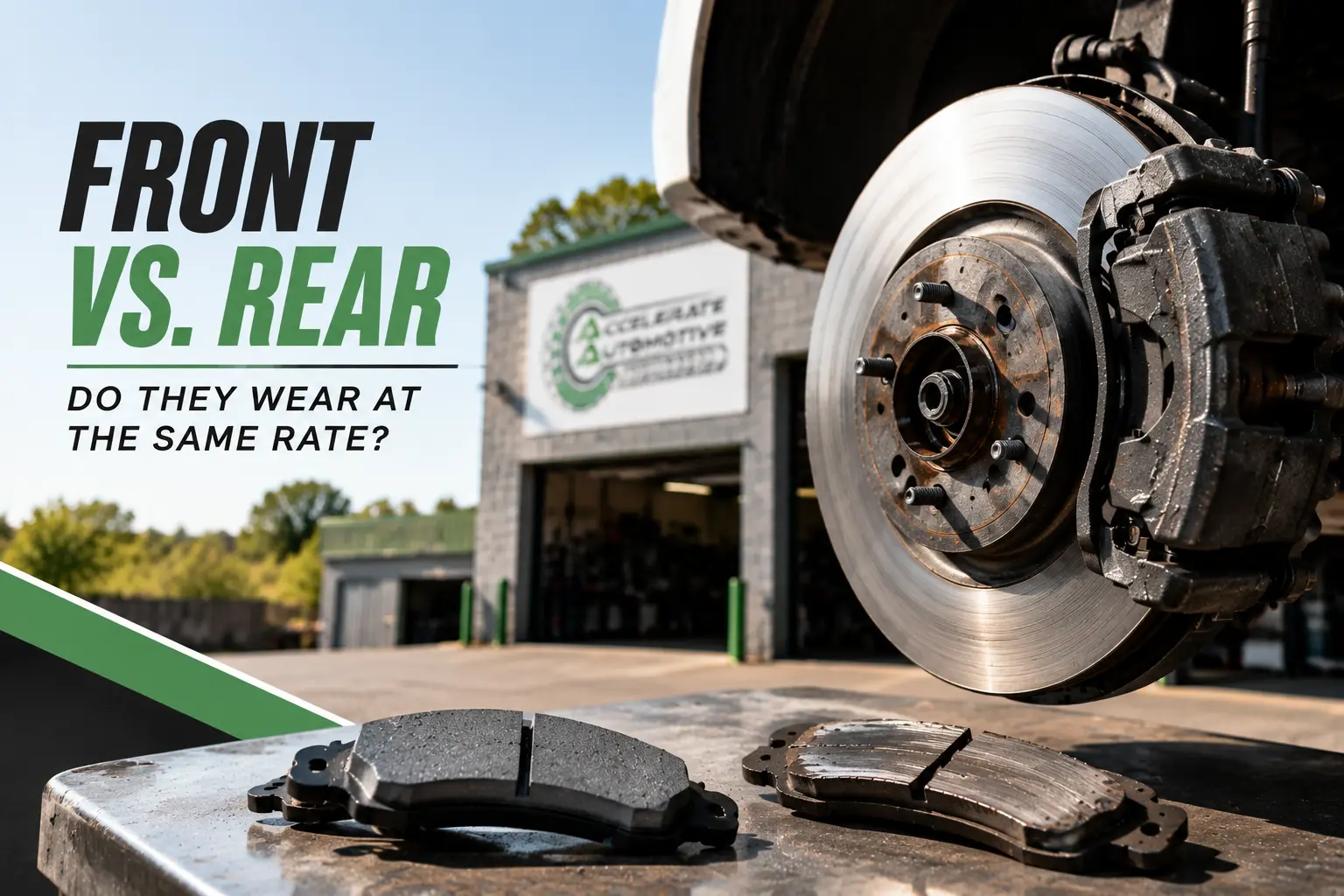
Not usually, though the exact difference varies by vehicle. When you brake, weight shifts forward, so the front brakes typically absorb more of the stopping force. On many vehicles, front pads wear out noticeably faster than rear pads but the ratio depends heavily on the car’s weight distribution, braking system design and how it’s driven. Rather than relying on a fixed rule, it’s more accurate to have both axles checked during an inspection instead of assuming one pair will always outlast the other by a specific margin.
Do Rotors Need Replacing With Pads?
Not automatically. If pads are replaced while there’s still material left, rotors can often be resurfaced or simply reused. If pads were pushed too far and started grinding, the rotors have likely taken damage and typically need
replacing too. Our brake rotor replacement service includes a full inspection first, so you’re only paying for parts that actually need attention.
How Often Should Brakes Be Inspected?
There’s no single interval that applies to every vehicle but a common guideline many shops use is checking brakes roughly every 10,000 to 12,000 miles or during routine service visits like oil changes. Think of it as practical guidance rather than a fixed rule. Some vehicles and driving habits call for more frequent checks, especially heading into winter when road salt and colder temperatures put extra strain on the system.
According to the Car Care Council, a properly functioning brake system is essential for safe vehicle control and recognizing early warning signs helps drivers avoid bigger problems down the road. That guidance lines up with what we see in the shop: catching brake wear early is almost always simpler and less costly than waiting.
Which Brake Pad Type Lasts Longest?
- Ceramic pads generally last longer and produce less dust, though they cost more upfront.
- Semi-metallic pads handle heat well and suit trucks or heavier vehicles but they can wear rotors faster and run noisier.
- Organic pads tend to be quieter and gentler on rotors but usually wear out sooner, particularly in regions with heavy salt and moisture exposure.
For many daily drivers around York, ceramic or semi-metallic pads tend to hold up well against the local mix of hills, salt and stop-and-go traffic, though the right choice still depends on your specific vehicle and driving habits.
How to Make Brake Pads Last Longer
A few habits genuinely help extend brake pad life:
- Coast toward stops instead of braking hard and late
- Avoid resting your foot on the brake in traffic
- Keep tire pressure in check, since underinflated tires add strain to braking
- Get brakes inspected ahead of winter rather than waiting for a problem to show up
None of this eliminates wear completely. Brake pads are a consumable part by design. But these habits can help you get more usable mileage before replacement becomes necessary.