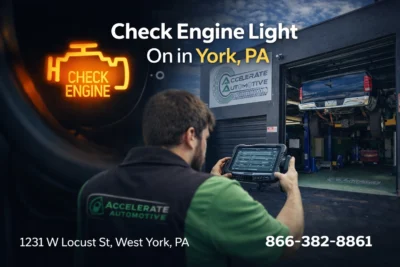



A check engine light flashing is not a minor warning. It is your vehicle telling you to stop paying attention to everything else and focus on the engine.
A steady light usually signals a fault that should be addressed soon. A flashing check engine light means the issue is severe and active. Continuing to drive can cause major engine damage within minutes.
Here in West York, PA, we see this situation more often than you might expect. Drivers assume the vehicle will “make it home.” Sometimes it does. Sometimes it arrives on a tow truck.
If your check engine light is flashing, here is what it means, what causes it and when immediate engine repair is required.
What Does a Check Engine Light Flashing Mean?
A flashing check engine light almost always indicates a severe engine misfire.
A misfire occurs when one or more cylinders fail to burn fuel properly. Instead of controlled combustion, raw fuel enters the exhaust system. That unburned fuel can overheat and destroy the catalytic converter.
The onboard computer recognizes this dangerous condition and flashes the warning light to get your attention.
In simple terms: the engine is running in a way that can cause immediate damage.
Why Is a Flashing Check Engine Light Serious?
The risk is not limited to poor performance. The danger is heat and fuel overload.
When misfires occur:
- Fuel is not burned correctly
- Exhaust temperatures spike
- The catalytic converter overheats
- Internal engine components experience stress
Catalytic converter replacement alone can cost thousands of dollars. Prolonged misfires can also damage pistons, valves or ignition components.
According to the National Highway Traffic Safety Administration, warning lights should never be ignored when they indicate active engine faults:
https://www.nhtsa.gov/road-safety
A flashing light is an active fault.

Should You Keep Driving If the Check Engine Light Is Flashing?
Short answer: no.
If the check engine light is flashing and the vehicle feels rough, shakes or loses power, you should reduce speed immediately and avoid heavy acceleration.
If the engine is running extremely poorly, pulling over and arranging a tow is the safest decision.
Driving even a few miles with a severe misfire can turn a moderate repair into a major expense.
Most Common Causes of a Check Engine Light Flashing
In West York, these are the issues we diagnose most often when a flashing check engine light appears.
1. Severe Engine Misfire
This is the primary trigger.
Causes of misfires include:
- Faulty spark plugs
- Failing ignition coils
- Damaged spark plug wires
- Fuel injector problems
- Low compression in a cylinder
Ignition components naturally wear over time. When maintenance is delayed, misfires become more likely.
2. Fuel System Problems
If the engine receives too much or too little fuel, combustion becomes unstable.
Possible causes include:
- Clogged fuel injectors
- Fuel pressure regulator failure
- Weak fuel pump
Uneven fuel delivery leads to incomplete combustion.
3. Vacuum Leaks
Modern engines rely on precise air and fuel balance. A vacuum leak disrupts that balance, creating lean conditions that trigger misfires.
Rubber hoses and intake gaskets are common failure points, especially in vehicles exposed to temperature swings like we experience in Pennsylvania.
4. Catalytic Converter Overheating
Sometimes the converter itself becomes restricted. That restriction causes engine stress and misfire conditions.
Once the converter overheats severely, replacement is often required.
How Engine Diagnostics Identify the Problem
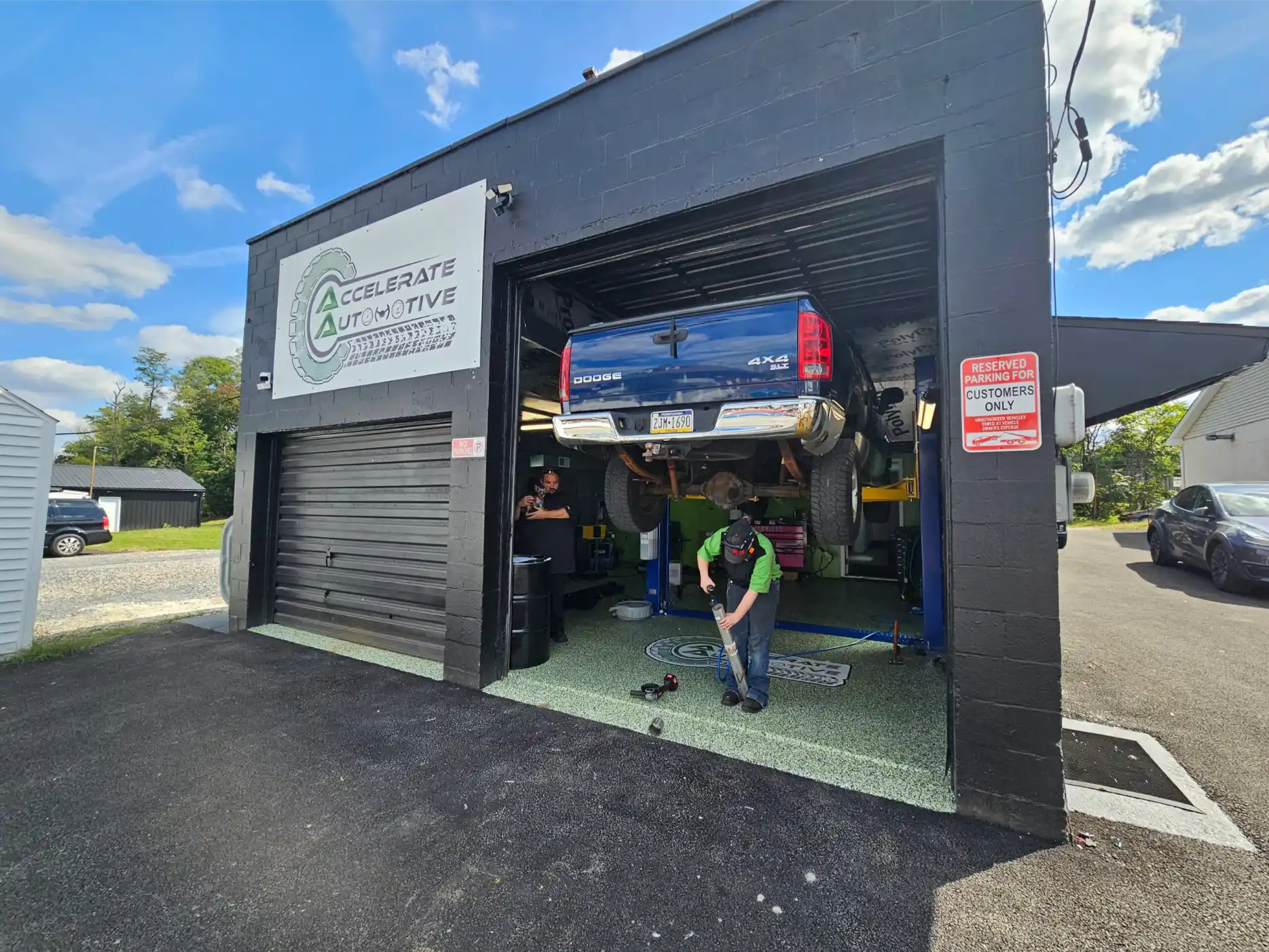
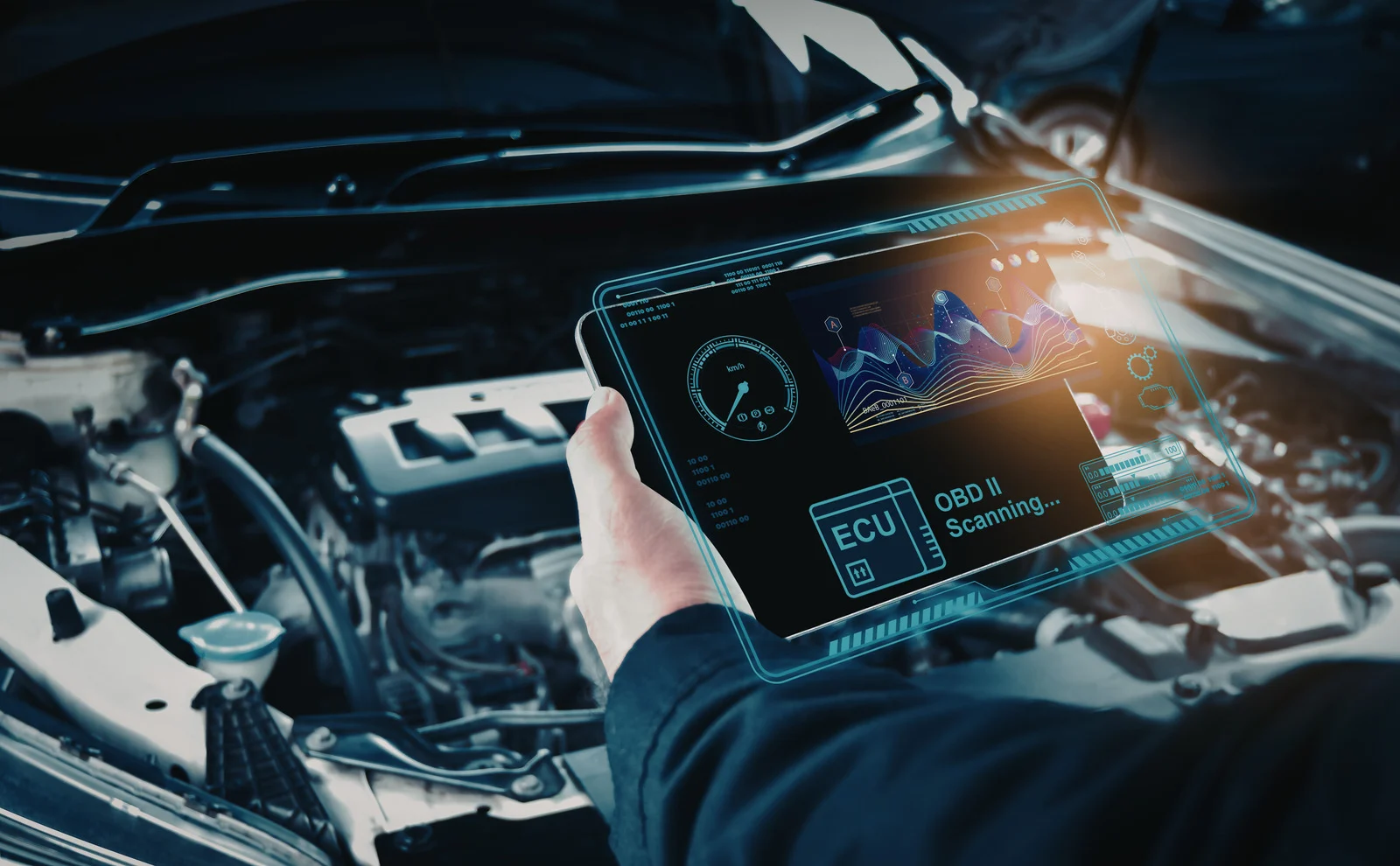
When a vehicle arrives at Accelerate Automotive in West York with a check engine light flashing, the first step is a professional diagnostic scan.
An OBD scan retrieves stored trouble codes. However, codes alone do not tell the whole story.
We evaluate:
- Cylinder misfire data
- Fuel trim readings
- Ignition timing
- Sensor performance
- Live engine data
Diagnosis is about understanding why the misfire is occurring, not just clearing the light.
If you need professional engine diagnostics in West York, you can schedule service here:
https://driveaccelerate.com/engine-transmission-repair/
What Immediate Engine Repair Might Involve
Repair depends on the root cause.
Common solutions include:
- Spark plug replacement
- Ignition coil replacement
- Fuel injector service
- Intake gasket repair
- Fuel system repairs
In more severe cases, catalytic converter replacement may be necessary.
The key is speed. The sooner the misfire is corrected, the lower the risk of secondary damage.
How Much Does It Cost to Fix a Flashing Check Engine Light?
Costs vary based on the underlying issue.
Typical repair ranges in West York, PA:
- Spark plugs: $150–$400
- Ignition coil replacement: $200–$600
- Fuel injector replacement: $250–$700
- Catalytic converter replacement: $1,000–$2,500
These numbers reflect why immediate action matters. A small ignition problem can quickly escalate if ignored.
Why Local Driving Conditions in York County Matter
Stop and go traffic, short trips and cold winter starts increase stress on ignition and fuel systems.
Short trips prevent engines from reaching optimal operating temperature. That allows carbon buildup and fuel system deposits to accumulate.
Winter conditions also strain batteries and ignition systems. Weak voltage can contribute to coil or misfire issues.
Regular maintenance reduces the risk, but once a check engine light is flashing, maintenance is no longer the conversation. Repair is.
Difference Between a Steady Light and a Flashing Light
This distinction matters.
A steady check engine light often indicates:
- Emissions-related issues
- Loose gas cap
- Minor sensor faults
A flashing check engine light signals:
- Active misfire
- Immediate risk to catalytic converter
- Potential engine damage
The flashing light demands immediate attention.
Can a Flashing Check Engine Light Turn Off by Itself?
Sometimes it stops flashing if the misfire becomes intermittent. That does not mean the problem is gone.
It means the engine temporarily stabilized.
The fault will return, often at the worst possible time.
Waiting rarely improves the outcome.
When to Call for a Tow
You should consider towing if:
- The vehicle shakes violently
- You notice burning smells
- Power is severely reduced
- The engine stalls repeatedly
Driving under these conditions risks internal engine damage.
Why Prompt Repair Protects Your Engine
Modern engines are designed for efficiency and tight tolerances. They do not tolerate prolonged misfires.
Raw fuel washing cylinder walls can reduce lubrication. Excess heat damages exhaust components.
Quick diagnosis prevents these chain reactions.
If your check engine light is flashing in West York, PA, schedule immediate service at Accelerate Automotive:
https://driveaccelerate.com/engine-transmission-repair/
Final Word
A check engine light flashing is not a suggestion. It is an urgent warning.
Reducing speed and arranging a diagnostic inspection as soon as possible protects your engine, your catalytic converter and your wallet.
If you are in West York or surrounding areas, do not ignore it. Get it inspected. The right repair at the right time makes all the difference.