

Blog
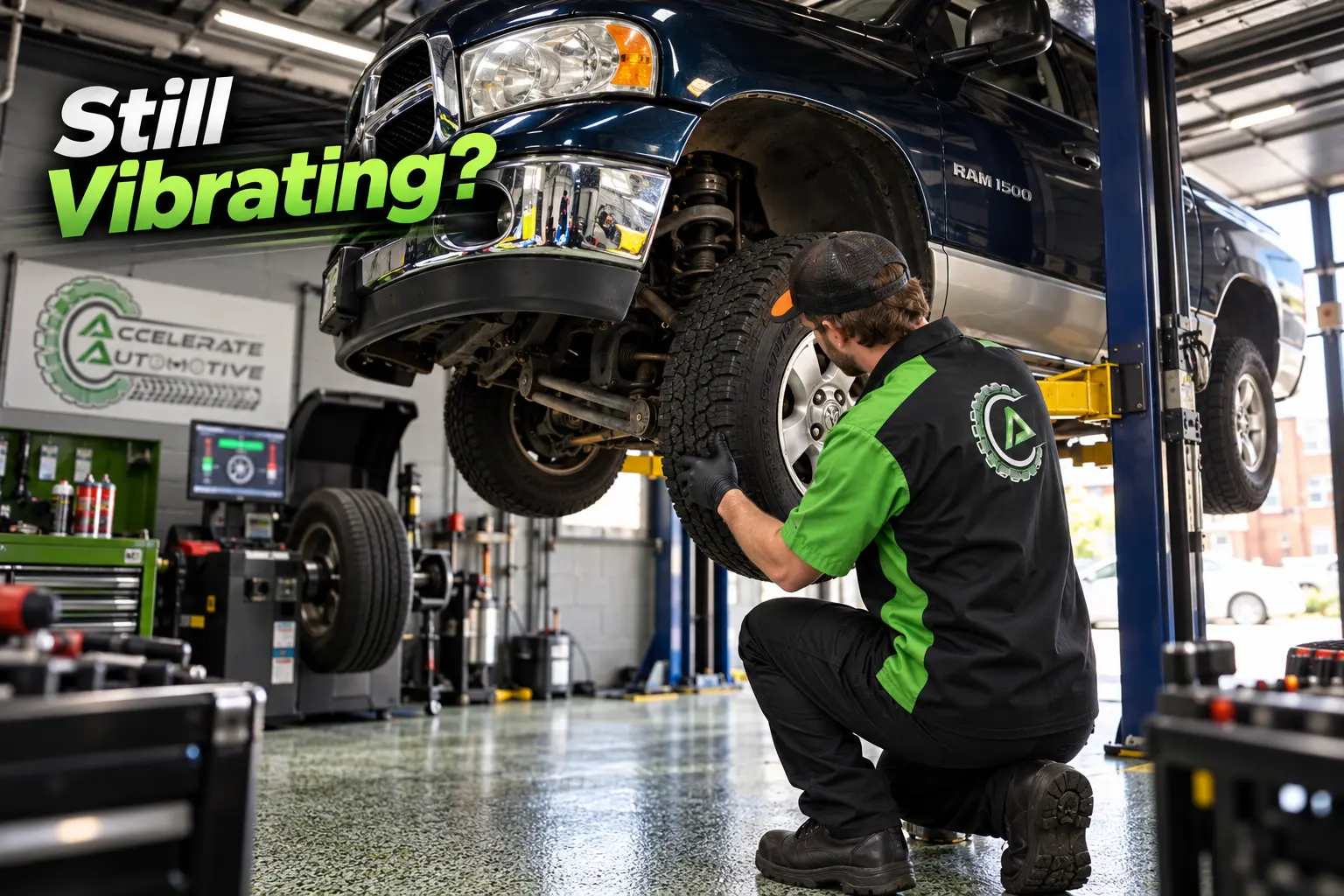
You paid for a balance, drove off the lot and felt the steering wheel shimmy again before you reached I-83. Frustrating. If you’re stuck with car vibration after tire balancing York PA roads only seem to make worse, the balance probably wasn’t the problem.
Balancing corrects one thing: uneven weight around the wheel. If the shake survives it, something else is wrong. Bent wheels, damaged tires, worn steering parts and brake faults all feel the same at 60 mph. Here’s how to tell them apart and what to do next.
Why Does My Car Still Vibrate After Tire Balancing?
Your car still vibrates after tire balancing because the vibration usually isn’t a weight problem. A balancer only adds small weights to even out the mass around a wheel. It can’t straighten a bent rim, fix a tire with an internal defect or tighten a worn suspension part.
Think of it this way: balancing is a precise fix for a narrow problem. If the shake continues, the diagnosis was incomplete or the cause sits somewhere the balancer can’t reach.
That’s good news, actually. It narrows the search.
Car Vibration After Tire Balancing York PA: 7 Causes a Balance Can’t Fix
Most repeat vibrations trace back to one of the causes below. We see the same handful again and again on cars, SUVs and pickups around West York.
1. A bent wheel or damaged rim
Potholes are the usual culprit. After a freeze-thaw winter in Pennsylvania, the roads around York can be rough and one hard hit is enough to bend the inner lip of a wheel.
A bent wheel wobbles even when the weights are perfect. The machine can’t compensate for a rim that isn’t round.
2. A tire with an internal defect or uneven wear
Tires can develop separated belts, bulges or flat spots that don’t show up as a simple weight imbalance. Cupped or feathered tread also sets up a rhythmic shake that gets worse with speed.
A tire can look fine from the outside and still be out of round. If you see a bulge on the sidewall, stop driving on it and get it checked the same day.
3. Worn steering and suspension parts
Tie rod ends, ball joints, control arm bushings and worn shocks or struts let the wheel move when it should stay put. Even a perfectly balanced tire will shake if the parts holding it are loose.
This is where proper suspension repair makes the difference. Replacing the worn component fixes the shake at its source, not just the symptom.

4. Alignment problems that wear tires unevenly
Here’s a point many shops skip. Bad alignment doesn’t usually cause a vibration on its own. It wears the tire unevenly and that uneven wear is what eventually shakes the car.
If your tires show wear on one edge, a wheel alignment belongs on the list. Balancing new rubber on a car that’s still out of alignment just starts the clock on the next problem.
5. A failing wheel bearing
A worn bearing often starts as a hum or growl that changes when you steer left or right. As it gets worse, you’ll feel it through the floor or the steering wheel.
Wheel bearings don’t fix themselves. Waiting usually means a bigger repair and, in a bad case, a wheel that’s no longer secure.
6. Brake rotor problems
If the shake shows up mainly when you press the brake pedal, balancing is almost certainly off the hook. Rotors that have worn unevenly cause a pulsing in the pedal or a shudder in the steering wheel while you slow down.
7. A wheel that isn’t seated correctly
Sometimes the wheel itself is fine and the problem is how it’s mounted. Rust or debris on the hub face, uneven lug nut torque or the wrong centering hardware can leave a wheel sitting slightly off-center. Lost wheel weights after a pothole hit can also undo a good balance.
How Can You Tell What’s Causing the Shake?
Where and when you feel the vibration points straight at the cause. Use this as a starting guide:
- Steering wheel shakes at 55 to 70 mph: usually a front tire or wheel issue.
- Vibration felt in the seat or floor: more often a rear wheel, tire or driveline concern.
- Shudder only while braking: brake rotors or related brake parts.
- Shake that gets worse when you accelerate: engine mounts, axle shafts or driveline wear.
- Hum or growl that changes when you turn: wheel bearing.
- Looseness or clunking over bumps along with the shake: steering or suspension wear.
Write down what you notice before you come in. Speed, road surface and whether the shake changes when you brake or turn are all useful clues.
What Is Road Force Balancing and Will It Help?
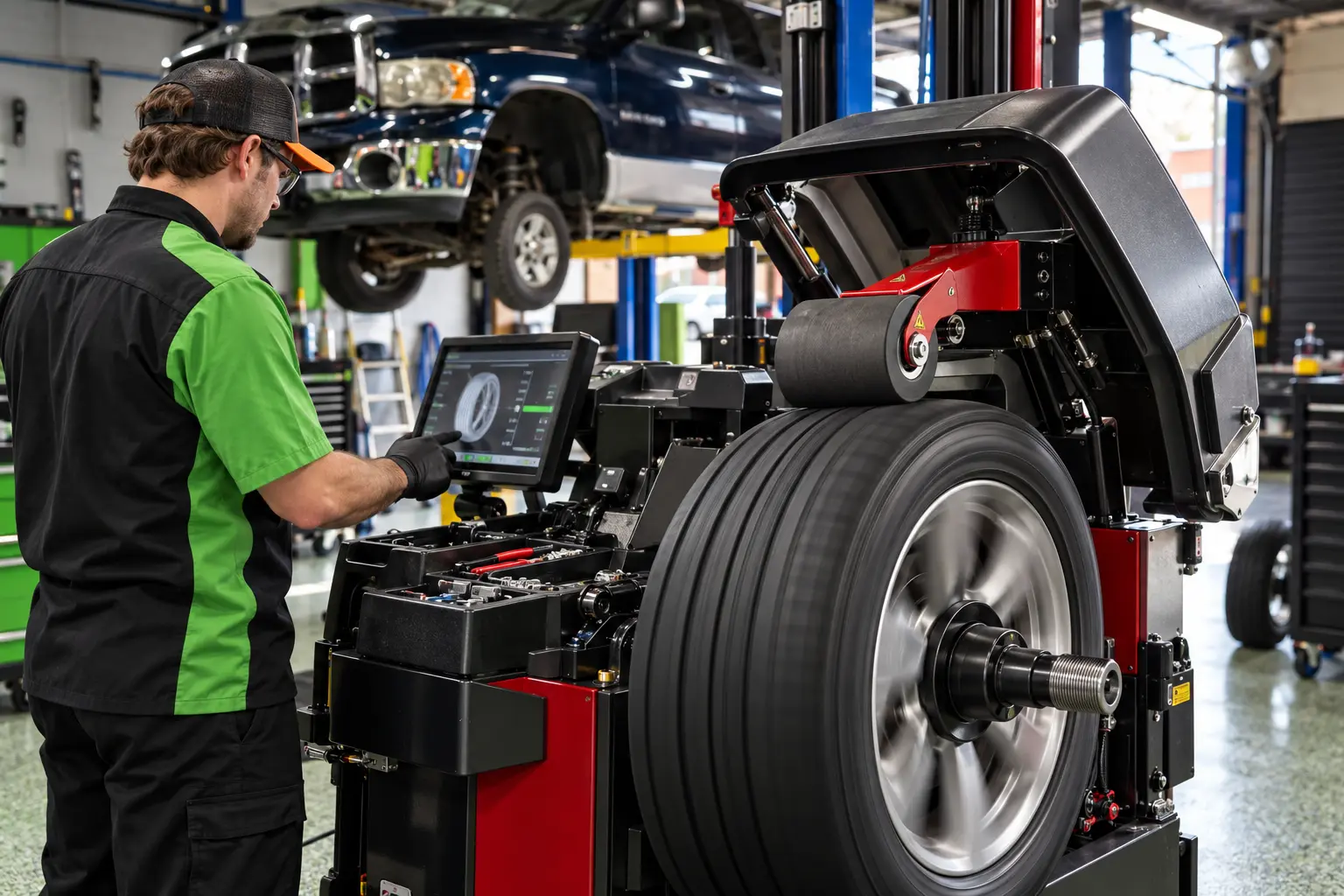
Road force balancing is a more demanding test than a standard spin balance. A roller presses against the spinning tire to mimic the load of the road, which reveals stiffness variations and out-of-round conditions a basic balancer can miss.
It can be a smart next step when a tire seems to be the culprit. It won’t help, though, if the real problem is a worn tie rod or a failing bearing. That’s why a full inspection comes first.
Can a Wheel Alignment Fix a Vibration?
Rarely and only indirectly. Alignment sets the angles of your wheels so they track straight and wear evenly. It doesn’t change how smoothly a wheel spins.
Where alignment matters is prevention. Correcting it stops the uneven wear that causes shakes later and it protects the tires you just paid to balance.
How Much Does It Cost to Fix a Car Vibration?
It depends entirely on the cause, so any number quoted over the phone without an inspection is a guess. A lost wheel weight is a small fix. A bent wheel, worn suspension components or a bad bearing cost more.
What saves money is diagnosing it right the first time. Paying for a second and third balance that can’t work is the expensive route. We’d rather find the real cause, explain what we found and give you a clear price before any work begins.
Is It Safe to Keep Driving With a Vibration?
Sometimes, but don’t assume it. A mild shake from a lost wheel weight is mostly an annoyance. Vibration caused by a bulging tire, a loose wheel, a failing bearing or worn steering parts is a safety issue.
Stop driving and call for help if the vibration came on suddenly, the steering feels loose or you see a bulge or cracking on a tire. The National Highway Traffic Safety Administration publishes useful guidance on tire condition and inflation if you’d like to check your tires at home first.
What Should You Do Before Bringing It In?
A few quick checks make the diagnosis faster:
- Check tire pressure when the tires are cold.
- Look for bulges, cracks or uneven tread wear.
- Note the speed range where the shake starts and stops.
- Mention any recent pothole hits, curb strikes or fender benders.
- Bring your last balancing or tire service receipt if you have it.
Pro tip: if the shake began right after new tires went on, tell us. It changes where we look first.
Get the Shake Diagnosed in West York
A proper diagnosis starts with your description of the problem, then a hands-on inspection of the tires, wheels, steering, suspension and brakes. Once we know the cause, we explain it plainly and fix only what’s needed. If your tires do turn out to need attention, our tire mounting and balancing service is available too.
Accelerate Automotive serves drivers across York, West York and the surrounding area, roughly a 30-mile radius. Evening appointments are available, and 24/7 drop-off means you can leave the car whenever your schedule allows.
Don’t keep paying for balances that don’t work. Call us at 866-382-8861 to book your vibration diagnosis or visit us at 1231 W. Locust Street or 1221 W. Heiges Ave, York, PA 17404.
Hours: Monday to Friday, 10:00 a.m. to 6:00 p.m. Saturday, 9:00 a.m. to 2:00 p.m.