

Blog
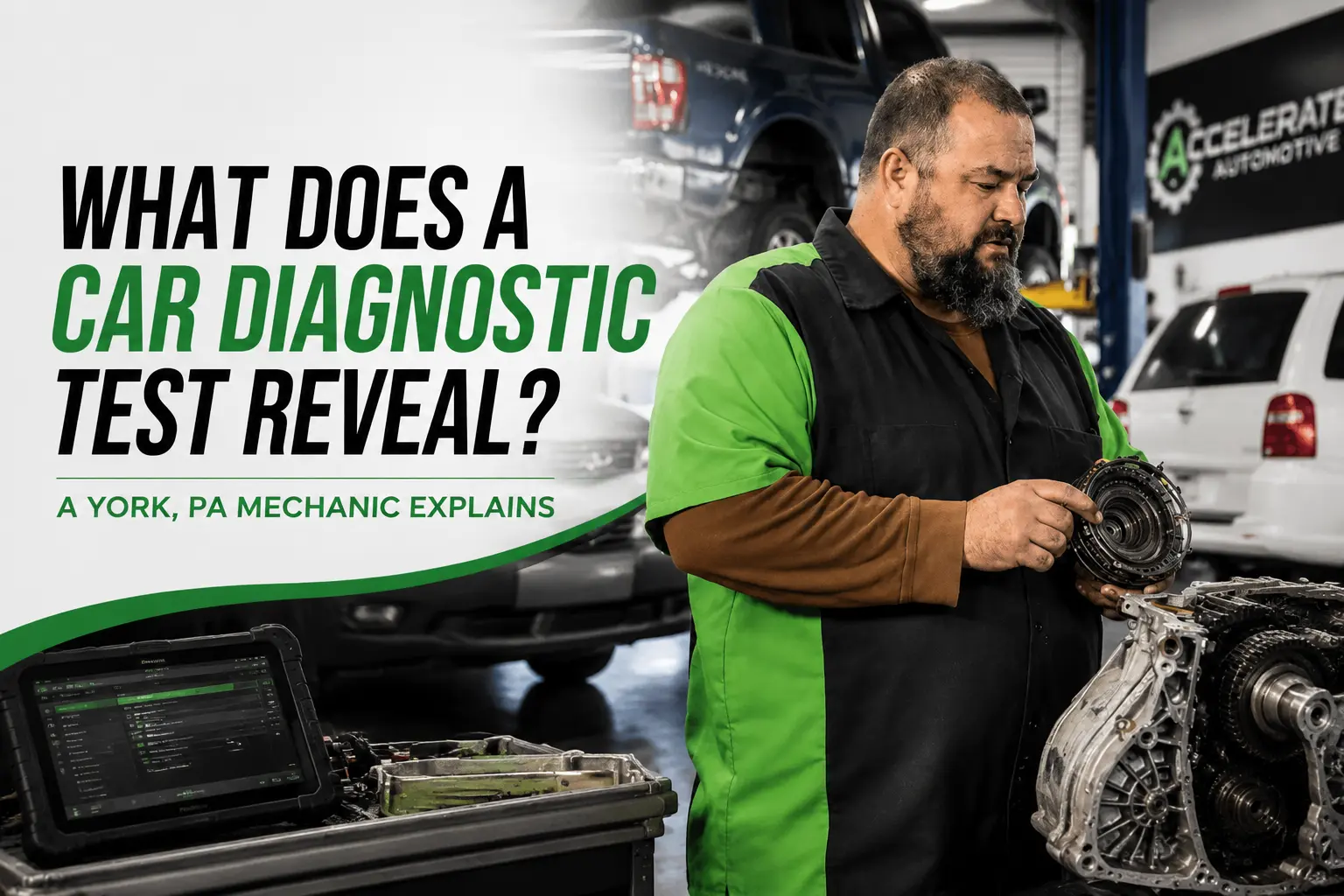
Your check engine light comes on and suddenly you’re stuck guessing. Is it something minor or is your engine about to leave you stranded on Route 30? A car diagnostic test takes the guesswork out of that moment. It reads the messages your vehicle’s computer has already been quietly logging and turns them into information a technician can actually use.
If you’ve searched “what does a car diagnostic test reveal,” you’re probably staring at a warning light right now or maybe your car’s been running rough and you want answers before you spend money on repairs. Either way, here’s what actually happens during a diagnostic test and why it matters more than most drivers realize.
What Does a Car Diagnostic Test Reveal About Your Vehicle?
A car diagnostic test reveals stored trouble codes from your vehicle’s onboard computer, along with live data from sensors monitoring the engine, transmission, emissions system and electrical components. In plain terms, it tells a technician which system is misbehaving and gives clues about why.
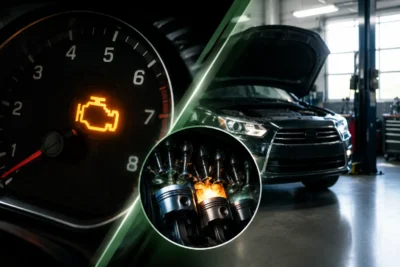
Modern vehicles run dozens of sensors around the clock. They’re tracking oxygen levels in the exhaust, fuel mixture, transmission shift patterns, battery voltage and more. When something falls outside its normal range, the computer stores a code and often triggers a dashboard light. A diagnostic scan pulls that code so a mechanic isn’t starting from zero.
Here’s the part a lot of drivers don’t expect: the code alone rarely tells the whole story. A code that reads “cylinder 2 misfire” could point to a bad spark plug, a failing ignition coil or a vacuum leak. That’s why a proper diagnostic inspection goes beyond the initial scan and includes a technician actually confirming what’s causing the fault before any repair gets recommended.
How Does Car Diagnostic Testing Work?
The process is more thorough than plugging in a code reader for thirty seconds, though that’s often where it starts.
Step 1: Connect the scan tool. A technician plugs an OBD2 scanner into the vehicle’s diagnostic port, usually located under the dash. This pulls any stored trouble codes.
Step 2: Review the codes. Each code points to a specific system or circuit. Some are straightforward. Others need more digging.
Step 3: Check live data. This is where experience matters. A skilled tech watches real-time readings, fuel trims, sensor voltages, RPM behavior, while the engine runs, comparing what’s happening against what should be happening.
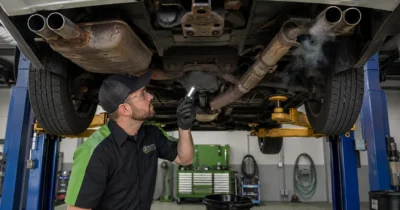
Step 4: Physical inspection. Wires get checked for corrosion. Vacuum lines get checked for cracks. Sensors get tested individually if needed.
Step 5: Confirm the actual cause. Only after this full process does a technician recommend a repair. Skipping straight from code to parts replacement is how drivers end up paying for a new part that didn’t fix anything.
What Can a Car Diagnostic Test Detect?
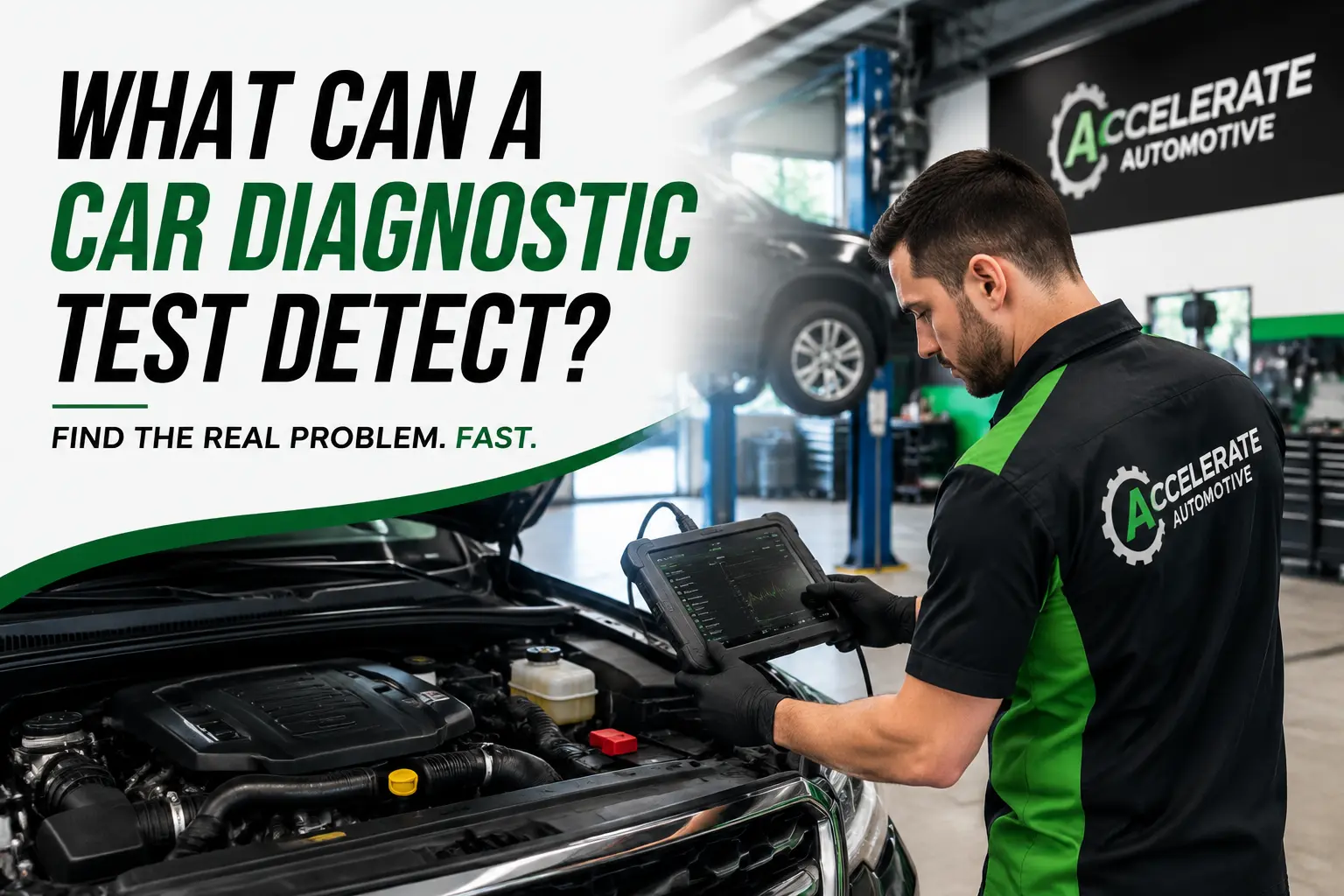
A diagnostic test can pick up problems across nearly every major system in your vehicle, including:
- Engine performance issues like misfires, poor fuel mixture or low compression signals
- Transmission problems, including erratic shifting or slipping
- Electrical faults in wiring, sensors or modules
- Emissions system failures that could cause you to fail state inspection
- Battery and charging system weaknesses before they leave you stranded
- ABS and brake system faults tied to sensor malfunctions
- Airbag system codes when the safety system detects an issue
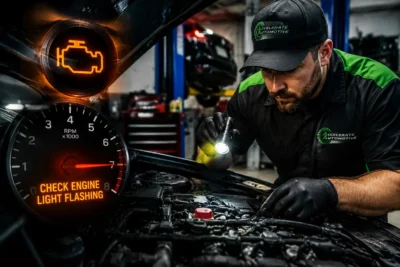
If your check engine light is on, a check engine light diagnostic is usually the fastest way to find out whether you’re dealing with something minor, like a loose gas cap or something that needs immediate attention.
Does a Diagnostic Test Tell You Everything That’s Wrong?
No and this is worth understanding before you book an appointment. A diagnostic scan is a starting point, not a final answer. It tells you where to look, not always exactly what’s broken.
Intermittent problems are the trickiest. A sensor that fails only when the engine is hot or a wiring issue that only shows up over bumps, won’t always throw a code during a quick scan. That’s why an experienced shop pairs the scan with driving history, symptom patterns and hands-on testing rather than reading a code off a screen and calling it done.
This distinction matters most when you’re comparing quotes. A shop that recommends replacing a part based on a code alone, without confirming the cause, isn’t doing a full diagnostic. They’re guessing with extra steps.
Should You Get a Diagnostic Test Before Approving Repairs?
Yes. If a shop suggests a repair without running diagnostics first or without explaining what the diagnostic actually found, that’s worth questioning. A confirmed diagnosis protects you from paying for parts you don’t need.
This matters even more in York’s climate. Cold winters and road salt take a toll on wiring, sensors and connectors, which means electrical gremlins show up more often here than in milder regions. A rushed diagnosis in weather like this can easily point a mechanic toward the wrong fix.
How Long Does a Car Diagnostic Test Take?
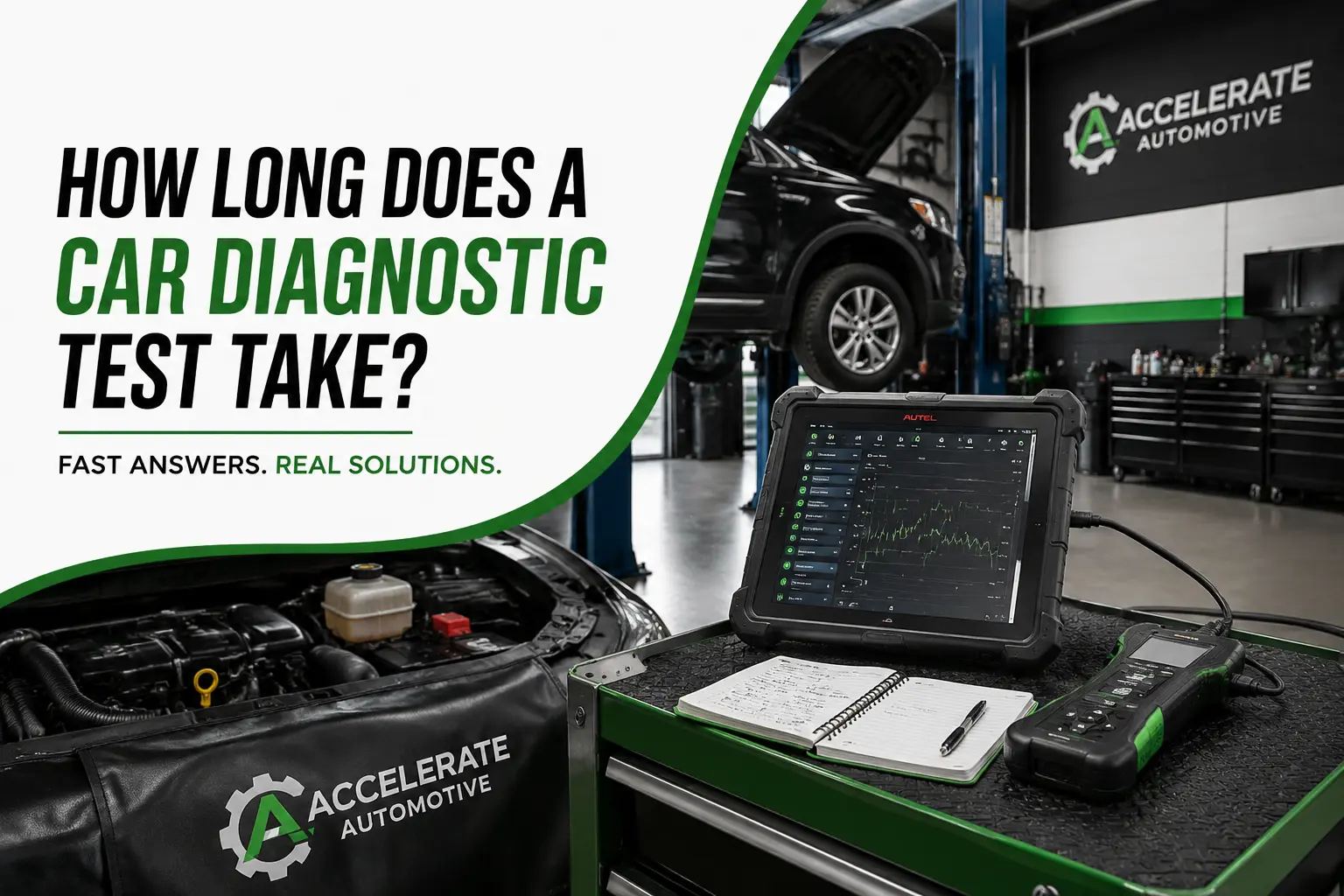
A basic code scan takes about fifteen to twenty minutes. A full diagnostic, one that includes live data review and physical inspection, typically runs anywhere from thirty minutes to an hour, depending on the complexity of the issue. Intermittent electrical problems can take longer since a technician may need to recreate the conditions that trigger the fault.
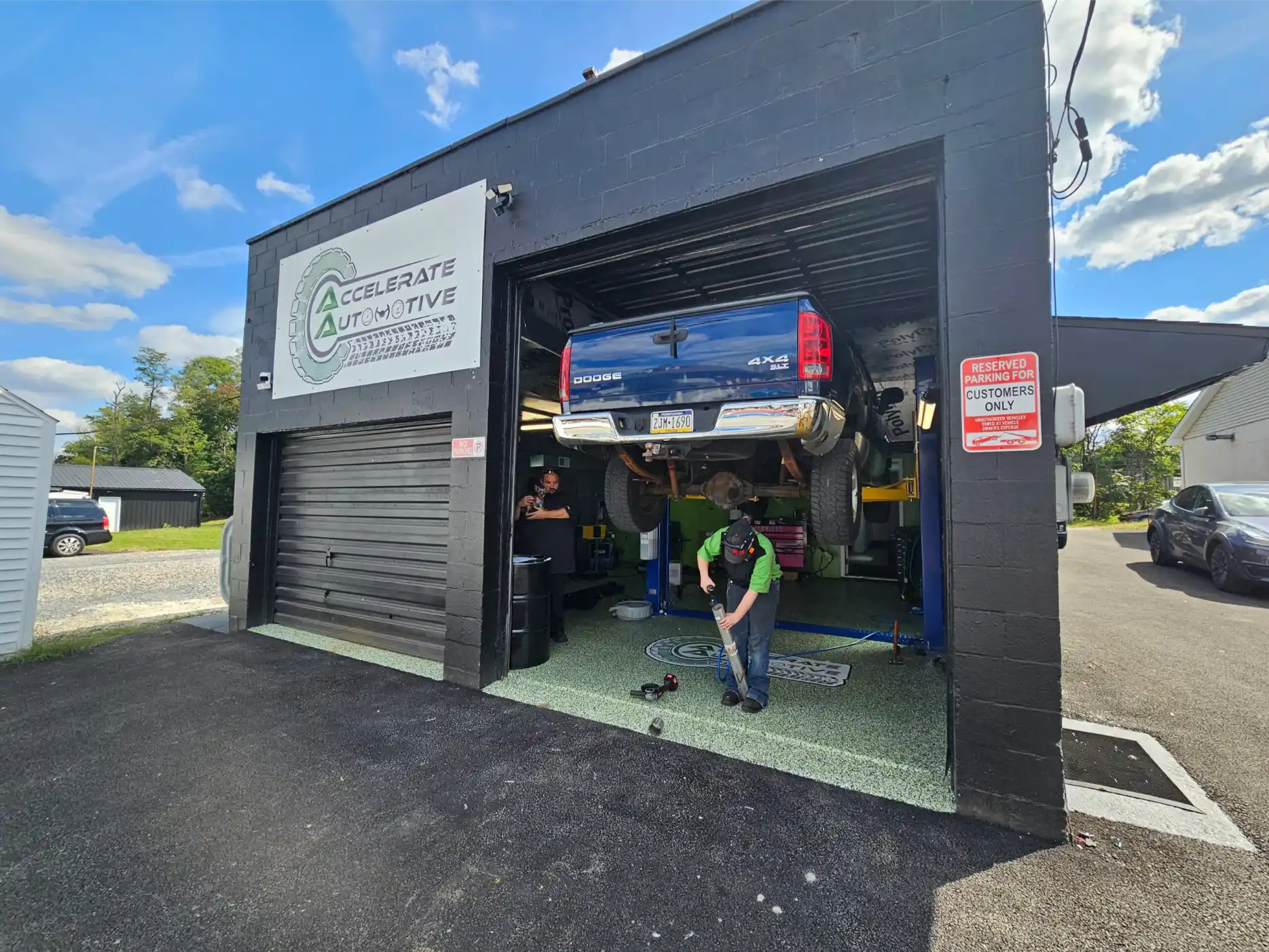
At Accelerate Automotive, we offer same-day car diagnostics in York, PA for most vehicles, so you’re not left waiting days just to find out what’s wrong.
Common Warning Signs That Call for a Diagnostic Test
You don’t need to wait for the check engine light. These symptoms are worth a scan on their own:
- Rough idling or the engine shaking at stoplights
- Noticeable drop in fuel economy
- Trouble starting, especially in cold weather
- Stalling or hesitation during acceleration
- Dashboard lights other than check engine, like ABS or battery icons
- Unusual noises paired with reduced power
Catching these early, before they turn into a breakdown, is almost always cheaper than waiting. According to the U.S. Environmental Protection Agency, a malfunctioning oxygen sensor alone can reduce fuel economy by as much as 40 percent if ignored long enough, which adds up fast at the pump.
What Happens After a Car Diagnostic Test?
Once the cause is confirmed, your technician should walk you through what was found in plain language, not just a code number. A good shop explains the problem, what caused it, what happens if you wait and what the repair involves. You should leave with enough information to make an informed decision, not just a bill.
If the diagnostic points to something specific, like an emissions fault or a failing sensor, that’s when a targeted repair plan makes sense instead of a guess-and-replace approach.
Get a Reliable Diagnostic Test in York, PA
If your check engine light is on or your car just isn’t running the way it should, don’t wait until it gets worse. Accelerate Automotive offers OBD2 diagnostic scans and full vehicle inspections for drivers throughout York and West York, PA. We’ll tell you exactly what the test reveals, walk you through your options and never recommend a repair we haven’t confirmed is necessary.
Call us or schedule your diagnostic appointment today and get real answers instead of guesswork.