

Blog
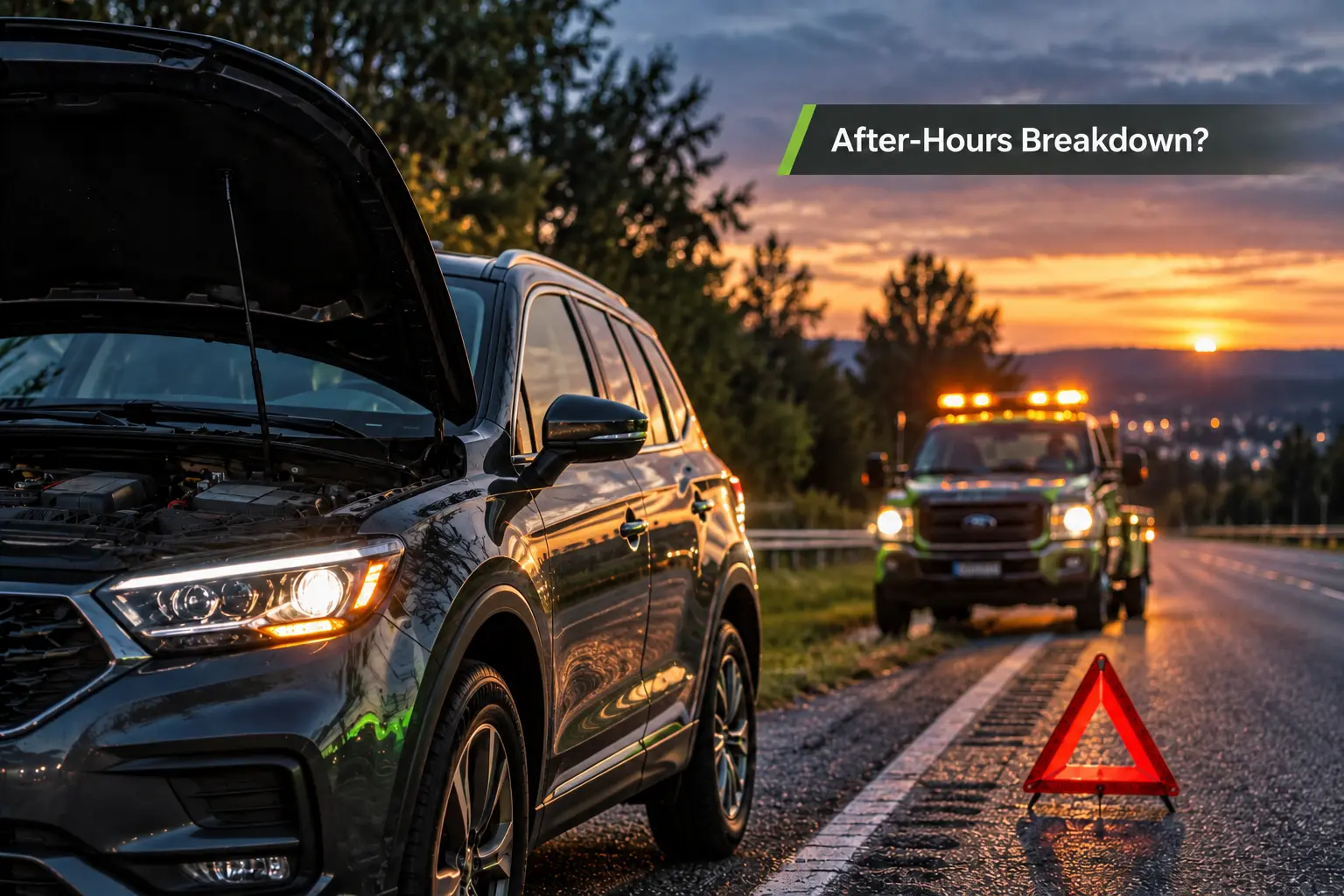
A car breakdown York PA drivers face after hours can turn an ordinary trip into a stressful situation within seconds. Maybe the engine shuts off, the car will not start, a tire goes flat or a warning light appears when most repair shops are already closed.
Your first priority is not figuring out exactly what failed. It is getting yourself and your passengers into the safest situation possible, deciding whether the vehicle should be driven and arranging the right next step.
For York, PA drivers, having a simple plan can make an unexpected breakdown much easier to handle.
Car Breakdown York PA: What Should You Do First?
If your vehicle starts losing power, making unusual noises, overheating or showing a serious warning light, stay calm and focus on getting out of moving traffic safely.
If the vehicle can still be controlled, reduce speed gradually and move as far away from active traffic as conditions allow. Turn on your hazard lights so other drivers can see that something is wrong.
Once you are stopped:
- Put the vehicle in park and set the parking brake.
- Keep your hazard lights on.
- Note your location.
- Check whether anyone is injured.
- Look for smoke, fire, leaking fluid or another immediate hazard.
- Avoid standing beside the vehicle near moving traffic.
- Call for emergency help if the situation is unsafe.
PennDOT advises motorists dealing with roadside emergencies to move as far from active traffic as possible, know their location, use hazard lights and contact appropriate assistance. Its guidance also stresses staying away from active travel
lanes while waiting for help. Read PennDOT’s roadside emergency safety guidance.
The exact response depends on where the vehicle stopped. A breakdown in a parking lot is very different from a disabled vehicle close to moving traffic.
Should You Stay Inside the Car After a Breakdown?
If you have moved completely away from traffic and there is no fire, smoke, strong fuel smell or other immediate danger, staying inside the vehicle may be safer than standing next to the roadway.
Keep your seat belt fastened if you are still close to traffic.
Do not walk around the vehicle simply to investigate a mechanical problem when cars are passing nearby. Diagnosing the failure can wait.
If your vehicle is stopped in a dangerous position, cannot be moved out of a travel lane or you believe there is an immediate threat to your safety, call 911 and follow the instructions you receive.
A car breakdown York PA drivers experience at night can be especially difficult because visibility is lower. Keep your hazard lights on and make yourself and the vehicle as visible as safely possible.
When Should You Call 911 Instead of Roadside Assistance?
Roadside assistance and towing are appropriate for many ordinary breakdowns. Some situations require emergency services first.
Call 911 if:
- The vehicle is stopped in an active travel lane and cannot be moved.
- A crash has caused injuries.
- You see fire or significant smoke.
- You smell fuel and believe there may be a leak.
- You or your passengers are in immediate danger.
- The breakdown location makes it unsafe to remain where you are.
Once immediate safety has been addressed, you can deal with transporting and repairing the vehicle.
For a routine mechanical failure in a safe location, contact your roadside assistance provider, insurance company’s roadside programme or a towing company that serves your location.
Is It Safe to Keep Driving After Your Car Breaks Down?
Sometimes a vehicle restarts after a problem. That does not automatically mean it is safe to continue driving.
The decision should depend on what happened before the vehicle stopped, which warning lights are showing, how the engine sounds, whether steering and braking feel normal and whether there are signs of overheating or fluid loss.
When in doubt, towing the vehicle for inspection is usually safer than trying to push it farther and potentially turning one repair into a larger one.
The Car Will Not Start
A no-start condition can have several causes.
A weak battery is one possibility, but a starter, charging system, electrical problem, fuel issue, sensor failure or another fault can produce similar symptoms.
Pay attention to what happens when you turn the key or press the start button:
- Nothing happens at all.
- You hear repeated clicking.
- The engine turns over but does not start.
- Interior lights are unusually dim.
- The engine starts and immediately stalls.
Those details can help a technician narrow down the problem later.
Avoid repeatedly attempting to start the engine for an extended period. Repeated cranking can drain the battery further and may not solve the underlying problem.
The Engine Is Overheating
An overheating engine needs to be taken seriously.
If the temperature gauge rises into the danger range, you see steam or an overheating warning appears, find a safe place to stop and shut the engine down.
Do not remove the radiator or cooling system cap while the system is hot. Pressurised coolant can cause serious burns.
Continuing to drive an overheating vehicle can turn a cooling system problem into major engine damage.
A Serious Warning Light Appears
Warning lights should be interpreted in context.
A check engine light may have many possible causes. A flashing light, severe engine shaking, major power loss, an oil pressure warning or a braking problem deserves much more caution than a minor warning with no change in how the vehicle drives.
If the cause is unclear, professional engine diagnostics in York, PA can help identify the fault rather than relying on guesswork.
You Have a Flat or Damaged Tire
A flat tire can quickly become a roadside safety problem.
If you notice sudden vibration, pulling, a tire pressure warning or the sound of a failing tire, slow down carefully and move to a safe location.
Do not continue driving any farther than necessary on a flat tire. Driving on it can damage the tire, wheel and surrounding components.
If the vehicle can be transported to the shop, Accelerate Automotive also has a dedicated flat tire repair service in York, PA.

Who Should You Call for an After-Hours Car Breakdown in York PA?
Once you are safe, decide what type of assistance the situation requires.
For roadside help, your options may include:
- Your auto insurance roadside assistance programme
- A roadside assistance membership
- A local towing company
- Emergency services when the location is unsafe
Tell the provider exactly where you are, what type of vehicle you have and what happened.
Do not simply say, “My car broke down.”
A useful description might be: “The engine lost power while driving, the check engine light came on and now the engine turns over but will not start.”
That information helps the person assisting you understand whether you likely need towing, a jump start, tire assistance or another type of roadside service.
What Information Should You Give a Tow Truck Driver?
Have a few details ready before you call.
You should know:
- Your current location
- Vehicle year, make and model
- Whether the vehicle starts
- Whether the vehicle can roll and steer
- Whether a tire or wheel is damaged
- Where you want the vehicle taken
- Your callback number
If your vehicle is in a garage, tight parking area, steep location or another place where access may be difficult, tell the towing provider before dispatch.
Ask about expected arrival time, pricing and payment arrangements before approving the tow whenever circumstances allow.
Where Should Your Vehicle Go After an After-Hours Breakdown?
Choosing the repair destination before the tow arrives can save time.
If the vehicle needs mechanical diagnosis or repair, you can have it transported directly to your preferred repair shop instead of towing it somewhere temporary and paying to move it again later.
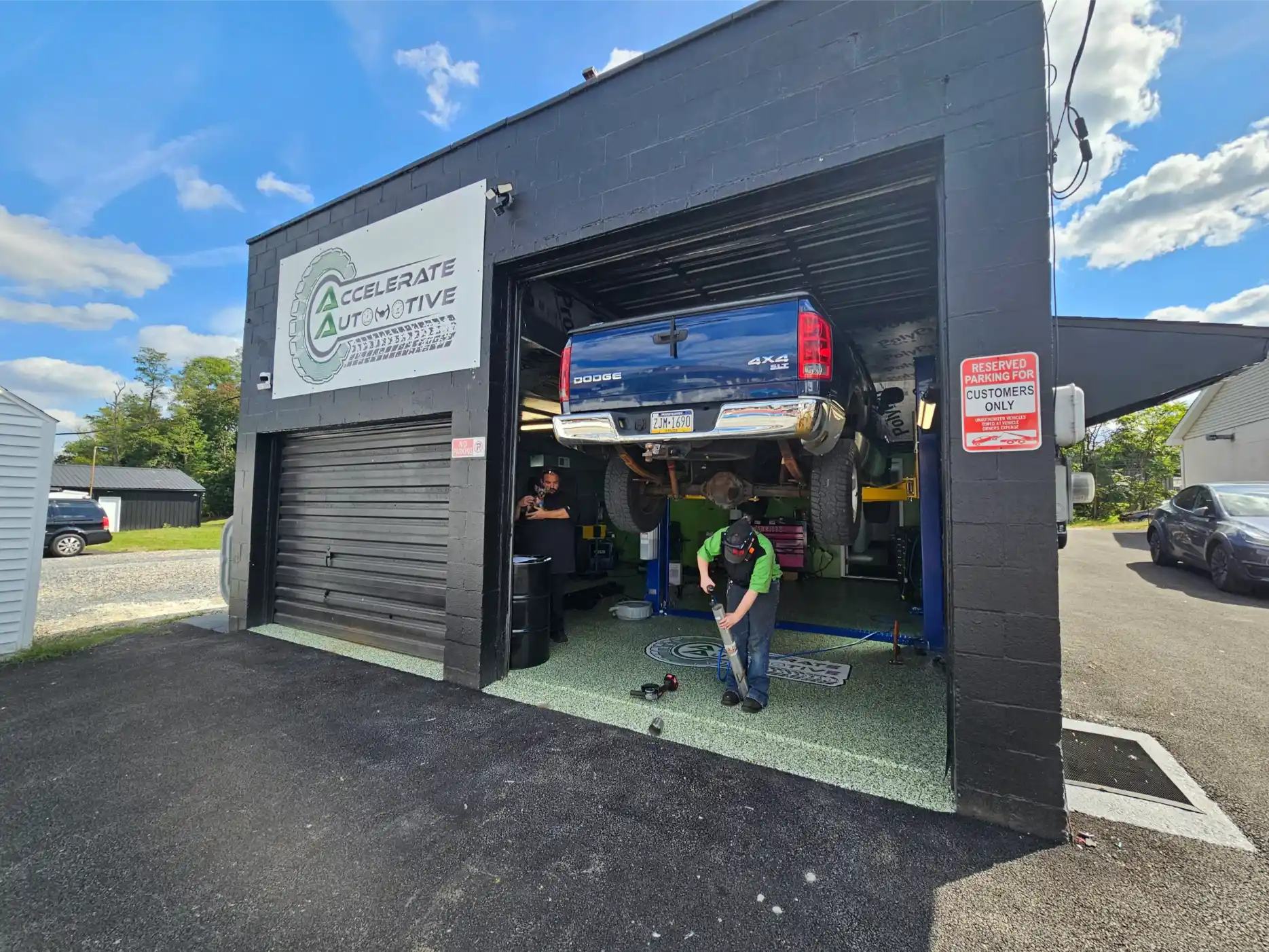
Accelerate Automotive serves drivers in York and West York from 1231 W. Locust Street & 1221 W. Heiges Ave, York, PA 17404.
For after-hours situations, the shop has a dedicated after-hours auto repair option in York, PA with 24/7 vehicle drop-off.
That means a breakdown after normal business hours does not necessarily require you to keep the vehicle at home or arrange another tow the following day.
What Should You Leave With the Repair Shop After an After-Hours Drop-Off?
A clear explanation of what happened can make the next stage much easier.
Leave your contact information along with a concise description of the symptoms.
Include:
- Your full name
- Best phone number
- Vehicle year, make and model
- Key location or drop-off instructions
- What happened immediately before the breakdown
- Warning lights you noticed
- Unusual sounds or smells
- Whether the engine overheated
- Whether the vehicle restarted
- Any recent repair or maintenance related to the problem
Try to describe what you experienced rather than diagnosing the car yourself.
For example, “The battery is bad” gives a technician less useful information than, “The car clicked several times when I tried to start it, the lights became dim and it would not crank.”
That distinction matters because several different failures can produce similar symptoms.
What Happens When the Shop Inspects a Breakdown?
The first goal is to identify the reason the vehicle failed.
That may involve a visual inspection, battery and charging system checks, fluid inspection, diagnostic scanning, electrical testing, mechanical testing or other procedures based on the symptoms.
Good diagnosis matters because a trouble code or warning light does not always identify the failed component by itself.
A fault code tells the technician which system detected an abnormal condition. Testing is often needed to determine why that condition occurred.
This is particularly important after a car breakdown York PA drivers cannot easily explain. Replacing parts based only on symptoms can waste money and leave the actual problem unresolved.
How Much Does Car Breakdown Repair Cost in York PA?
There is no reliable single price for breakdown repair because “breakdown” describes the situation, not the failed part.
A car that stops running could need something relatively straightforward or a much larger repair.
Cost can depend on:
- The cause of the failure
- Parts required
- Labour involved
- Vehicle make and model
- Diagnostic time
- Whether another component was damaged
- Whether the vehicle was driven after the warning signs appeared
The practical first step is diagnosis.
Once the cause is known, you can make a repair decision based on the actual problem instead of guessing from roadside symptoms.
Can You Prevent Every Unexpected Car Breakdown?
No. Even maintained vehicles can develop unexpected failures.
Regular maintenance does reduce the chance that certain problems will catch you completely by surprise.
Pay attention to:
- Battery condition
- Tire pressure and tread condition
- Fluid levels
- Cooling system condition
- Oil changes
- Brake condition
- Warning lights
- Fluid leaks
- New vibrations
- Unusual noises
- Changes in starting or engine performance
Small changes are often easier to investigate before they become roadside problems.
If your car starts taking longer to start, runs hotter than normal, develops a vibration or shows a warning light, scheduling an inspection before the problem becomes severe can save considerable inconvenience.
What Should You Keep in Your Car for a Breakdown?
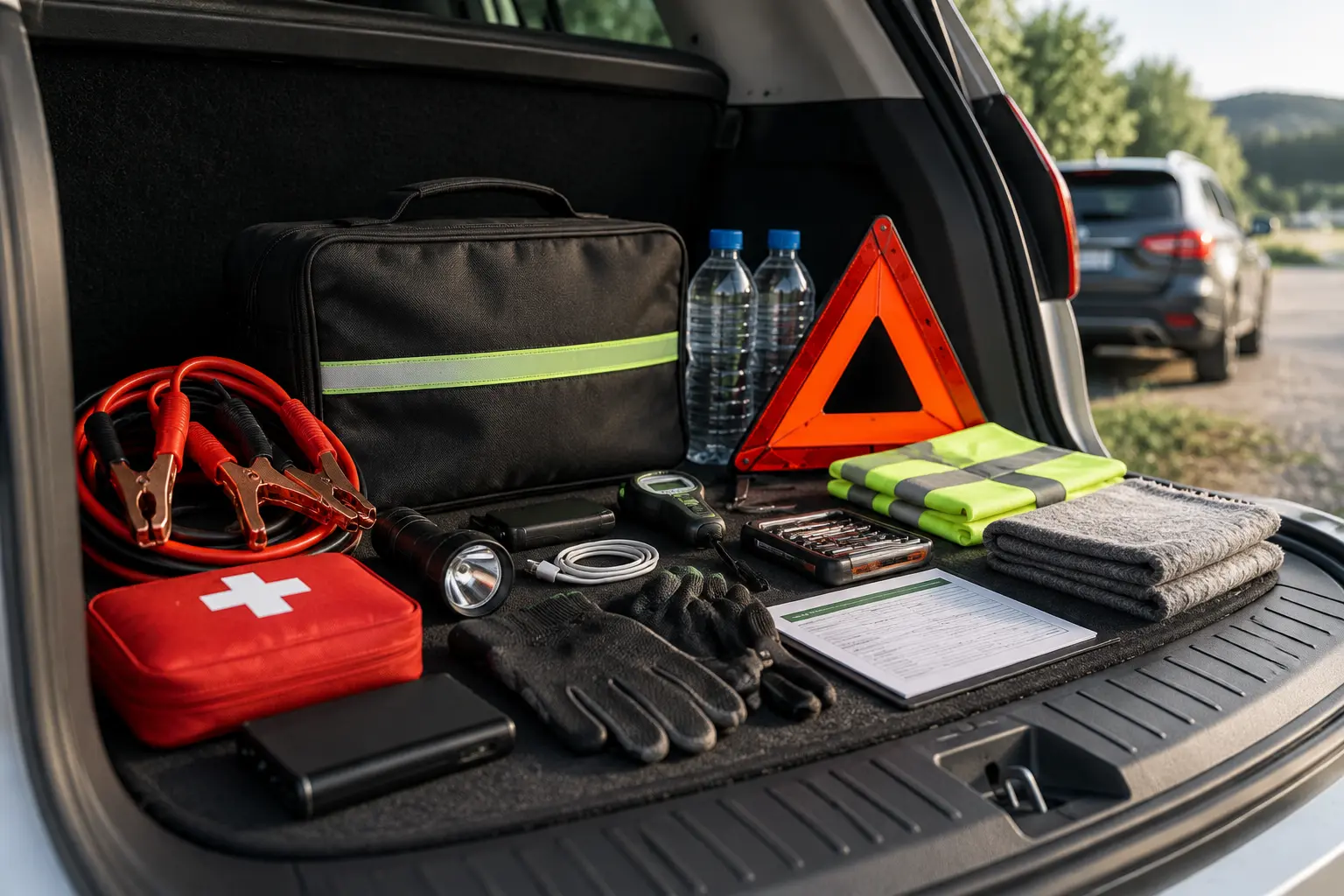
A basic roadside emergency kit is useful whether you drive around York every day or travel farther from home.
The National Highway Traffic Safety Administration recommends carrying items such as a charged phone and charger, first aid supplies, a flashlight, jumper cables, a tire pressure gauge, water, basic tools and weather-appropriate supplies. See NHTSA’s recommended roadside emergency kit.
A practical kit may include:
- Phone charging cable or power bank
- Flashlight
- Reflective safety equipment
- First aid kit
- Jumper cables
- Tire pressure gauge
- Drinking water
- Work gloves
- Emergency blanket
- Basic vehicle information
- Insurance and roadside assistance contact details
Check the kit occasionally. A dead flashlight or empty power bank is not much help when you actually need it.
What Should You Do if Your Car Breaks Down at Night in York PA?
Start with safety.
Move away from active traffic if you can do so safely, turn on your hazard lights, identify your location and determine whether emergency services are needed.
Then arrange roadside assistance or towing.
Do not spend unnecessary time standing outside trying to inspect the car in darkness, especially near moving traffic.
For an after-hours car breakdown York PA drivers should think in this order:
Safety first. Transport second. Diagnosis third.
Trying to solve the mechanical problem before securing yourself and the vehicle puts those priorities backwards.
Can You Drop Off a Car at Accelerate Automotive After Hours?
Yes. Accelerate Automotive provides 24/7 vehicle drop-off, which can be useful when a breakdown happens after regular shop hours.
Normal service hours are Monday through Friday, 10:00 AM–6:00 PM and Saturday, 9:00 AM–2:00 PM. Evenings are available by appointment.
If a towing provider is transporting the vehicle after hours, make sure you have confirmed where the vehicle should be left and provide clear contact and symptom information for follow-up.
What if You Are Not Sure Whether the Car Needs a Tow?
Do not force the vehicle to continue driving simply because it still moves.
If you have lost braking ability, steering feels unsafe, the engine is overheating, oil pressure is lost, the vehicle is severely shaking, a tire is badly damaged or the vehicle repeatedly stalls, arranging transportation is generally the safer choice.
If the problem is minor and you are unsure whether the vehicle can be driven, seek professional advice before continuing.
A short tow can be far less costly than additional mechanical damage caused by driving a vehicle that is already warning you to stop.
Get Your Vehicle Checked After a Breakdown in York PA
An unexpected breakdown is frustrating enough. The next step should be clear.
If your vehicle has stopped running, developed a serious warning light, overheated, suffered a tire problem or needs diagnosis after being towed, Accelerate Automotive can inspect the problem and determine what repair is actually needed.
We serve York, PA, with a strong West York focus and provide 24/7 vehicle drop-off for drivers dealing with problems outside normal business hours.
Accelerate Automotive
1231 W. Locust Street & 1221 W. Heiges Ave
York, PA 17404
Phone: 866-382-8861
Email: service@driveaccelerate.com
If your vehicle is currently in a dangerous roadside position, handle the safety situation first. Once the vehicle can be transported safely, contact Accelerate Automotive to arrange the next step.