

Blog
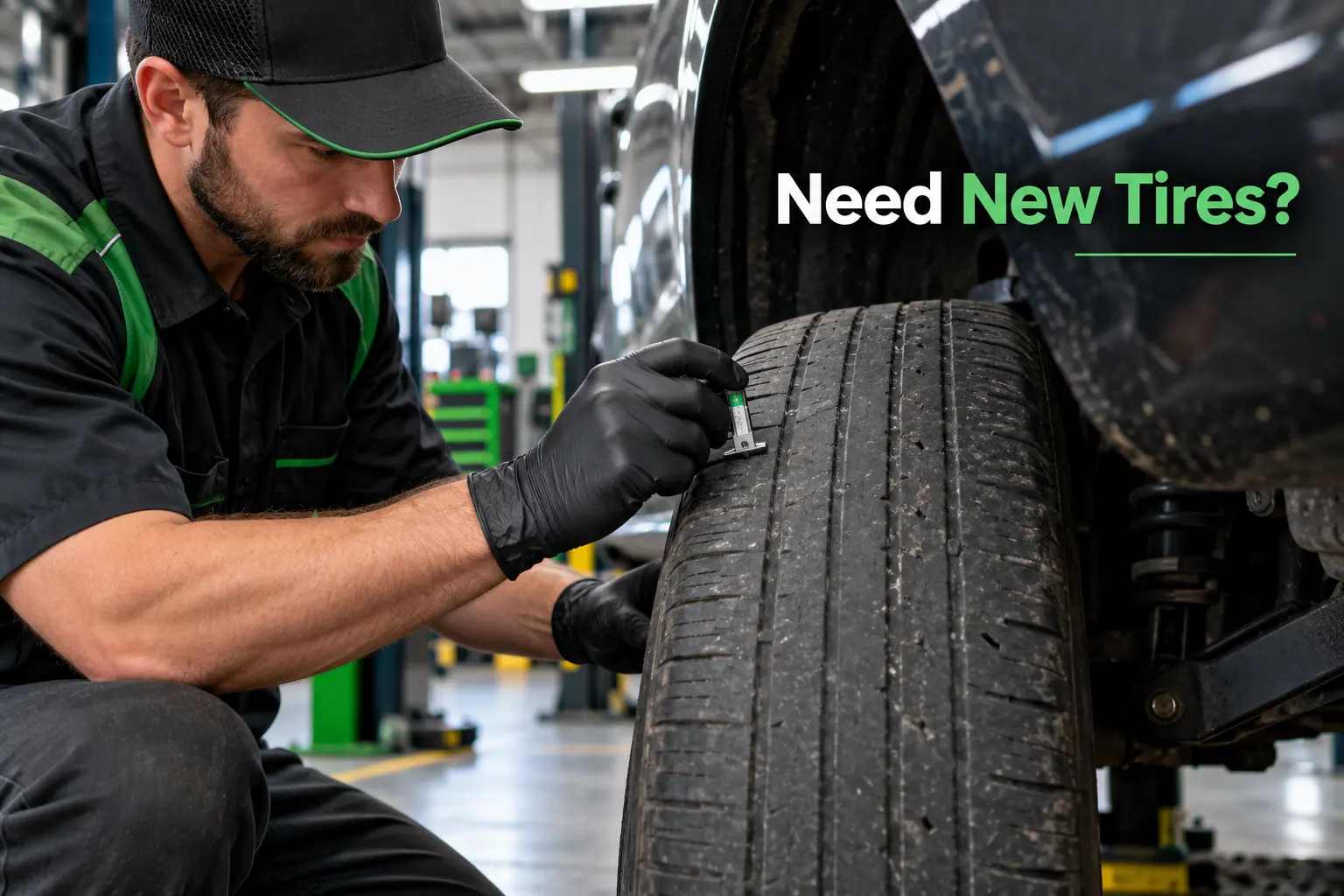
You hit the brakes on a wet Route 30 morning and the car takes a beat longer to settle than it used to. That small hesitation is often the first of the signs you need new tires York PA drivers miss until something worse happens.
Tires are the only part of your car that touches the road. Four patches of rubber, each about the size of your hand, handle every turn, stop and pothole. When they wear out, nothing else on the vehicle can make up for it.
Here’s how to tell when it’s time, what’s urgent and what can wait. Think of it as a field guide to the signs you need new tires before a small problem turns into a tow.
What Are the Signs You Need New Tires in York, PA?
Short answer: the clearest signs you need new tires are low tread, sidewall damage and a car that feels different. Check tread depth, look for sidewall damage and note how the car feels. If tread is down to 2/32 of an inch, the sidewall shows cracks or bulges or the car vibrates, pulls or loses grip in rain, replace the tires. Age matters too, even with good tread.
The rest of this guide breaks each sign down so you can check your own set in the driveway in about ten minutes.
1. Your Tread Is Worn Down
Tread is what channels water out from under the tire. As it wears, the tire pushes through water instead of moving it aside and that’s when hydroplaning becomes a real risk.
The legal minimum in Pennsylvania is 2/32 of an inch. Most tire professionals recommend replacing sooner, around 4/32, because wet-weather stopping gets noticeably worse once you’re below that.
The Penny Test
Take a penny and slide it into a tread groove with Lincoln’s head pointing down. If you can see the top of his head, you’re at or below 2/32 and the tire is done.
The Quarter Test
Try the same thing with a quarter and Washington’s head. If the top of his head is fully visible, you’re near 4/32. That’s your cue to start shopping, especially before winter.
Check several spots on every tire: inside edge, center and outside edge. One good-looking groove tells you very little.
2. The Wear Pattern Looks Uneven
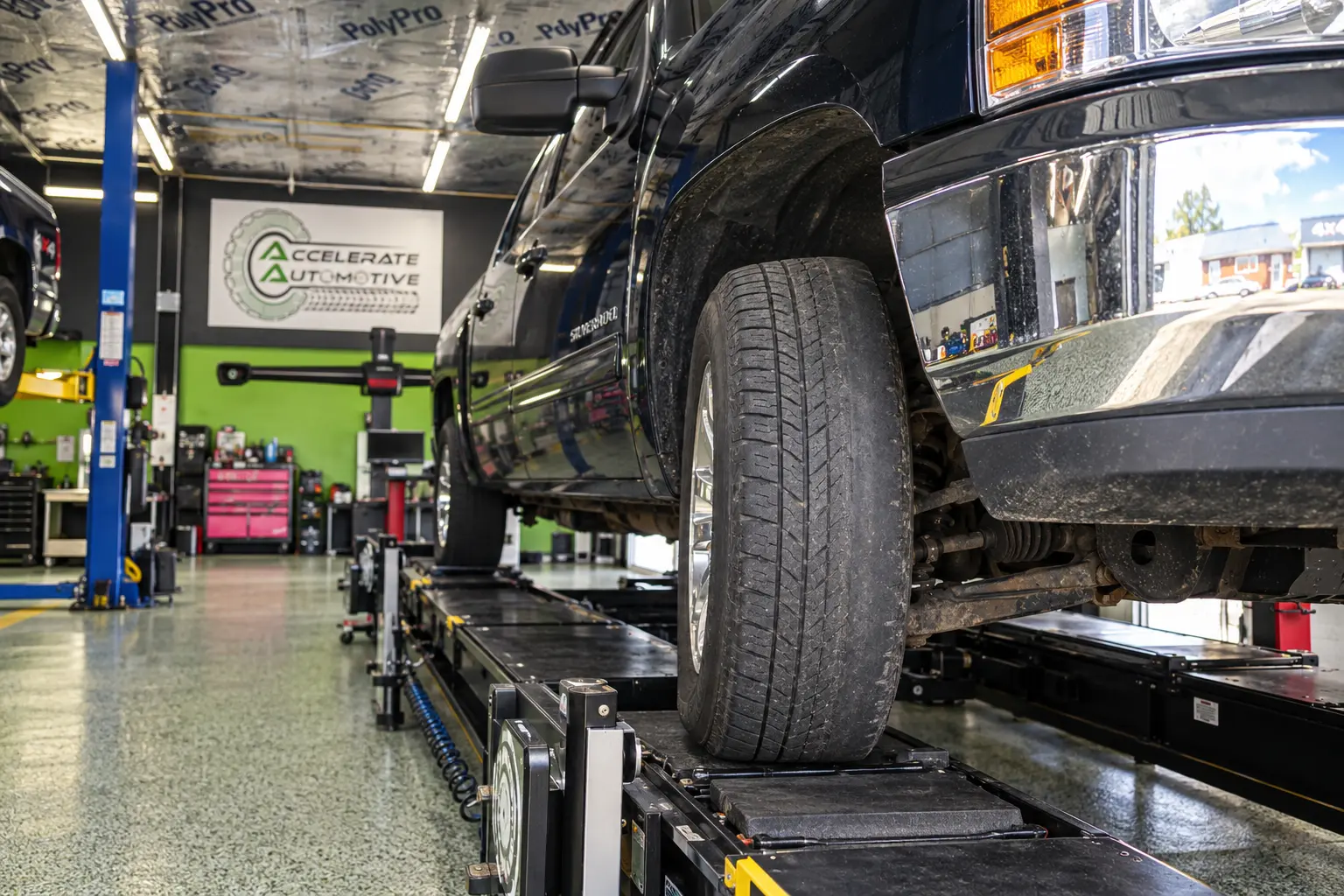
A tire that’s bald on one shoulder but fine everywhere else is telling you something. Wear on the inside or outside edge usually points to alignment trouble. Wear down the middle suggests overinflation. Both edges worn can mean the tire runs underinflated.
Scalloped or “cupped” patches often come from worn shocks or struts. Replacing the tire without fixing the cause just means you’ll be back in a year.
That’s why a proper wheel alignment in York, PA is worth doing whenever you put new rubber on the car. It protects your investment and keeps the wear even.
3. You Feel Vibration in the Steering Wheel or Seat
A shake that starts around 50 or 60 mph is a classic complaint. Sometimes it’s just an out-of-balance wheel. Other times it’s a tire with a separated belt, a flat spot or severe uneven wear.
Pro tip: if the vibration shows up in the steering wheel, suspect the front tires. If you feel it in your seat or the floor, look at the rear.
Don’t keep driving on it hoping it’ll settle. A belt separation can fail without much warning at highway speed.
4. The Car Pulls to One Side
If you let go of the wheel on a straight, flat stretch and the car drifts, something is off. It could be alignment or uneven tire pressure. It could also be a tire with internal damage or lopsided wear.
Check pressure first. If the pull stays after that, have the tires and alignment looked at together.
5. You Hear Humming, Roaring or Thumping
Worn tires get loud. A steady hum that rises with speed often means uneven tread. A rhythmic thump that matches wheel rotation can point to a flat spot or a damaged internal belt.
You may not notice the noise creeping up since it builds slowly. A passenger riding along will often hear it first.
6. There’s Cracking, Bulges or Exposed Cord
Look at the sidewalls, not just the tread. Small surface cracks in the rubber are a sign of aging. Deep cracks, cuts or any bulge are a different story.
A bulge means the inner structure has failed and only a thin layer of rubber is holding air in. If you see one, stop driving on it as soon as it’s safe. Visible cord or fabric is the same level of urgent.
Pennsylvania freeze-thaw cycles don’t help. Potholes that open up each late winter are a common cause of sidewall bruising and you can’t always see the damage from above.
7. The Tires Are Too Old, Even With Good Tread
Rubber breaks down with time, not just miles. Heat, sunlight, road salt and sitting still all take a toll.
Find the DOT code on the sidewall. The last four digits show the week and year the tire was made. “2422” means the 24th week of 2022.
Many vehicle and tire manufacturers suggest having tires inspected once they reach about six years old and replacing them by ten, regardless of tread. Check your owner’s manual for the specific guidance on your vehicle. That spare in the trunk counts too.
8. You’ve Put On a Lot of Miles
How many miles do tires last? It depends on the tire, your driving and how well you maintain them. Many passenger tires carry treadwear warranties somewhere in the 40,000 to 60,000 mile range, though plenty wear out sooner.
Highway commuters, drivers who haul heavy loads and anyone skipping rotations tend to wear tires faster. Regular rotation helps a set last longer.
Mileage is one of the quieter signs you need new tires. Use it as a reminder to inspect, not as the only deciding factor. Tread and condition tell the real story.
9. Your Car Loses Grip in Rain or Snow
Of all the signs you need new tires, this is the one York drivers tend to explain away.
The back end feels loose on wet pavement. Stops take longer. The traction control light flickers on turns that never used to bother it.
Those aren’t quirks of the car. They’re what tires with tired tread feel like. If you’ve noticed it, don’t wait for the first snow to find out how bad it really is.
Will Worn Tires Fail a PA State Inspection?
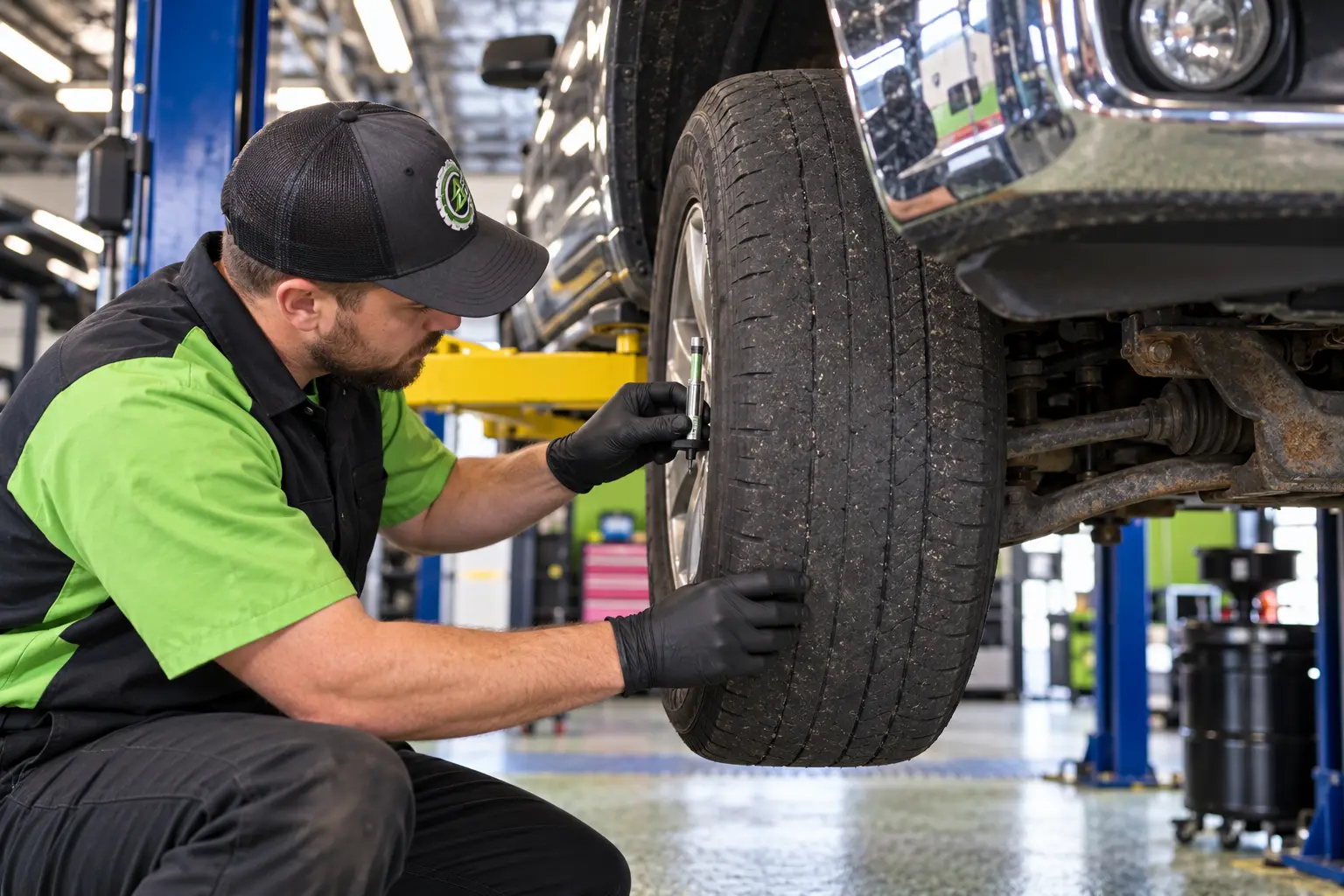
They can. Pennsylvania inspectors check tread depth and tires with tread below 2/32 of an inch can fail. Exposed cord, bulges and certain cuts are also grounds for failure.
If you’re coming up on your sticker date, it’s smart to look over your tires first. Our team can handle your PA state inspection in York and tell you ahead of time if the tires are likely to be a problem.
For the official rules, see the Pennsylvania Department of Transportation’s vehicle inspection information.
What’s the Fastest Way to Check Tire Safety at Home?
Do a quick monthly check with these five steps:
– Press a penny into the tread at three spots per tire.
– Check air pressure when the tires are cold, using the number on the driver’s door jamb sticker, not the number on the tire sidewall.
– Run your hand over the tread for uneven spots or scalloping.
– Look at both sidewalls for cracks, bulges and cuts.
– Read the DOT date code on each tire.
The National Highway Traffic Safety Administration also has a helpful tire safety guide if you want more detail on pressure and load ratings.
Should You Replace Two Tires or All Four?
If the tread is close to even on all four, replace all four. If only one or two are damaged, put the new pair on the rear axle for better stability in wet conditions, even on front-wheel-drive cars. Mixing very different tread depths can upset handling and on all-wheel-drive vehicles it can stress the drivetrain.
Every vehicle is different, so a technician should look at yours before you decide. We’ll tell you what you actually need, not what’s most expensive.
When It’s Time, Get Your Tires Replaced in York, PA
None of this is meant to scare you. Catching the signs you need new tires York PA roads reveal, like cracked sidewalls after a rough winter, keeps the repair simple. Most tire problems are easy to handle when you catch them early. The ones that turn into emergencies are the ones that get ignored for another month.
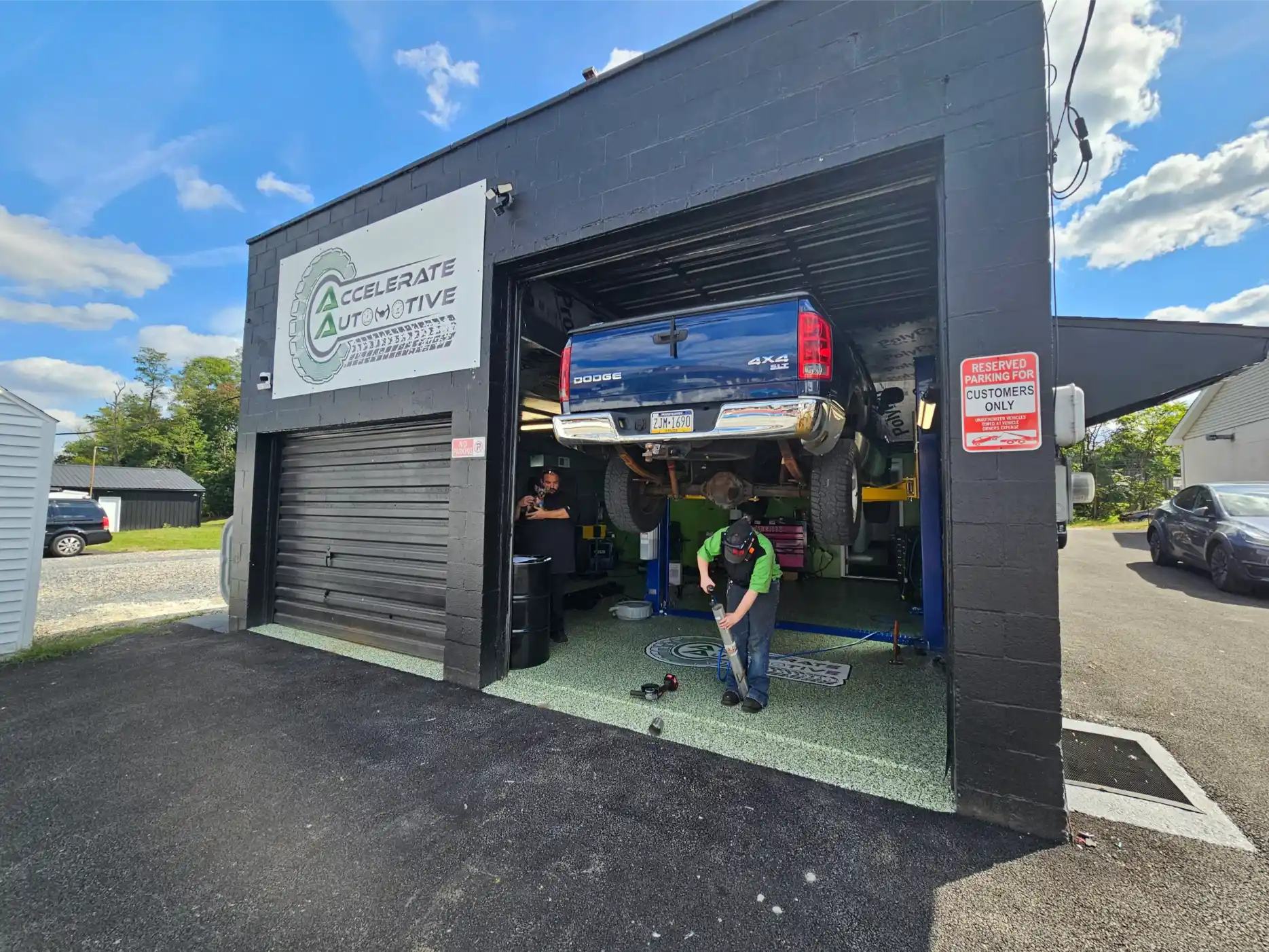
If you’ve spotted any of the signs above, stop by Accelerate Automotive at 1231 W. Locust Street in York or call 866-382-8861. We’ll check your tread, pressure, sidewalls and alignment, then give you a straight answer on what needs to happen.
Our tire services in York, PA cover replacement, mounting, balancing and more for cars, SUVs and trucks. We’re open Monday through Friday 10:00–18:00 and Saturday 09:00–14:00, with evening appointments and 24/7 drop-off available.
Don’t wait for a flat or a failed inspection. If you’re searching for new tires York PA locals trust for honest advice, we’re here. Call today and get a tire check on the calendar.