

Blog
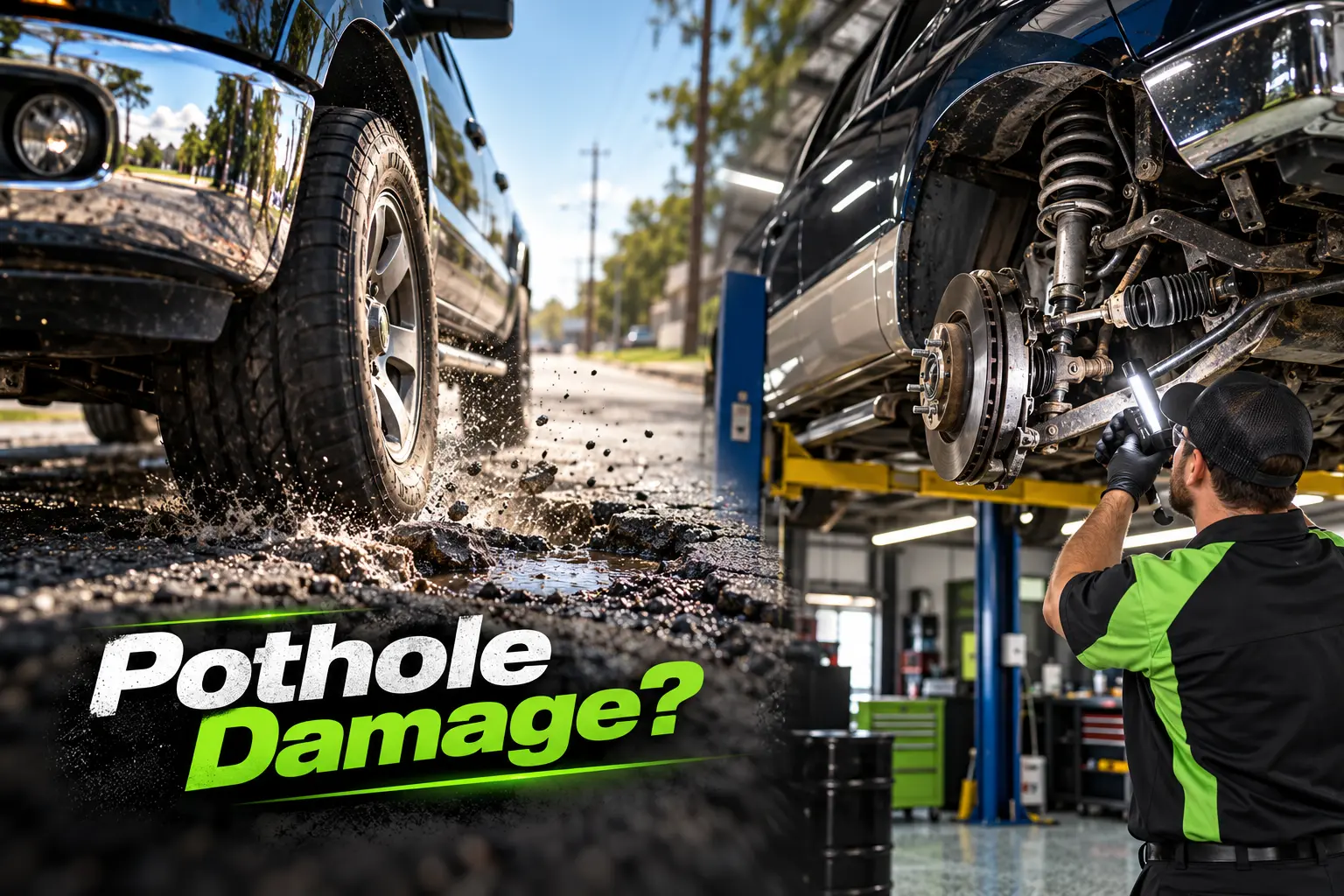
You hit the pothole, felt the jolt and kept driving. Most of us do. The car seems fine, so you move on with your day.
Pothole suspension damage in York, PA rarely announces itself at the moment of impact. It builds quietly. A bent part, a stressed joint or a shifted wheel angle can sit there for weeks before you notice the pull, the clunk or the tires wearing down early.
This guide explains what actually happens under your car, the signs to watch for and when it’s time to get a professional look.
Why Are Pennsylvania Roads So Hard on Your Suspension?
Winter does most of the damage. Water seeps into small cracks in the pavement, freezes and expands. When it thaws, the surface weakens. Traffic then breaks the loose material apart and a crack becomes a hole.
Pennsylvania sees this freeze-thaw cycle every year. By late winter and early spring, many roads around York have fresh potholes in places that were smooth in the fall.
The problem isn’t limited to one season, though. Patched holes sink. Utility cuts settle. Edges crumble. If you commute through West York, you probably know a few spots you steer around out of habit.
Your suspension is the system that absorbs all of it. Every bump you don’t feel is a bump a part handled for you.
What Does a Pothole Actually Do to Your Suspension?
A pothole delivers a sudden, hard impact. The tire drops in, strikes the far edge and the force travels up through the wheel into the suspension and steering components.
At 35 mph, that force can exceed what those parts were designed to take in a single hit. Metal can bend. Rubber can tear. Fluid seals can fail.
The damage usually falls into three categories:
- Bent or cracked components, such as control arms and tie rods
- Worn or torn parts, such as bushings, ball joints and sway bar links
- Leaking or weakened dampers, meaning struts and shock absorbers
Even when nothing is visibly broken, the wheel angles can shift. That affects how the car tracks, how the tires wear and how it handles in an emergency.
How Do You Know If a Pothole Damaged Your Suspension?
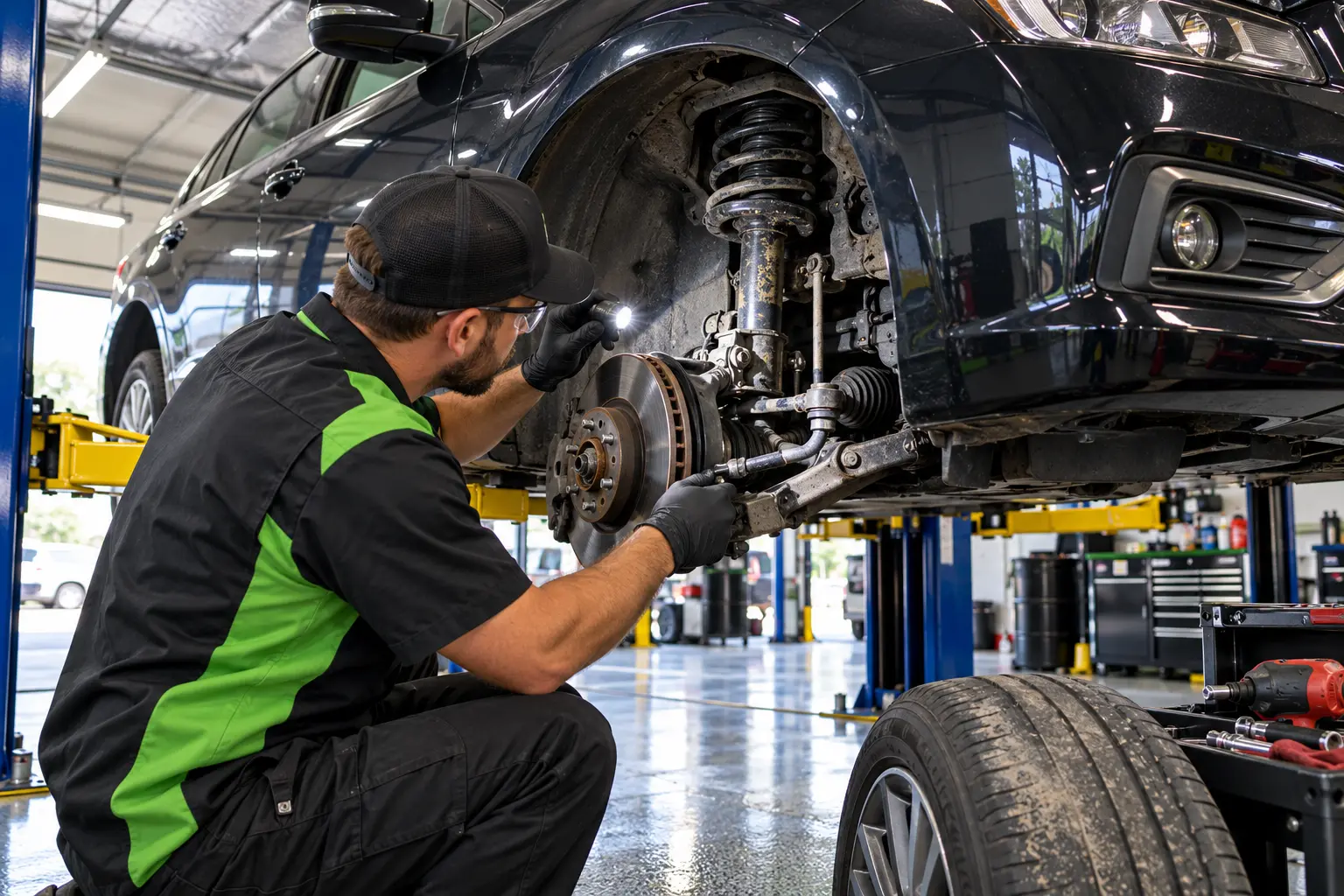
Here’s the short answer: a pothole likely damaged your suspension if the car pulls to one side, the steering wheel sits off center, you hear clunking over bumps or the ride feels rougher than before.
Watch for these signs after an impact:
- The vehicle drifts left or right on a straight road
- The steering wheel is crooked while driving straight
- A clunk, knock or rattle over bumps or during turns
- Vibration or shaking at highway speeds
- The car bounces more than usual after a bump
- Uneven or fast tire wear, especially on the inside or outside edge
- A sagging corner or a car that sits lower on one side
- Fluid on a strut body
Some symptoms show up the same day. Others take a few weeks. Uneven tire wear, for example, only becomes obvious after hundreds of miles.
Pro tip: if something feels different after a hard hit, trust that feeling. Drivers know their cars better than they think.
Which Suspension Parts Take the Hit?
Not every pothole damages the same part. The wheel’s position, your speed and the vehicle’s weight all matter. Here are the usual suspects.
Struts and Shocks
These control how the car rides and keeps the tires planted on the road. A hard impact can bend a strut rod or blow a seal. Once a strut leaks, it stops damping properly and the car feels floaty or bouncy.
Control Arms and Ball Joints
Control arms connect the wheel assembly to the frame. Ball joints let the wheel pivot and move up and down. A strong hit can bend an arm or loosen a joint. A worn ball joint is more than a comfort issue. If it fails completely, the wheel can separate from the suspension.
Tie Rods and Steering Components
Tie rods link your steering to the wheels. When one bends, the steering feels vague or off-center. You might notice the wheel doesn’t return smoothly after a turn.
Bushings and Sway Bar Links
These are small parts that do a lot of quiet work. Torn bushings cause clunks and sloppy handling. Broken sway bar links add body roll and noise in corners.
Wheel Alignment
Alignment isn’t a part, but it’s often the first thing a pothole knocks out. A car can be mechanically sound and still sit a few degrees off. That’s enough to chew through a set of tires. A proper wheel alignment check after an impact is a smart, low-cost way to catch it early.
Is It Safe to Keep Driving After Hitting a Pothole?
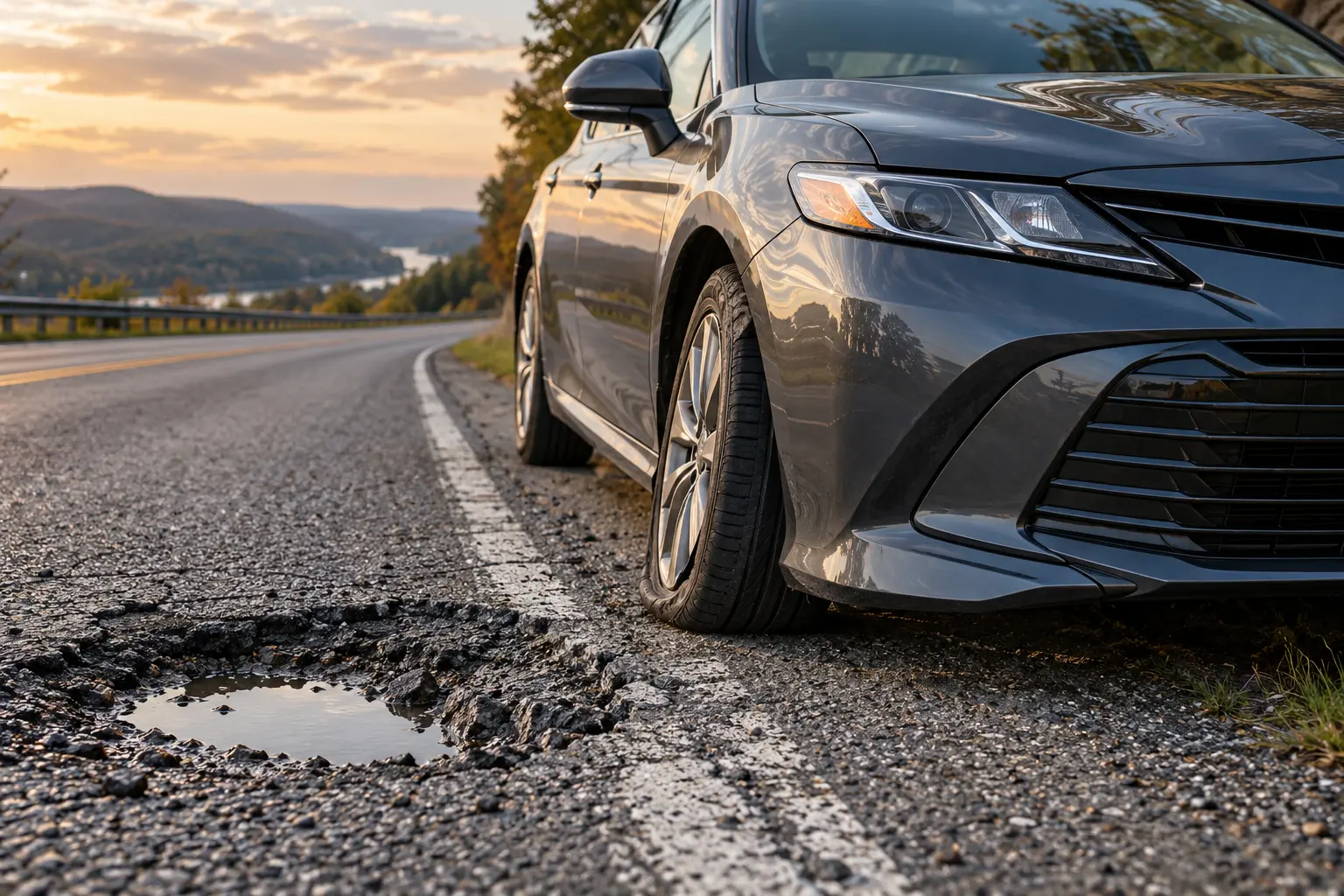
Sometimes, but not for long. If the car feels normal, you can usually drive it to a shop for a check. If it pulls hard, the steering feels loose or you hear grinding or loud clunking, stop driving and get it inspected.
Here’s the thing. Suspension and steering parts control your ability to stop and steer. A weak link may hold up on a quiet street and fail during a sudden swerve on a main road.
A few warning signs call for immediate attention:
- A tire that looks bulged or is losing air
- A wheel that wobbles or leans in at the top
- Steering that feels stiff, loose or unpredictable
- Metal-on-metal grinding
If any of these appear, pull over safely and don’t push your luck.
How Much Does Pothole Suspension Repair Cost?
It depends on what was damaged and anyone who quotes a number without looking at the car is guessing.
A simple alignment correction is a very different job from replacing a control arm and a strut. Cost also varies with your vehicle, since parts and labor differ between a compact sedan, a pickup and a luxury SUV
What you can count on is this: catching damage early almost always costs less. A worn bushing is a small repair. Ignore it and it can wear out the ball joint, the tire and the alignment together.
An inspection is the fastest way to replace guessing with facts. A technician can put the car on a lift, check each component and tell you what needs attention now and what can wait.
What Should You Do Right After You Hit a Pothole?
A few steps can protect both your car and your wallet.
- Pull over when it’s safe. Check the tire for bulges, cuts or low pressure.
- Note the location. Write down the road and the nearest cross street.
- Pay attention to how the car drives. Notice any pull, noise or vibration.
- Report the pothole. PennDOT accepts reports for state roads and your municipality handles local ones. You can start at the Pennsylvania Department of Transportation website.
- Book an inspection. Don’t wait for a symptom to get worse.
Keep any notes and repair paperwork. If you decide to pursue a damage claim with the responsible agency, documentation helps.
Why Pothole Damage Gets Worse the Longer You Wait
Suspension parts work as a system. One weak part puts extra load on the others.
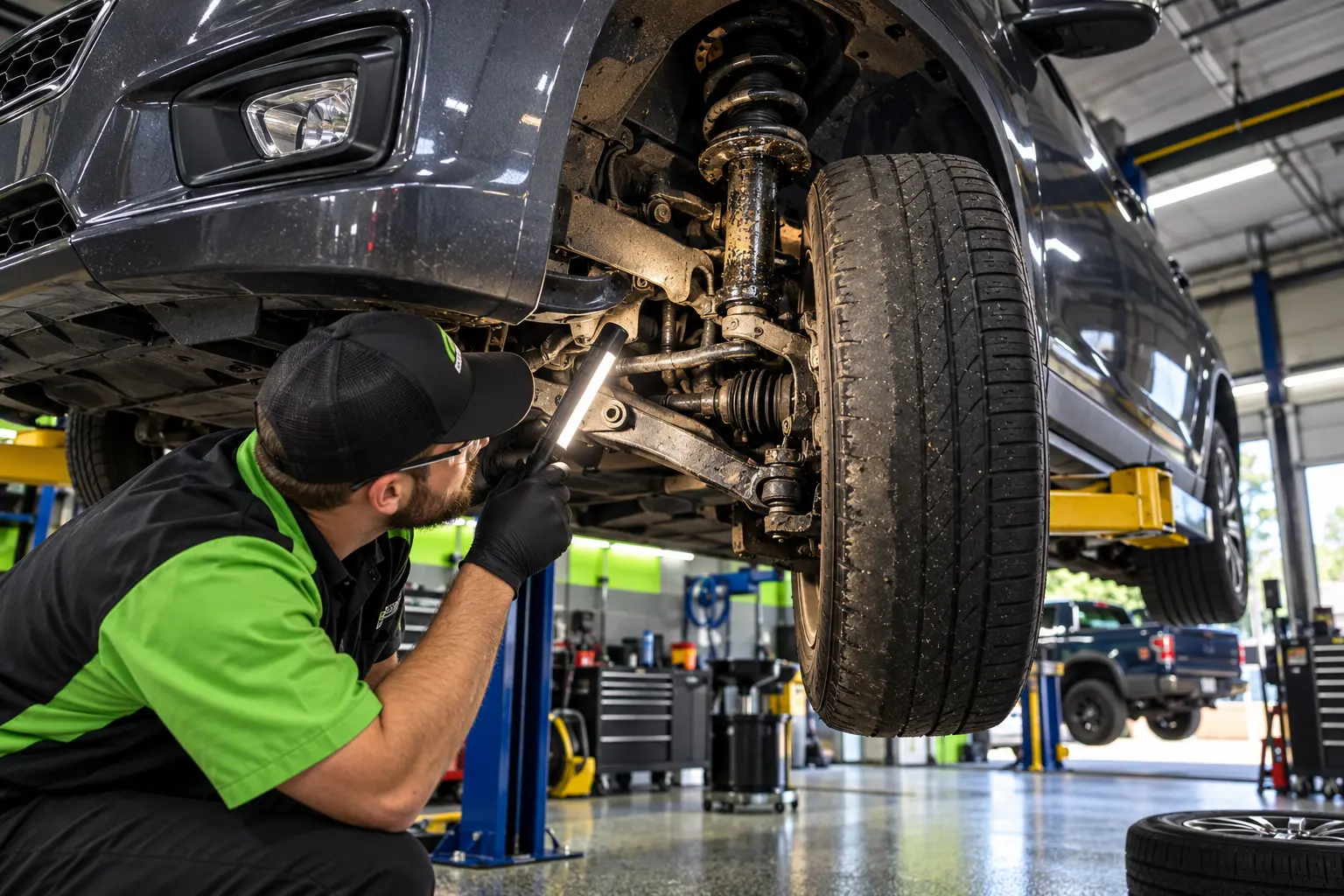
A leaking strut lets the tire bounce and that wears the tire unevenly. A loose ball joint changes the wheel angle and that wears the tire and strains the steering. A bent control arm throws off the alignment, so the car fights itself on every mile.
Small problems stack up. What starts as a minor fix can become a bigger repair simply because time passed.
It’s also about safety. A car that doesn’t track straight or respond cleanly takes longer to control in rain, snow or an emergency stop. Pennsylvania weather doesn’t give you much margin for that.
For general vehicle safety guidance, the National Highway Traffic Safety Administration is a solid public resource.
What Happens During a Suspension Inspection?
A proper inspection isn’t a quick glance under the hood. It’s a hands-on check of every part that connects your wheels to your car.
A technician will typically:
- Lift the vehicle and check each wheel for play or movement
- Inspect struts and shocks for leaks and wear
- Examine control arms, ball joints and bushings for damage
- Check tie rods and steering linkage
- Look at tire wear patterns for clues about alignment and suspension health
- Test-drive the car to confirm what they find
You should leave with a clear explanation, not a vague list. Good shops show you what they found and explain why it matters.
Suspension Inspection and Repair in West York, PA
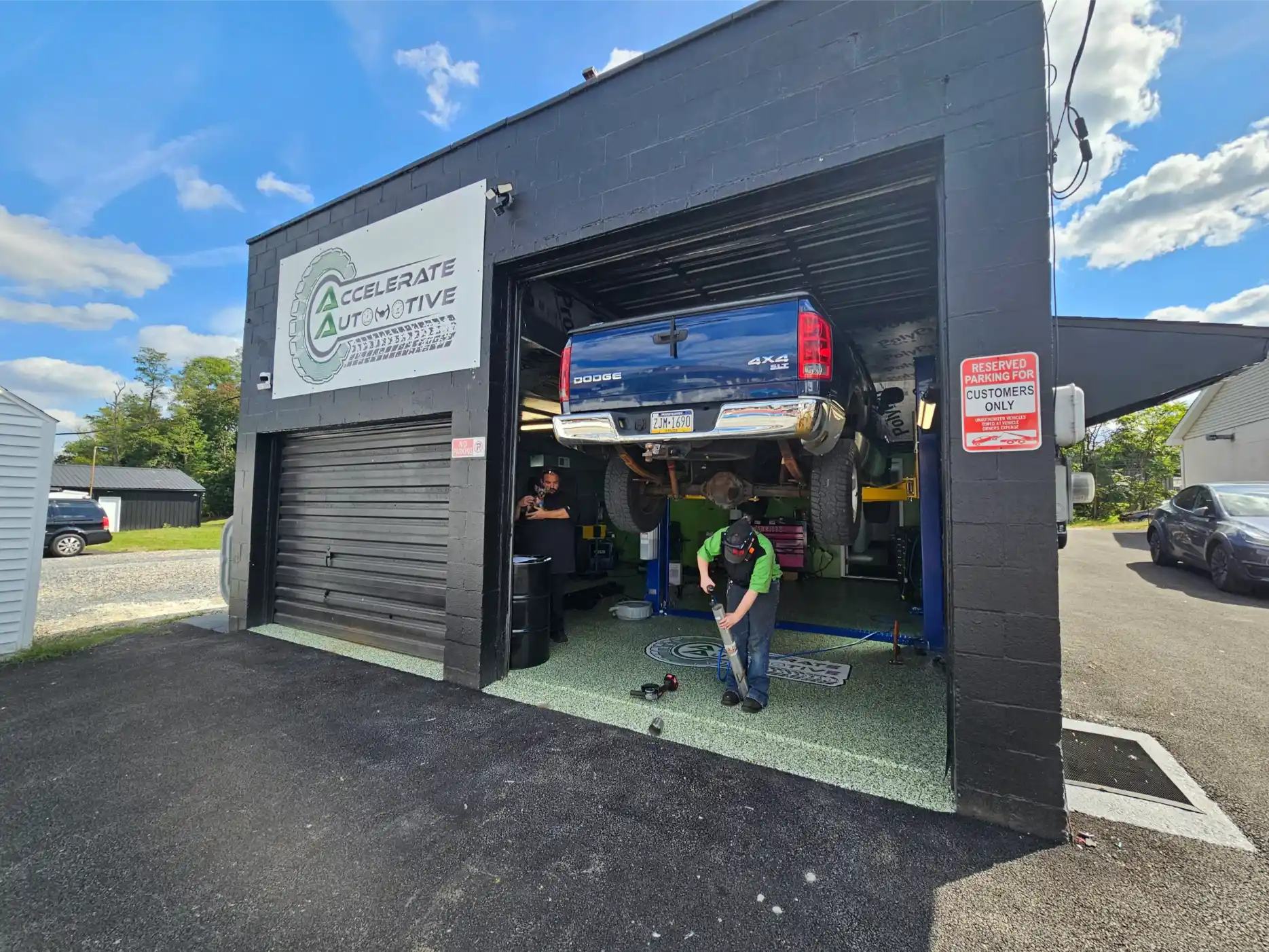
If you hit a pothole and something feels off, don’t wait for it to get worse. Accelerate Automotive can inspect the damage and explain your options in plain language.
Our team handles suspension repair for drivers across York and the surrounding area, including West York and communities within about 30 miles. We’ll look at the full picture, from struts and control arms to alignment, so you only pay for what the car actually needs.
You can find us at 1231 W. Locust Street and 1221 W. Heiges Ave, York, PA 17404. We’re open Monday through Friday from 10:00 a.m. to 6:00 p.m. and Saturday from 9:00 a.m. to 2:00 p.m. Evening appointments are available and 24/7 drop-off makes it easy to leave your car when it suits your schedule.
Ready to get it checked? Call 866-382-8861, email service@driveaccelerate.com or schedule your inspection online.
One bad pothole shouldn’t turn into a bigger repair bill. Let’s find out what it did and fix it right.