

Blog
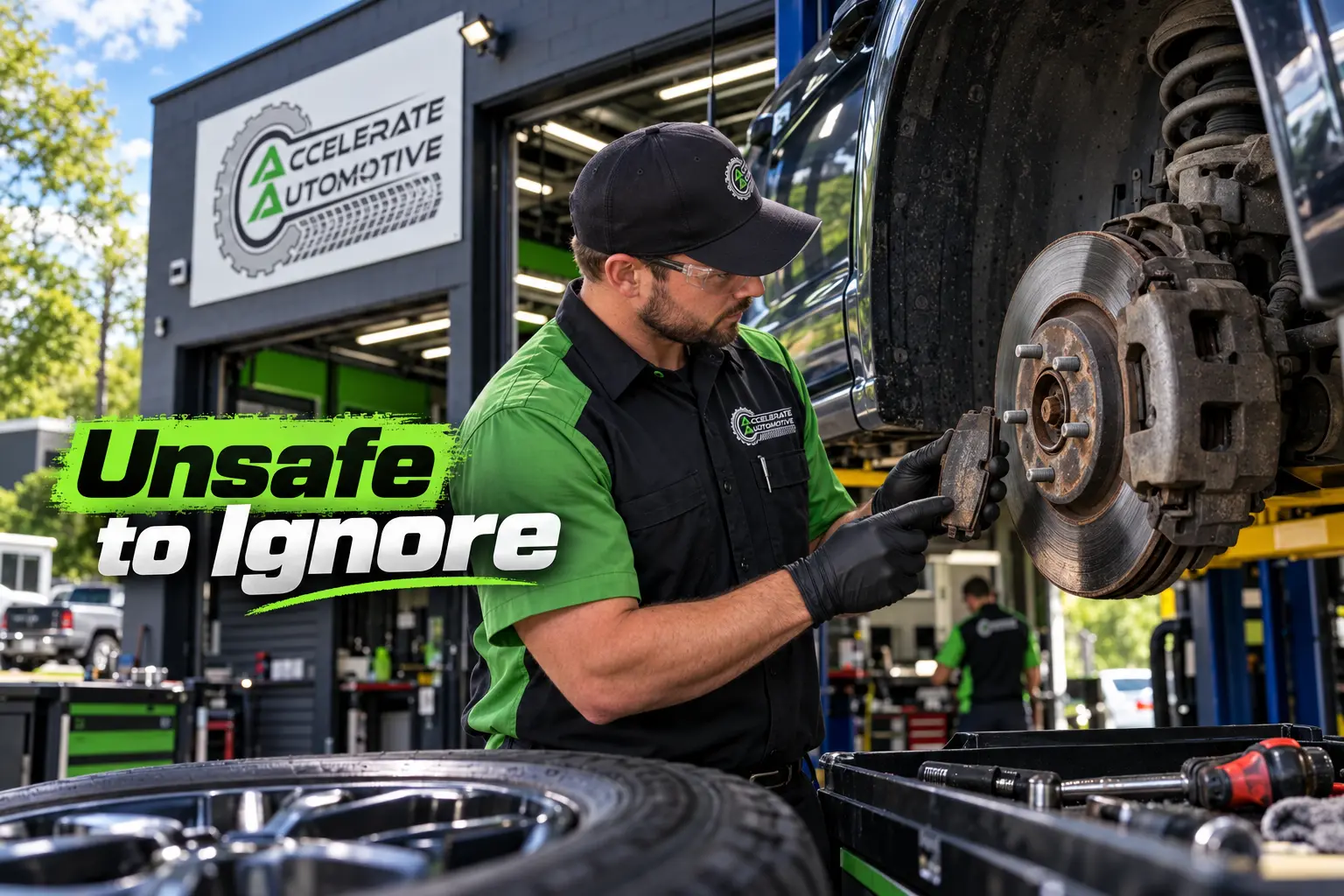
When a brake pedal changes feel, stopping distance gets longer or a grinding noise starts every time you slow down, waiting for the next routine service is a bad gamble. The signs you need brake repair York PA drivers should take seriously often appear before the vehicle loses dependable stopping power.
Around York and West York, daily stop-and-go driving, wet weather, winter road salt and normal wear can all put stress on braking components. This guide explains which symptoms call for a prompt inspection, which ones mean you should stop driving and what a professional brake check should include.
What Are the Signs You Need Brake Repair York PA Drivers Shouldn’t Ignore?
The most important warning signs are changes in how the vehicle stops, how the brake pedal feels and what you hear or smell while braking. A new symptom does not always mean the same part has failed, so the goal is to recognize the warning and get the system checked before the problem grows.
Common red flags include:
- Grinding, scraping or persistent squealing when braking
- A soft, spongy or sinking brake pedal
- Longer stopping distances
- Pulling to one side during braking
- Shaking, vibration or pedal pulsation while slowing down
- A brake or ABS warning light that stays on
- Brake fluid loss or an apparent leak
- A burning smell, smoke or unusual heat near a wheel
Some of these symptoms can come from more than one cause. That is why a proper brake inspection matters more than guessing which part needs to be replaced.
1. Grinding or Scraping When You Brake
Grinding is one of the clearest reasons to have the brakes inspected quickly. In many cases, a pad may have worn far enough that metal components are contacting the rotor. Debris, damaged hardware or another brake fault can also create a similar sound.
Continuing to drive with severe grinding can turn a pad problem into rotor or caliper damage. More importantly, the vehicle may not stop as predictably as it should.
If the noise is loud, sudden or paired with weaker braking, do not treat it as a normal maintenance sound. Arrange an inspection before putting more miles on the vehicle.
For wear-related concerns, Accelerate Automotive’s brake pad replacement service in York, PA can address worn brake pads after the braking system has been properly inspected.
2. A Soft, Spongy or Sinking Brake Pedal
The brake pedal should feel consistent from one stop to the next. If it suddenly feels soft, requires more travel than usual or sinks much closer to the floor, the braking system needs attention.
Possible causes can include air in the hydraulic system, a fluid leak, a brake hose issue or a problem elsewhere in the hydraulic system. Pedal feel alone cannot tell you which component is responsible.
A pedal that nearly reaches the floor, especially when braking performance has changed, is not a symptom to monitor for a few days. Stop driving as soon as it is safe to do so and arrange professional service or towing.
3. Your Vehicle Takes Longer to Stop
A gradual increase in stopping distance can be easy to miss because drivers often adjust without realizing it. You may start braking earlier at traffic lights or pressing the pedal harder without thinking much about the change.
That difference can point to worn friction material, overheated brakes, hydraulic problems, contaminated components or another issue reducing braking effectiveness. Tire condition and road surface also affect stopping distance, so the source needs to be diagnosed rather than assumed.
If your car no longer stops with the same confidence it had before, schedule a brake inspection York PA drivers can use to identify the cause before the problem becomes more severe.
4. The Car Pulls to One Side While Braking
A vehicle that changes direction when the brakes are applied deserves attention. Brake-related causes can include a sticking caliper, uneven pad contact, a restricted hose or a problem affecting one side more than the other.
Pulling can also come from tires, alignment or suspension issues. The timing of the symptom matters. If the vehicle mainly pulls when you press the brake pedal, the braking system should be part of the inspection.
Strong or sudden pulling can make a quick stop harder to control. If the car feels unstable under braking, avoid unnecessary driving until the cause is identified.
5. Shaking, Vibration or Pulsation During Braking
A steering wheel that shakes or a brake pedal that pulses during ordinary braking can point to uneven rotor surfaces, heat-related rotor variation, worn components or looseness elsewhere in the wheel or suspension system.
There is an important exception. ABS operation can create rapid pedal pulsation during hard braking on a slippery surface. That can be normal when the anti-lock system is actively working to prevent wheel lockup.
Repeated vibration during routine stops is different. If it happens consistently on dry pavement, a technician should inspect the brakes and related components instead of assuming the rotors automatically need replacement.
6. The Brake Warning Light or ABS Light Stays On
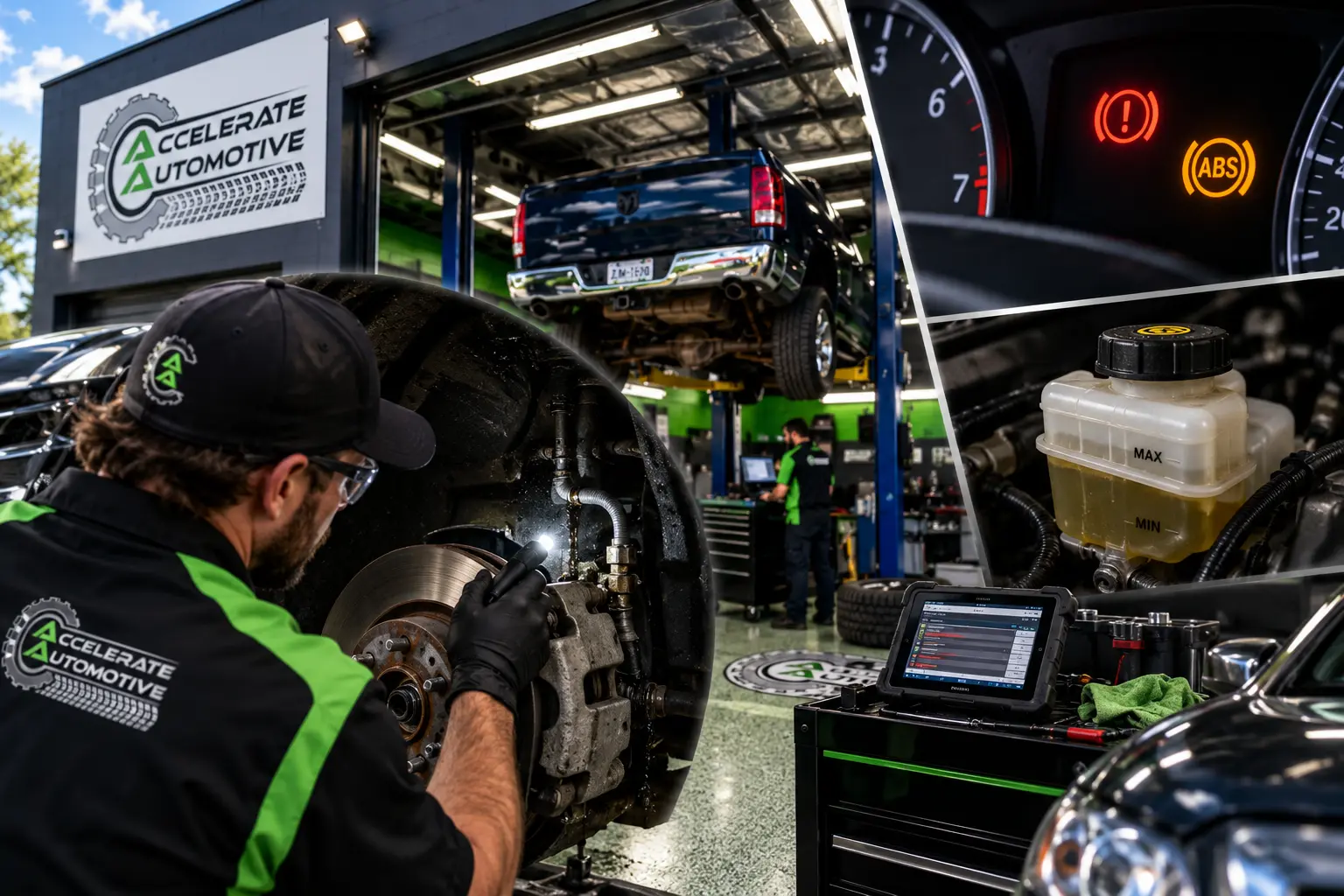
Dashboard brake warnings should not be dismissed without finding out what triggered them. Depending on the vehicle, a red brake warning light can relate to the parking brake, hydraulic system, brake fluid level or another brake-system concern.
An ABS warning light indicates that the vehicle has detected a fault involving the anti-lock braking system. On some vehicles, conventional braking may remain available while ABS functionality is limited. The exact fault still needs to be confirmed with appropriate diagnostic equipment.
If the ABS light remains on, Accelerate Automotive offers ABS diagnostics in York, PA to investigate warning-light faults, sensors, modules and related braking-system issues.
If a brake warning light comes on at the same time as a major change in pedal feel or stopping performance, treat the situation as urgent.
7. You Notice Brake Fluid Loss or a Possible Leak
Brake systems depend on hydraulic pressure. A leak can reduce that pressure and may lead to a soft pedal or reduced braking ability.
Fluid near a wheel, brake line or underneath the vehicle is not enough by itself to identify the source because several automotive fluids can appear in similar areas. A falling brake-fluid level, a warning light or a change in pedal feel makes the concern more serious.
Do not keep topping off brake fluid without finding out why the level dropped. If there is an active leak and braking performance has changed, the safer choice is to stop driving and have the vehicle transported for inspection.
8. You Smell Burning or Notice Excessive Heat Near a Wheel
A hot, sharp burning smell after normal driving can indicate that a brake is dragging. A sticking caliper, seized hardware or another mechanical problem can keep a pad in contact with the rotor and create excessive heat.
You may also notice smoke near a wheel, pulling while driving or heat that seems concentrated around one wheel. Do not touch the wheel or brake components to check their temperature because braking components can become extremely hot.
Smoke, severe heat or a strong burning odor is a reason to stop driving and arrange an inspection. Continued driving can damage multiple components and may reduce braking performance.
Is It Safe to Drive With Bad Brakes?
It depends on the symptom, but any noticeable loss of braking performance should be taken seriously.
An occasional light squeal with completely normal pedal feel and stopping performance does not necessarily mean the vehicle needs to be towed immediately. It still deserves a prompt inspection, especially if the noise persists or becomes louder.
A soft pedal that is getting worse, a pedal that approaches the floor, severe grinding, smoke near a wheel, an apparent hydraulic leak or a sudden increase in stopping distance is different. Those symptoms can indicate that the vehicle is no longer safe for normal driving.
Stop driving and arrange towing or roadside assistance when:
- The brake pedal goes to the floor or braking force drops suddenly
- You cannot stop the vehicle predictably
- A wheel is smoking or severely overheated
- There is an apparent fluid leak along with changed braking performance
- The vehicle pulls violently when the brakes are applied
- Grinding is accompanied by noticeably weaker braking
- A red brake warning light appears with a major change in pedal feel
When in doubt, do not test a questionable braking system by driving farther or deliberately braking harder.
Does Squeaking Always Mean the Brakes Are Unsafe?
No. A brief squeak after rain, washing the vehicle or sitting overnight can come from moisture or light surface rust. Certain brake pad materials can also make occasional noise without indicating an immediate brake failure.
Persistent squealing is different, especially when it is new or getting louder. Many brake pads use wear indicators that can create noise as the friction material becomes thin. Squealing may also come from glazing, contamination, hardware problems or another brake condition.
The useful rule is simple: do not diagnose brake condition by sound alone. Persistent noise deserves an inspection. Grinding, weak braking or a major pedal change deserves faster attention.
What Happens If You Delay Brake Repair?
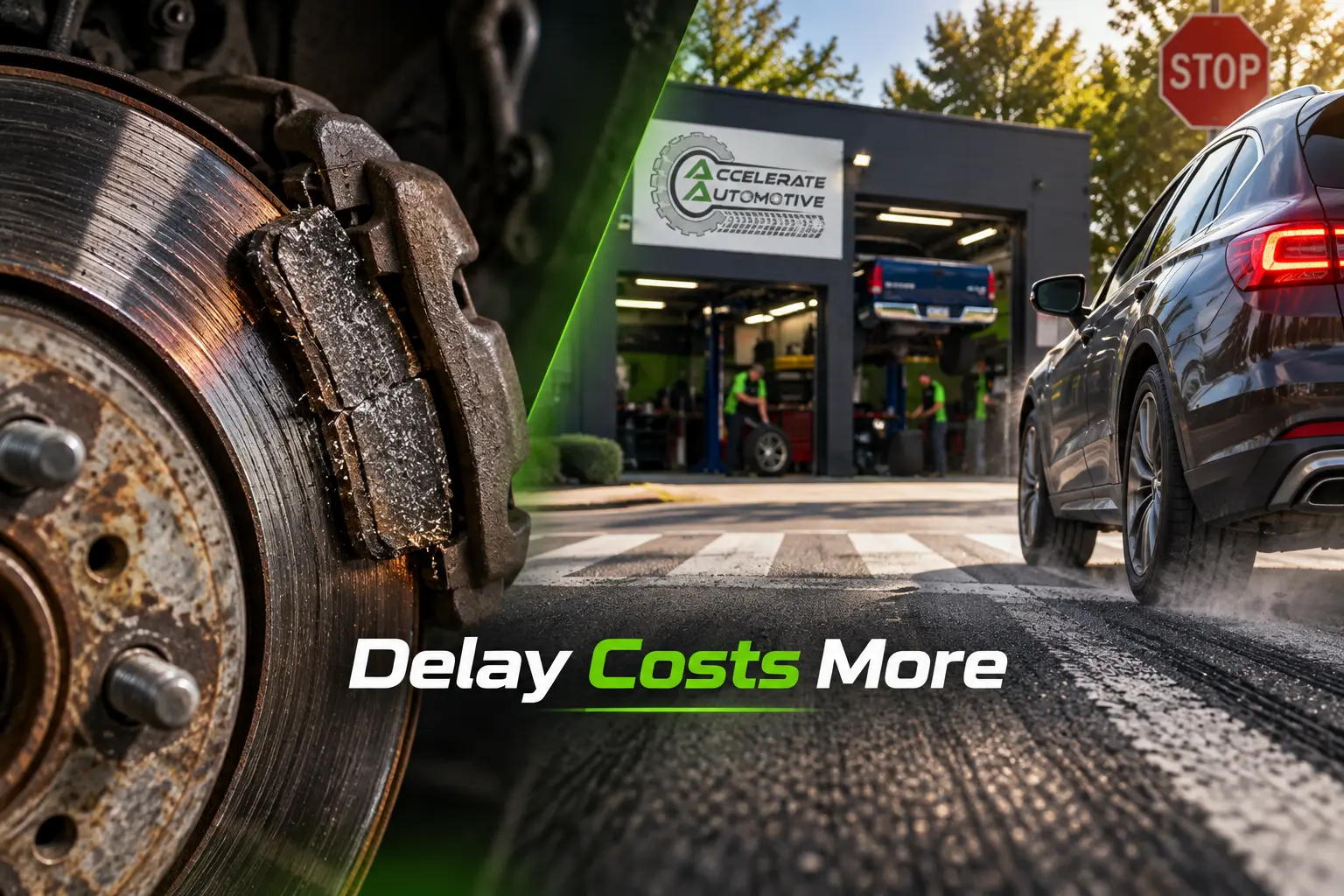
Brake problems rarely become less expensive when ignored. A worn pad can damage a rotor. A sticking caliper can overheat pads and rotors. A hydraulic leak can worsen. Uneven wear may point to another component that needs attention.
There is also a safety cost. A vehicle that needs more distance to stop gives the driver less room to respond when traffic slows unexpectedly, a pedestrian enters a crosswalk or another vehicle moves into the lane.
Early diagnosis helps separate normal wear from an actual system fault. It can also prevent unnecessary parts replacement because the repair decision is based on inspection results rather than assumptions.
What Does a Professional Brake Inspection Include?
A brake inspection should evaluate the braking system as a whole. Replacing pads without checking why they wore abnormally can leave the original problem unresolved.
Depending on the vehicle and symptom, a technician may inspect:
- Brake pad or shoe condition and remaining friction material
- Rotor or drum condition
- Caliper movement and brake hardware
- Flexible brake hoses and metal brake lines
- Brake fluid level and signs of leakage
- Brake pedal feel and hydraulic operation
- Parking brake operation
- Wheel-related causes of vibration or pulling
- ABS fault codes and system data when a warning light is present
Accelerate Automotive provides brake repair and replacement in York, PA for drivers who need the cause confirmed before deciding what work is necessary.
Why Brake Problems Matter in Pennsylvania
Pennsylvania safety inspections include the braking system among the vehicle components that must be checked. PennDOT also advises drivers to maintain their vehicles between annual inspections because mechanical problems can develop before the next inspection date.
That matters for York drivers because a current inspection sticker does not mean a brake component cannot wear, leak, seize or develop a fault months later. New brake symptoms should be addressed based on what the vehicle is doing now, not simply when its next inspection is due.
For additional statewide guidance, see PennDOT’s vehicle maintenance information.
When Should You Book Brake Repair in York, PA?
Book an inspection as soon as you notice a change in braking that repeats or affects your confidence in stopping the vehicle. You do not need to wait for several warning signs to appear at the same time.
A new squeal may turn out to be ordinary brake wear. A vibration may come from the braking system or another wheel-related component. A warning light may require diagnostic testing before anyone can determine which repair, if any, is needed.
Getting the cause confirmed early is the point.
If the brakes feel unsafe right now, do not drive the vehicle simply to prove that the problem is serious. Arrange a safe way to get it inspected.
Schedule Brake Service With Accelerate Automotive in York
If you are seeing the signs you need brake repair York PA drivers should not ignore, Accelerate Automotive can inspect the braking system and determine what is actually causing the symptom.
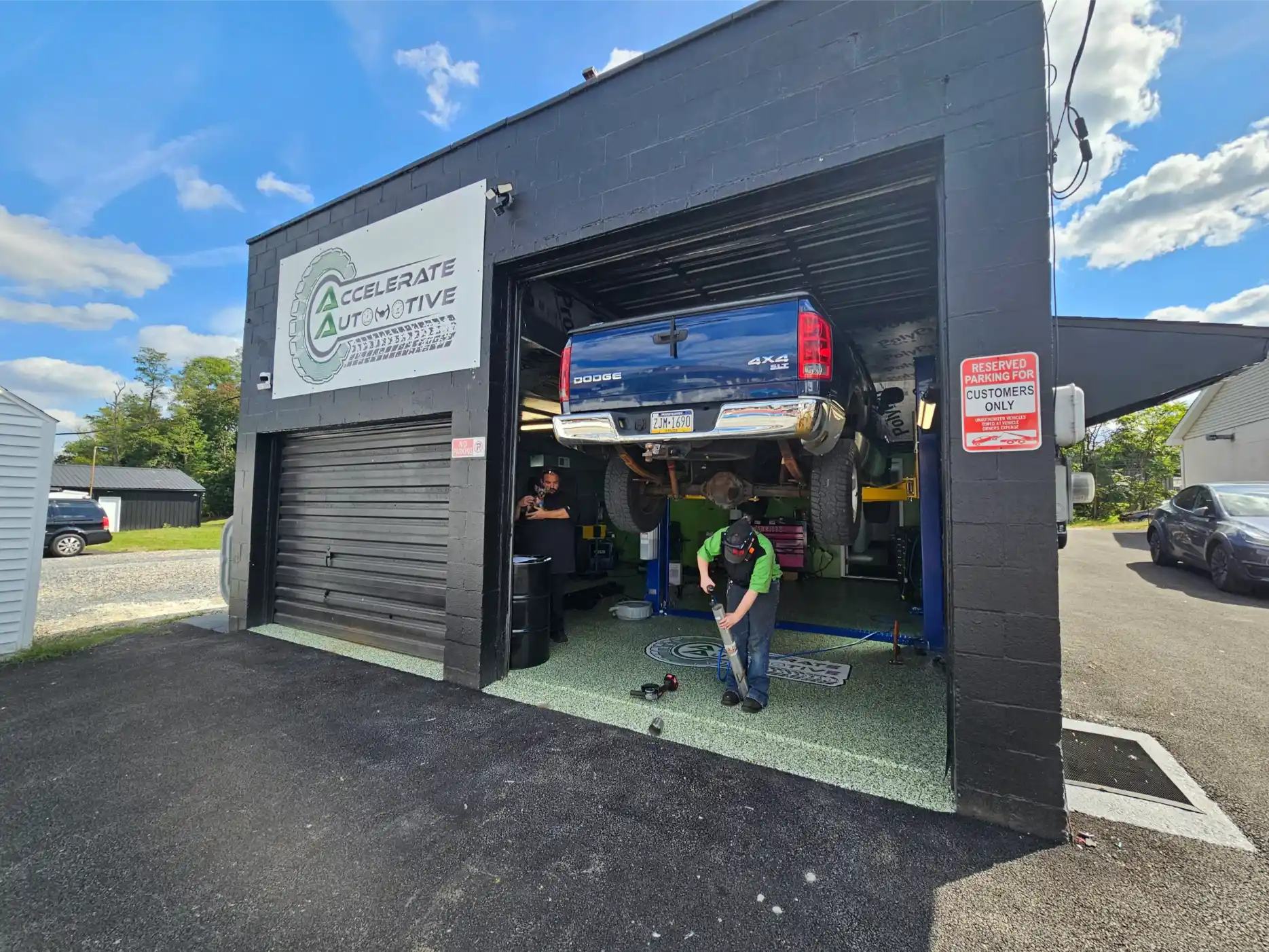
Accelerate Automotive serves York, West York and surrounding communities from 1231 W. Locust Street and 1221 W. Heiges Ave, York, PA 17404. Call 866-382-8861 to discuss the symptoms and arrange service. A 24/7 drop-off option is available for added flexibility.
Brakes often provide a warning before a problem becomes severe. Paying attention to that warning while the vehicle still stops normally can protect the braking system, reduce the chance of additional damage and help you avoid driving with a problem that has become unsafe.